
Church and House of Worship Roofing in Lafayette, LA
Home / Property Types We Roof / Church and House of Worship Roofing
Talk With Our Lafayette Team
Tell us which building area is affected and what worship or community access must continue. We will inspect the roof details, document findings and discuss a practical repair plan.
Call 555-555-5555
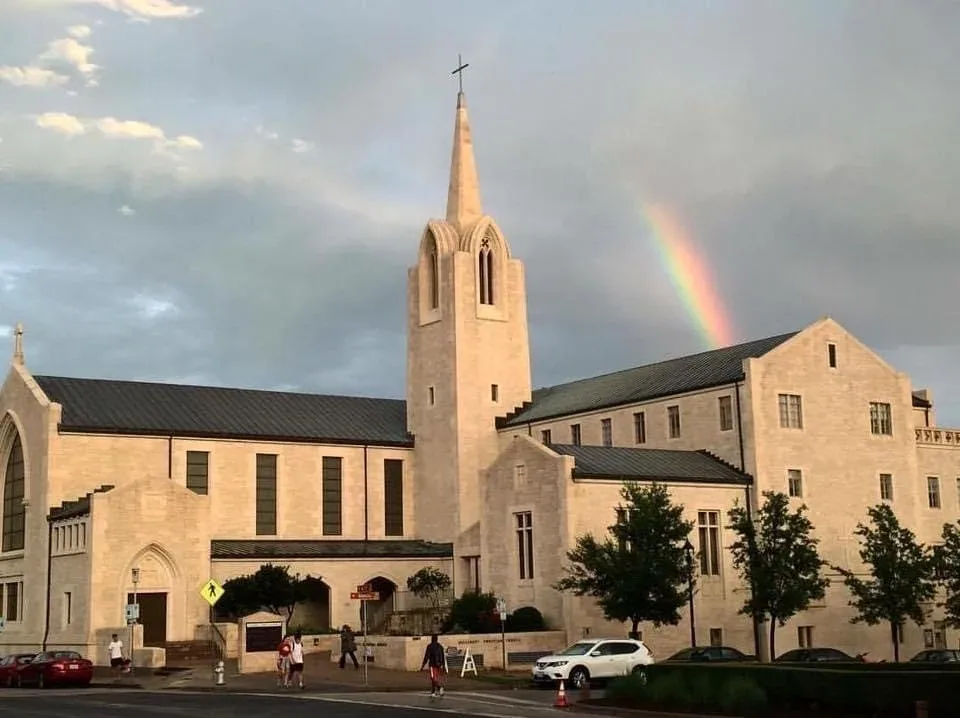
Review the church roof and transitions
A brown ceiling mark appears above the last pew after a rain. The roof above the sanctuary may have a tower, a steep transition or a low-slope addition tied into the older section. We inspect the relevant roof areas, check the flashing and follow water toward the drain before proposing a repair.
The Johnston Street-Louisiana Avenue corridor project connects businesses, schools, neighborhoods and places of worship across Lafayette. The Diocese of Lafayette also appears on LEDA’s list of the parish’s largest employers. Those facts place faith institutions within the local civic and commercial mix; they do not tell us how a particular sanctuary or fellowship hall is built.
Inspect the sanctuary and attached wings
A church may have a steep sanctuary roof, a tower or steeple, and a separate low-slope section over offices, classrooms or a fellowship hall. Each transition can move water toward a seam or wall. We identify the roof materials, inspect valleys, roof edges, flashing and penetrations, then record where the assembly changes.
A stain below a tower does not prove the tower itself is leaking. Water can enter at a roof-to-wall transition or travel along framing before appearing indoors. We compare the ceiling report with exterior details and note what the inspection confirms. If access requires a lift or interior ladder, the property contact approves the route and work area.
A commercial roof inspection can document the roof sections and visible defects. For a defined entry point, commercial roof repair can address the failed detail and its surrounding material.
Check steeples, parapets and transitions
Steeple bases, cross supports, parapets and changes between roof heights require careful flashing. We inspect seams at those transitions, look for movement or open corners, and check how the detail sheds water. Sealant over a weak or moving joint can hide a problem without correcting the path.
Some churches also have metal roofing over a sanctuary and membrane roofing over an education wing. A repair material must suit the surface and existing attachment. On metal, we check panel laps, exposed fasteners and penetrations. On a membrane, we inspect welded seams or laps, curb corners and termination bars. A single building may need separate scopes for the two assemblies.
When wind or hail has left visible damage, storm damage roof repair can document the affected roof area. We tie any storm-related recommendation to what can be seen rather than assume every portion of the building was affected.
Work around services and community use
Worship schedules, funerals, school programs, meals and community events can use the same entrances and rooms. The church contact identifies service times, quiet periods, parking needs and areas that must remain open. We schedule material delivery and lift placement around those limits. If roof work crosses an entrance, the plan should show the temporary route before the crew arrives.
Interior protection may be needed below a sanctuary, kitchen or classroom. We coordinate any ceiling access with the facility contact and limit entry to the approved area. Noise can carry through a roof deck, so disruptive work should be placed in a suitable window when practical. At the end of a shift, the crew secures exposed roof areas and reports any issue that could affect the next service.
For larger work, occupied-building reroofing can phase roof sections around ongoing use. The schedule names the work zone, access route, protection and daily closeout.
Keep drainage clear across additions
Flat or low-slope wings may send runoff to internal drains, scuppers or perimeter gutters. We check outlets and overflows, then look for ponding near roof transitions and equipment. Lafayette Regional Airport’s normals show a 60.50-inch annual precipitation total and a June normal of 7.08 inches. That local rainfall pattern makes drainage review useful before a leak reaches a sanctuary or classroom.
A blocked drain and a settled roof area call for different work. We record whether water clears after the outlet is opened and whether a low spot remains. If the same area holds water, we inspect nearby seams and flashing and describe any slope correction separately from membrane repair.
Drain and scupper service can address a defined outlet issue. Routine roof maintenance can also document debris, loose metal and new penetrations after other trades have worked above the building.
Compare a repair with a roof project
A split at one pipe flashing may be repaired. Repeated leaks across the sanctuary, wet insulation or deteriorated edges can justify broader planning. We map the affected areas and explain what a targeted repair leaves in place. That gives a board or facilities committee a clear basis for comparing service work with a capital project.
A replacement scope should state material removal, insulation, flashing, edge metal, drainage and access assumptions. If tear-off exposes hidden deck damage, we photograph the location and follow the owner’s approval process before adding work. When the property has a historic or active sanctuary, the owner can identify architectural features and interior protection requirements before the project is priced.
Church facilities can compare access needs with school roofing and government building roofing, while keeping each roof assembly and schedule distinct. For a large project, a commercial roof replacement assessment can review insulation and drainage with the membrane.
Keep roof notes with facility records
Volunteer trustees and facility staff may change over time. Keep repair photos, roof plans, invoices, inspection notes and access instructions in one record. We can mark the sanctuary, education wing, kitchen and hall by the names already used onsite. Later service calls can find the same seam or drain without relying on a past volunteer’s memory.
The Johnston Street-Louisiana Avenue corridor connects places of worship with schools, businesses and UL Lafayette. The University Avenue corridor is identified in local planning as a mixed-use overlay and downtown gateway. These local routes provide useful context for facilities with shared streets and surrounding activity, while the roof work remains specific to the property.
Call when a stain returns, a tower flashing opens or a drain backs up. We will inspect the roof, document what is visible and discuss a repair window that respects the facility’s calendar.
A church roof scope should account for the way the building is used throughout the week. Confirm service times, community events, and access needs before setting inspection or installation windows. On the roof, pay close attention to transitions around steeper sections, towers, gutters, and later additions, where materials and drainage paths can meet. A short map and photo record lets volunteers and building staff track the same locations after the contractor leaves.
Questions About Church and House of Worship Roofing
Can roofing work happen during worship hours?
The facility identifies services and events that should remain quiet or accessible. We can sequence noisy work and material deliveries around those times when practical, then protect and secure the roof each day.
What can cause a leak near a steeple?
The entry point may be at a base flashing, roof transition or nearby seam. We inspect the steeple connection and the surrounding roof, then document what supports a repair rather than assume the tower is the source.
Do sanctuary and fellowship hall roofs need the same repair?
They may use different materials and drain in different ways. We identify each assembly and detail, then specify compatible work for the section that needs attention.
How should a church board compare repair and replacement?
We map defects, moisture, repair history and edges, then state what each scope addresses. That record gives the board a clear comparison without treating one leak as proof that every roof section needs replacement.
Can the congregation use the building during reroofing?
Often, if work can be phased and entrances, parking and interior protection are planned. The facility contact sets access rules, and we define the roof zone and daily closeout for each phase.