Emergency Commercial Roof Repair in Lafayette, LA
Home / Commercial Roofing Services / Emergency Commercial Roof Repair
Talk With Our Lafayette Team
Call with the building address, active leak area, and safe access details. Our emergency response is available around the clock, then we can document the permanent repair needed.
Call 555-555-5555
Get the roof protected now
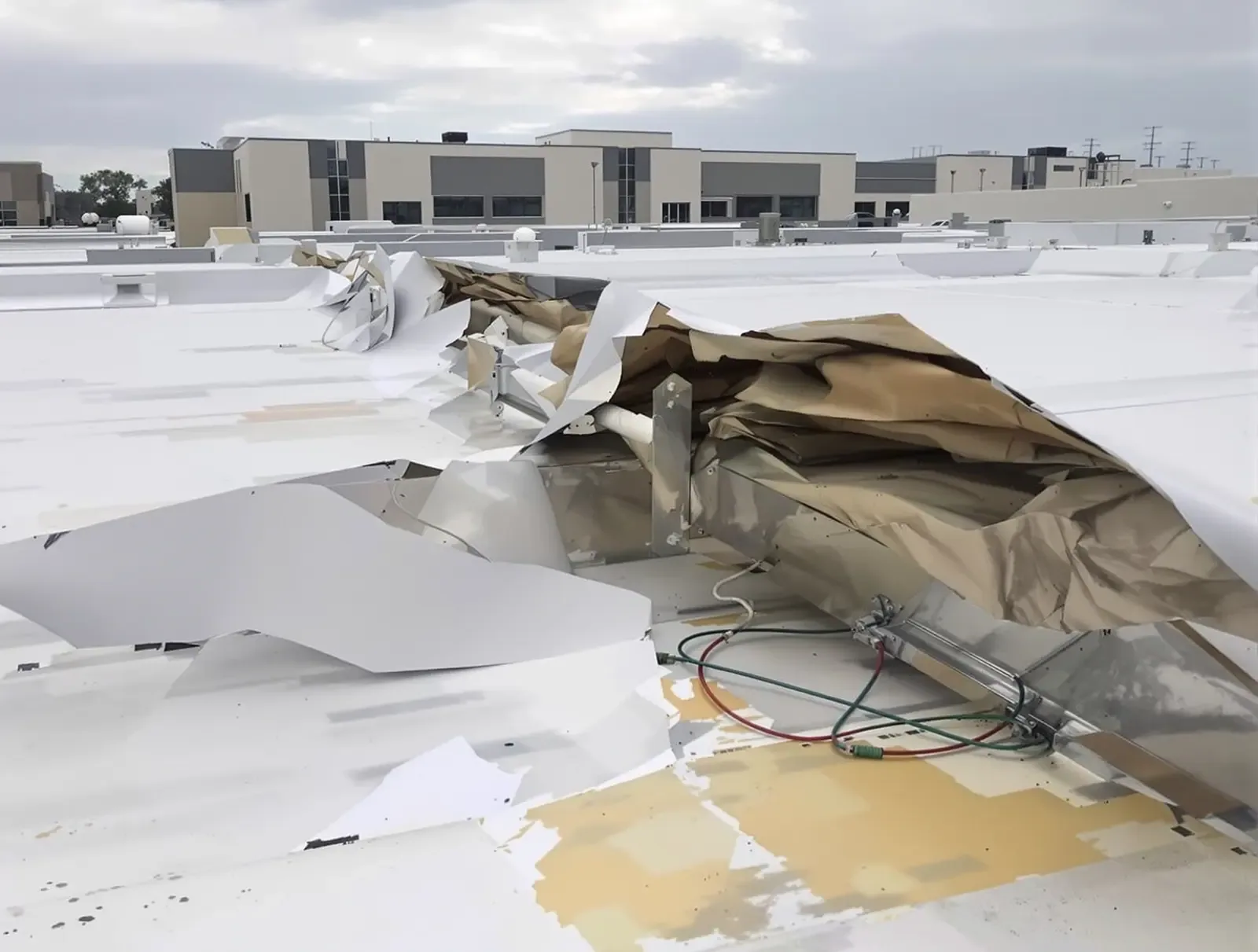
A roof opening, sudden drip, or loose section can interrupt a workday before anyone has a full picture of the damage. Our emergency response runs around the clock in Lafayette, LA, including nights, weekends, and holidays. We begin with the immediate risk: where water is entering, what needs protection, and how to reach the roof safely. Temporary dry-in can limit further exposure while conditions are checked for a permanent repair.
We ask about the building, interior impact, roof access, and weather at the time of the failure. Then we inspect the affected area and nearby details, documenting what is visible and what remains uncertain. A reported storm event between Lafayette and Breaux Bridge included widespread large hail and two tornadoes, but a regional report cannot identify damage on a specific property. We assess the actual roof. For a planned repair after stabilization, a focused repair scope can address the failed membrane or detail.
Make the interior safe first
Keep people away from active drips, sagging ceiling material, exposed wiring, and any area where water is near equipment. Move contents only when that can be done safely. Mark the affected rooms and tell the building contact which areas cannot be used. Do not climb onto a wet roof or enter a space where ceiling material may fall. Those first steps reduce exposure while a roofer arranges access.
We coordinate with the person who can authorize roof access and interior protection. For an occupied property, that may include a facilities contact, tenant manager, or security staff. At Rayne, the regional campus provides 24-hour hospital service, a reminder that critical operations cannot simply pause for roof work. Each building has its own operating requirements. We plan a safe work window around the actual use and keep the contact informed as the conditions are assessed.
Stop the immediate water path
Once the roof can be reached safely, we locate the opening or failed detail and choose temporary protection suited to the surface. A tarp, temporary membrane patch, or other dry-in may be appropriate depending on the damage and weather. The protection must be secured without creating another hazard or sending water into an adjacent section. We also check nearby seams, penetrations, drains, and edges for related openings.
Temporary work is recorded as temporary. We explain what area it covers, what could still admit water, and what conditions are needed for a lasting repair. If rain continues, the work may need to wait for a safe break. Lafayette's airport normals show substantial annual precipitation, which makes secure stopping points and material protection practical parts of emergency work. We remain available any hour, including holidays, to respond when an active leak requires immediate attention.
Separate storm impact from older wear
After the immediate opening is protected, we inspect for damage patterns across the affected area. Wind may loosen metal, open a seam, or disturb flashing; hail can leave marks that need closer review; a falling limb may puncture the membrane or damage rooftop equipment. We photograph the visible condition and check nearby sections before assigning a repair limit. The cause matters because an impact point and a long-standing seam failure call for different documentation and work.
The National Weather Service recorded an April supercell with large hail and two tornadoes between Lafayette and Breaux Bridge. That local event is useful context after severe weather, but it is not proof of a claim or damage at a particular address. We identify observable conditions and keep the storm timeline separate from our roof findings. A hail inspection or wind-related repair review can support the next step when those conditions are present.
Return for the permanent repair
A lasting repair needs compatible material, a prepared surface, and a sound connection to the existing roof. We confirm the system, remove loose or wet material where required, and repair the membrane or flashing detail that failed. The scope may include adjacent seams, edge metal, drains, or equipment curbs if they contributed to the opening. Photos and location notes show what was changed and what should be watched afterward.
Some emergency calls reveal a wider condition. Wet insulation, repeated openings across several sections, or a deteriorated deck can change the repair plan. We explain whether the permanent fix remains localized or should be compared with replacement or a recover option where allowed. That decision follows inspection and code review, not the urgency of the first call alone.
Keep people updated during response
Emergency work moves more smoothly when one building contact receives the scope and timing updates. We confirm roof access, interior areas to protect, material staging, and any temporary change to tenant routes. For retail or professional properties, a blocked entrance or delivery zone can affect operations even when the roof work is above. We agree on access and safety steps before bringing materials onto the property.
River Ranch includes offices, retail, restaurants, grocery, healthcare, banking, and professional tenants. An emergency plan at a mixed commercial district needs to reflect the actual tenant and access conditions at the affected building. We limit the work area, protect the interior, and leave the space in a safe condition when the crew steps away. If a permanent scope needs a separate window, we give the property contact a clear account of temporary protection and remaining exposure.
Keep the event and repair record together
A useful emergency record ties the initial call to the roof findings. It can include the time reported, affected interior areas, roof location, temporary protection, observed damage, permanent work, and follow-up items. That helps a facilities team distinguish what was secured from what was fully corrected. It also gives an insurance reviewer a clearer sequence of events without treating the first observation as a final conclusion.
If the leak is one item among several, we can map the condition and set priorities for the next service window. A written roof condition report can organize photos and follow-up actions. For ongoing review across several buildings, a multi-property roof program can help keep emergency records alongside planned inspections. The building stays safer when temporary and permanent work are clearly distinguished.
Questions About Emergency Commercial Roof Repair
Can you respond to a commercial roof leak overnight?
Yes. Emergency response is available at any hour, weekends and holidays included. We first assess access and immediate risk, then work to protect the interior and limit water entry. The permanent repair may need a dry surface or daylight access, so we explain what is temporary and when the corrective work can proceed.
What should building staff do before a roofer arrives?
Keep people clear of active leaks, unstable ceiling material, and water near electrical equipment. Move contents only if the area is safe, mark affected rooms, and share roof access information with the responder. Staff should stay off a wet roof. Photos from a safe indoor location can help document the event.
Does emergency tarping count as a permanent repair?
A tarp or temporary dry-in limits exposure while the roof is assessed. It does not replace a compatible membrane or flashing repair. We record the area protected and identify what still needs work, then return under conditions suitable for a lasting correction. The written closeout separates those two stages.
Can storm documentation support an insurance claim?
We can document observed roof conditions with photos, locations, and a description of repair work. That record can help the owner assemble information for a claim, but it does not promise coverage or determine the insurer's decision. We keep the roof findings distinct from assumptions about cause or payment.