
Commercial Roof Inspection in Lafayette, LA
Home / Commercial Roofing Services / Commercial Roof Inspection
Talk With Our Lafayette Team
Tell us what is recurring, what repairs are on file, and which roof areas need attention. We can walk the assembly and give you a useful next-step report.
Call 555-555-5555
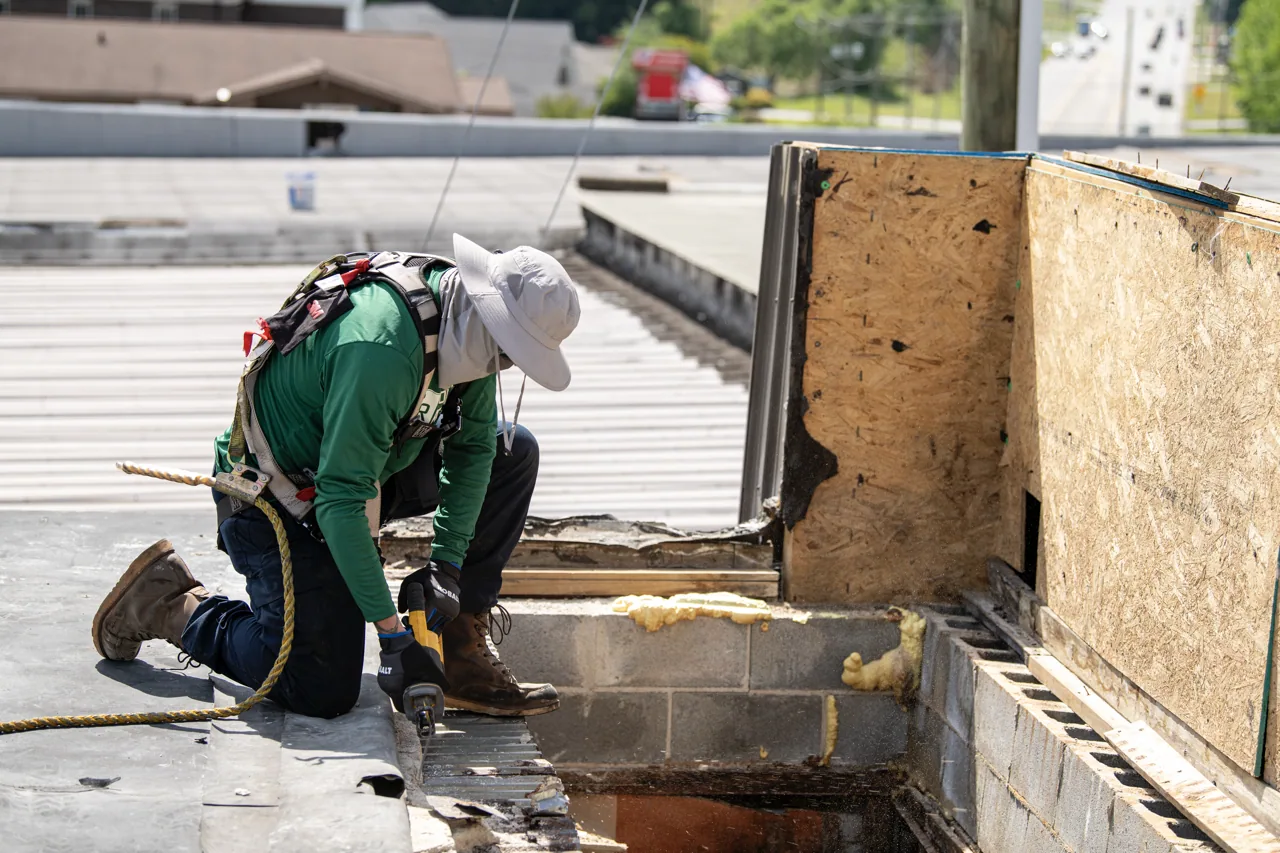
Get a current roof condition record
A maintenance file with three different leak notes can leave a building manager unsure which condition needs attention first. A roof inspection puts those observations into one current record. We walk accessible areas, review the membrane and details, check drainage, and document conditions with photographs. The report separates active defects from wear to monitor, so decisions can follow what is on the roof today. In Lafayette, LA, seasonal heat and heavy rain make a clear view of water paths especially useful.
We ask about prior repairs, interior reports, roof access, and upcoming work before setting the inspection scope. That history can point us toward recurring seams or details, but we confirm them in the field. A complex commercial property near Opelousas or Downtown Lafayette may have roof areas with different access needs. We note limits where a surface cannot be safely reached, then explain whether drone imaging or moisture testing would answer the remaining question.
Look at the roof as an assembly
We inspect the field membrane, seams, penetrations, wall transitions, edge metal, drains, scuppers, and equipment supports. The review considers what each detail is doing, not only whether it looks clean. Open laps, loose flashing, cracked sealant, punctures, displaced fasteners, and damaged metal can provide a route for water. We record the location and apparent extent, then check nearby areas for a related condition.
Interior clues help complete the picture. A ceiling mark, odor, or past water report may point to a roof section, but it does not prove the current entry point. We compare the symptom with roof slope, drains, seams, and prior patch locations. If the owner has dated photos, invoices, or a leak log, those can sharpen the comparison. At the close of the walk, we separate observed defects from items that need a test opening or closer review.
Follow the path rain should take
Water should move toward a drain, scupper, or roof edge without collecting at a detail. We check whether drains are open, whether the surrounding membrane is intact, and whether low areas show signs of extended ponding. Lafayette Regional Airport's climate normals record 60.50 inches of annual precipitation and 7.08 inches in June. That local context makes a drainage check practical, but the inspection still relies on the conditions visible at the property.
A blocked drain, settled insulation, or poorly placed overflow can have different remedies. We note which condition appears to be limiting flow and whether the roof needs cleaning, localized repair, or a design review. A maintenance visit can clear debris if that service is included, but it should not disguise a structural low point or failed membrane. Roof drain and scupper work can address those details when the inspection finds a specific need.
Identify the system and its weak details
We note the roof material and check how its seams and transitions are holding. Heat-welded thermoplastic seams, rubber membrane laps, modified bitumen, built-up roofing, and metal panel joints each need a different repair approach. We do not assume that a patch used on one area will suit another surface. Where the material is unclear or several generations of repair appear together, we record that uncertainty and recommend a closer check before proposing a repair.
Flashing is a common place for movement to show. Curbs, pipes, walls, and equipment bases interrupt the roof plane, so each transition needs an intact tie-in. We look for split corners, loose counterflashing, open sealant joints, and missing securement. The report connects each photo with a roof location and a suggested next step. If water has entered at a seam, a seam evaluation can narrow the repair method; a flashing review can focus attention on those transitions.
Decide when testing adds value
A visual walk can identify many defects, but hidden moisture may need another method. Infrared imaging can highlight temperature patterns that merit investigation. Selected core cuts can confirm layers, insulation condition, and moisture at specific points. We recommend testing when the result could change a repair boundary, replacement decision, or budget. The survey notes where measurements were taken and what they can and cannot show.
UL Lafayette's facilities profile lists a campus footprint exceeding 150 acres and buildings totaling more than 2.1 million square feet. The university's figure counts campus buildings, not roof area. For a multi-building property, inspection limits and test locations should be recorded by roof section so the owner can see which areas were reviewed. Drone imaging may help document broad or hard-to-access surfaces, while an infrared moisture survey can investigate suspected wet insulation.
Turn findings into a usable priority list
We organize findings by location and urgency. Active openings, loose details, drainage concerns, and maintenance items should not sit in one undifferentiated list. Photos make the condition easier to confirm with a facilities team or property owner. The report can also note areas that were not accessible and any follow-up test that would clarify the next decision. A clear limit keeps the report honest about what the inspection covered.
At the Johnston Street-Louisiana Avenue corridor, Lafayette's planning documents describe connections among businesses, schools, UL Lafayette, and Moncus Park, along with drainage and access work. Roof planning in a busy commercial setting also benefits from a record that links condition to operations and timing. We can recommend repair, monitoring, further testing, or capital planning based on the observed roof. A photo-backed condition report helps keep that next step connected to the building record.
Use inspection findings between service calls
A good inspection record supports more than a single repair decision. It lets the property team compare conditions over time, identify repeat problem areas, and schedule upkeep before an urgent call. For a roof with several tenants or equipment contractors, simple notes about access, penetrations, and completed repairs can prevent the next visit from starting without context. The inspection can become the starting point for an annual maintenance plan if the owner wants a recurring schedule.
We discuss what to address now, what to watch, and what would justify bringing us back sooner. If active water entry occurs after hours, emergency response remains available around the clock, weekends and holidays included. For broader planning, roof asset tracking can connect inspection findings with repair history and future budget discussions. We leave the owner with a concise account of what we saw and a practical sequence for what comes next.
Questions About Commercial Roof Inspection
What does a hands-on commercial roof inspection include?
We review accessible membrane areas, seams, penetrations, flashings, edges, drains, scuppers, and rooftop supports. We consider interior leak reports and prior repairs, then photograph and locate conditions. The report distinguishes observed problems, items to monitor, and questions that need infrared imaging or a test opening.
Can a roof inspection tell whether insulation is wet?
A visual walk may show clues, but hidden moisture often needs testing. Infrared imaging can flag patterns for closer review, and a core cut can confirm the assembly at a selected location. We recommend a test when its result could change the repair or replacement decision, then record what was sampled.
How should I use the photos in the inspection report?
Keep them with the roof map, repair history, and date of inspection. A labeled photo helps a facilities contact see where a defect was found and compare it with later work. We can group findings by urgency and section, making it easier to plan a repair visit or budget review.
Can you inspect roofs at several buildings in one visit?
We can plan a multi-building inspection, with access and scope defined for each roof. The report should keep locations separate so a condition at one property is not treated as a finding at another. Larger or restricted areas may call for drone imaging or a separate survey plan.