
Commercial Roof Repair in Lafayette, LA
Home / Commercial Roofing Services / Commercial Roof Repair
Talk With Our Lafayette Team
Tell us where water appeared and what work has already been tried. We can inspect the roof detail, document the condition, and recommend a repair scope for your Lafayette property.
Call 555-555-5555
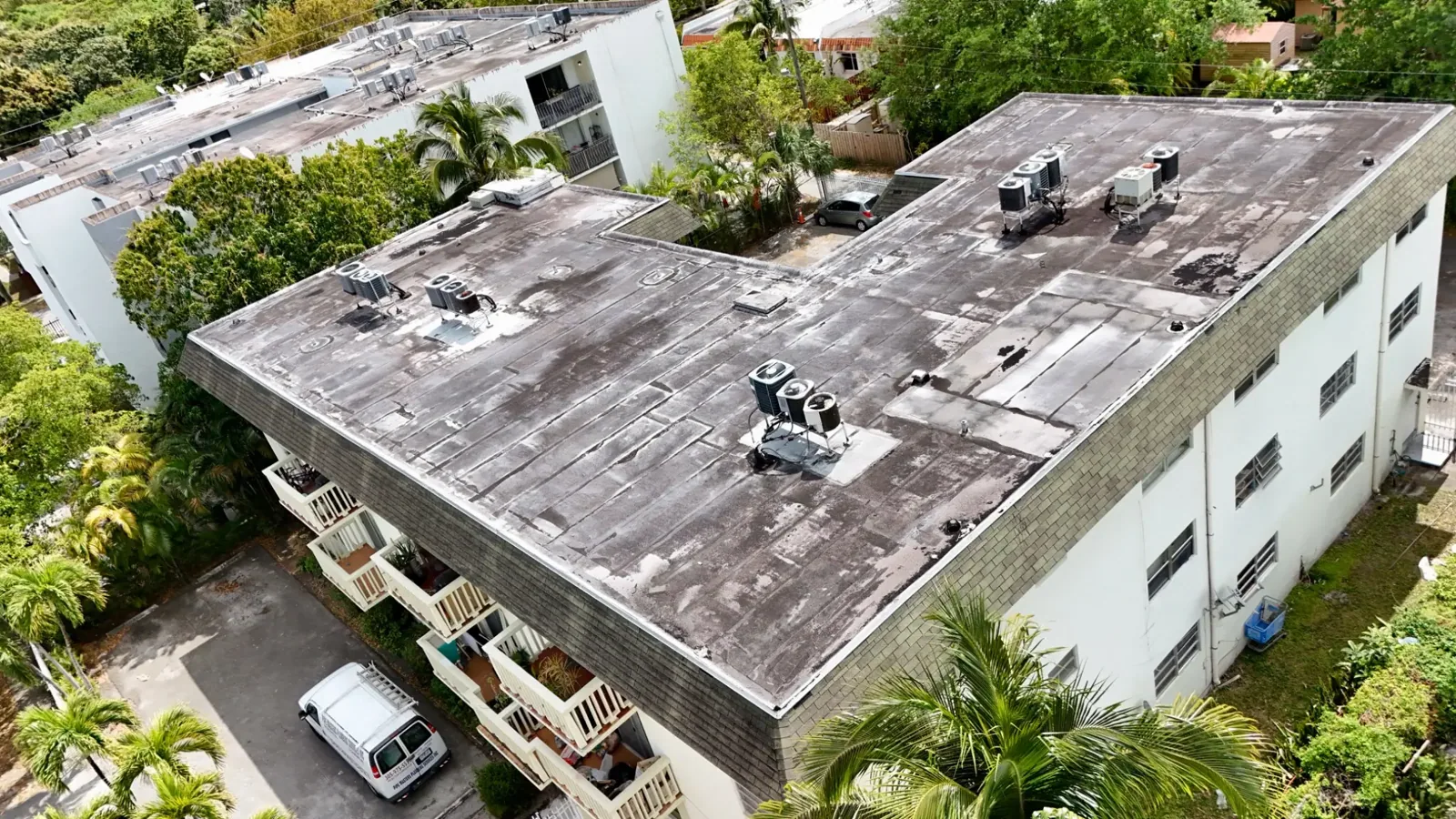
Pin down the repair cause
A repair should close the path water is using, not just cover the mark that showed up indoors. On a commercial roof, entry can begin at a seam, curb, wall transition, drain, or edge several feet from the ceiling stain. We inspect the roof detail and trace the water path before choosing a patch. Lafayette, LA, brings warm-season heat and substantial rain, so a repair also needs to account for how the roof moves, drains, and dries.
We start with the area that failed, then check nearby details that could share the same cause. A roof above offices in Downtown Lafayette may have different access constraints from a distribution building near the regional airport, but the diagnostic work is the same: identify the assembly, note the failure, and document the limit of the repair. When the roof history includes repeating calls, a closer inspection can help tell a local defect from a broader condition.
Sort the symptom from the cause
Interior water marks give us a starting point. We ask when they appeared, whether the leak changes with wind direction or rain intensity, and what work has already been done above. On the roof, we inspect the membrane, seams, flashings, curb corners, penetrations, drains, and adjacent surfaces. Water can travel along insulation or a deck before it appears inside, so the first visible mark may not sit directly below the entry.
A written repair finding separates what we saw from what we suspect. Photos, location notes, and a description of the affected layers make the scope easier to review. If a roof has several unrelated defects, we distinguish each one so the owner can set priorities. That record also gives the next service call a useful baseline. Lafayette's Johnston Street-Louisiana Avenue project includes drainage and utility work along a commercial route, a reminder that roof water management starts with tracing where water is meant to go. Drain and scupper work may be part of the repair if those details are involved.
Match the repair to the roof system
A membrane patch has to suit the existing material and its condition. TPO and PVC seams are typically heat welded; EPDM repairs use compatible details; modified bitumen and built-up roofs need repairs suited to their layers and surfacing. Metal panels bring their own fasteners, laps, and transition points. We identify the system before selecting materials, because an incompatible patch can lift or split and leave the same entry path open.
Seam failures, punctures, loose flashings, and failed sealant are different repair problems. We prepare the surface, remove loose or unsound material where required, and tie the repair into sound surrounding roof. Where movement or repeated separation is present, a surface patch may not be enough. A seam repair review or a flashing detail assessment can identify how far the corrective work should extend. We state whether a repair is a temporary stabilization or a permanent detail correction.
Follow the drainage path
Standing water can keep a defect wet and make it harder to see where leakage begins. We look for blocked drain bowls, leaves at scuppers, low areas, open laps, and changes in slope around equipment or additions. Lafayette's annual precipitation normal is 60.50 inches, with 7.08 inches recorded as the June normal at the airport. That figure helps explain why drainage deserves attention, but it does not establish a defect on any individual roof.
We check whether a drain is clear and whether water can reach it. If a low area is caused by settled insulation or a deck issue, clearing the drain alone will not correct the condition. The scope can separate maintenance, membrane repair, and any larger correction. In an occupied property, we also plan safe access around equipment and roof openings. A recurring puddle near a curb at the Oil Center, for example, should be traced to its actual roof conditions rather than treated as proof of a particular assembly failure.
Set the repair window
Repair timing depends on active leakage, weather, surface conditions, material requirements, roof access, and building operations. We tell the property contact what needs to be moved or protected, where the crew will work, and how the area will be secured before crews leave. If conditions do not support a permanent repair, temporary protection can limit water entry until the surface is ready. Lafayette emergency response runs at all hours, weekends and holidays included.
The work itself should be inspectable. We record the repair location, preparation, materials, and completed details with photos when appropriate. This is useful on multi-tenant properties, where a maintenance log can connect an interior complaint with roof work above it. River Ranch's published tenant mix includes grocery, restaurant, healthcare, banking, and professional services. Those different operating needs make access coordination part of the repair scope. For a more detailed record of overall roof conditions, a photo-based report can help track outstanding items.
Know when repair stops being enough
A sound repair program can extend the useful life of a roof when defects remain limited and the surrounding assembly is stable. The decision changes when water has affected broad areas, seams fail across multiple sections, insulation is wet in several locations, or repairs keep returning at the same detail. We compare the repair area with the wider roof condition and explain what another repair would address. The answer should reflect evidence, not an automatic push to replace.
If the roof is near the point where recurring work no longer resolves the problem, we can compare repair with full replacement or a recover option where the existing assembly qualifies. A roof with active water entry needs protection now, while the longer-term decision can follow after the deck and insulation are better understood. That split keeps a repair call useful even when it becomes the first step toward larger work.
Before approving a repair, ask for the affected roof section, the observed defect, and the work proposed to address it. That makes it easier to compare a localized repair with a larger restoration scope. The report should distinguish what was visible from what still needs opening or testing, and should note any temporary protection separately. A clear boundary matters when a leak appears near a seam but water may be traveling from a drain, curb, or perimeter detail.
Questions About Commercial Roof Repair
Why does the ceiling stain return after a roof patch?
The original entry may not have been located, or another nearby detail may be open. Water can move below the membrane before it appears indoors. We compare the stain timing with roof details, repair history, and drainage, then test or open the assembly where needed. The next scope should explain the cause it addresses and the limits of that work.
Can you repair a roof if the membrane type is not known?
We identify the roof material and detail before choosing a compatible repair. The membrane, seam method, surface condition, and prior patches all matter. If the assembly is unclear, photos and selective inspection can narrow it down. A patch selected without that check may not bond or remain compatible with the surrounding material.
What should be documented after a leak repair?
Keep the repair location, observed cause, materials used, and closeout photos with the building record. We can also note related items that were not included in the repair scope. That history helps distinguish a new failure from a return at the same detail, especially across multi-tenant properties near Downtown Lafayette or the Oil Center.
Can emergency repairs happen at night or on a holiday?
Yes, our emergency response is available around the clock, including weekends and holidays. The first task is protecting the building and reducing further water entry. A permanent repair may need dry conditions or a compatible work window, so we explain when the follow-up scope can proceed and what interim protection remains in place.