
Infrared Moisture Survey for Commercial Roofs in Lafayette, LA
Home / Commercial Roofing Services / Infrared Moisture Survey for Commercial Roofs
Talk With Our Lafayette Team
Share the leak history and roof areas in question. We can plan imaging, verify selected locations, and map a practical repair or replacement decision.
Call 555-555-5555
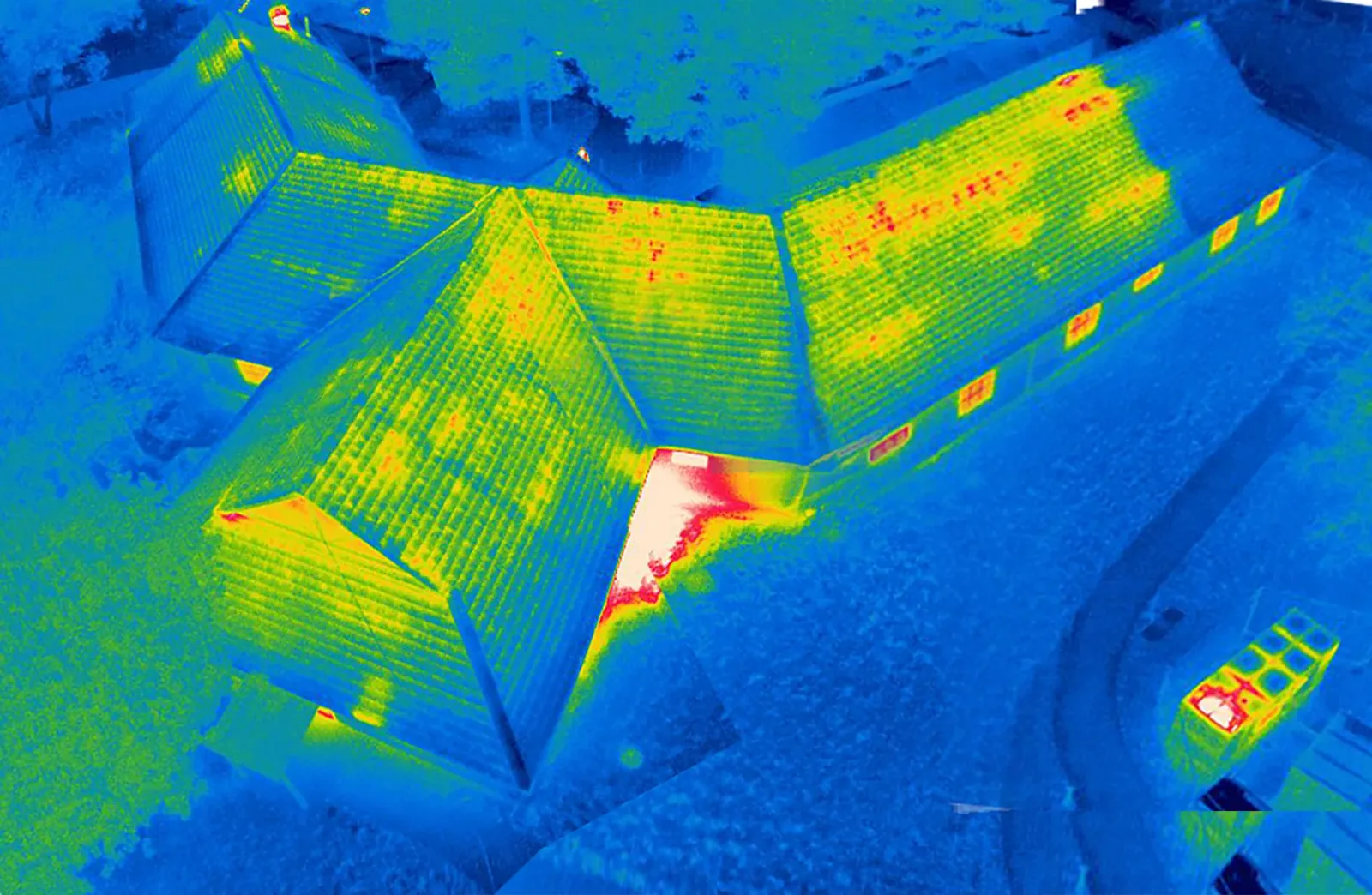
Find out what is below the membrane
A dark patch on an infrared image is a place to investigate, not a diagnosis by itself. Roof surface temperature can vary with shade, insulation, moisture, and recent weather. We plan an infrared survey around the question the owner needs answered: where might moisture be held, and would confirming it change the repair or replacement scope? In Lafayette, LA, frequent rain and a warm, humid climate make careful moisture review useful before covering an existing assembly.
We review roof history, visible conditions, and safe access, then choose an imaging window that can produce meaningful readings. Selected core cuts can verify the layers and moisture at specific locations. The university's facilities records describe a Lafayette campus spanning more than 150 acres, with buildings totaling over 2.1 million square feet; the figures do not specify roof area. A multi-building property needs its own mapped survey limits. Lafayette is one local setting where a roof-by-roof record can keep findings distinct.
Set the question before imaging
We start with leak reports, repair records, known roof sections, and suspected problem areas. That background helps target the survey, but it does not replace field observation. We note the membrane type where known, surface obstructions, drains, equipment, and changes in roof height. Each affects where an image can be captured and how a thermal pattern should be read.
Survey timing matters. Infrared readings depend on conditions that create a useful temperature difference, so we consider recent sun exposure, wind, rain, roof construction, and the current surface. If a roof has standing water or reflective surfaces, those conditions may limit interpretation. We explain the limits before testing and may suggest a different approach if the image will not answer the owner's question. A hands-on roof inspection can establish visible conditions before the survey begins.
Read patterns with the roof in view
Thermal imaging records surface temperature differences. A warmer or cooler area can point to a condition worth checking, but the cause may be moisture, insulation variation, shading, stored heat, or another feature. We compare the image with roof layout, visible repairs, and interior reports. The survey map identifies locations for follow-up instead of treating every color change as wet material.
At Lafayette Regional Airport, the 1981-2010 rainfall normal is 60.50 inches per year, including a 7.08-inch June average. That local rainfall context makes a leak history relevant, though climate data cannot confirm moisture in a roof. We use the weather history only to frame the inspection question, then test selected locations. If water remains active, around-the-clock emergency response is available, weekends and holidays included, while the moisture survey or repair visit is arranged.
Confirm selected locations with core cuts
A core sample can show the layers, insulation condition, and moisture at one opening. We select locations that represent image patterns or a roof concern, then document what the sample reveals. A core cut confirms only that point, so the survey plan may use several openings across different patterns. We discuss patching each test opening and restoring the roof detail afterward.
Sample results help draw a repair boundary. A dry sample inside a thermal pattern may prompt another location or a review of shading and insulation transitions. A wet sample can support removal or repair planning, but the area around it still needs a reasoned limit. The findings should state the location, observed assembly, and moisture result without implying that one test describes the whole roof. Recover work may be considered only when existing layers, moisture, attachment, and code allow them to remain.
Map what needs removal or repair
Once suspect areas are verified, we map the affected roof sections and relate them to drains, seams, curbs, and edges. That map can help separate wet insulation from dry areas and identify where the membrane needs repair. The extent depends on the samples, visible condition, and moisture path. Removal limits follow confirmed moisture evidence, test openings, and the exposed assembly.
Rain can enter at a seam or flashing detail and spread below the visible surface. Lafayette's annual precipitation normal is substantial, so we note any opening that could continue to admit water while a larger scope is reviewed. A localized wet area may call for targeted removal and a compatible patch. Broad moisture or repeated failures may justify comparing full replacement. Leak tracing and repair can address active entry, while a replacement assessment can compare broader options.
Coordinate testing around building use
Infrared surveys and core cuts both require access, but their disruption differs. We coordinate roof entry, sample locations, interior observation, and any area where a test opening must be protected. A core cut should be planned and repaired within the agreed work window. The property contact needs to know where testing will occur and whether access below the roof is helpful.
The Johnston Street-Louisiana Avenue corridor connects business locations with schools, neighborhoods, UL Lafayette, and Moncus Park. Commercial sites in active areas may need a specific delivery, parking, or access plan even for a diagnostic visit. We confirm the property conditions rather than assuming a roof can be reached from any side. If tests reveal urgent water entry, emergency protection can be arranged at any hour, including holidays.
Leave a map the owner can use
The final record should show the image patterns reviewed, core locations, test results, limitations, and recommended action. We connect each note with a roof area so a repair crew or facilities manager can find it later. Areas that were not tested remain identified as unconfirmed. The owner can then compare targeted repair, continued monitoring, recover feasibility, or replacement using the same set of observations.
For several buildings, separate maps prevent an observation at one roof from being carried over to another. A photo-supported condition report can retain the survey findings with the roof history. For ongoing capital decisions, roof asset planning can track repairs and future review dates. We explain what the survey confirms, what is still a question, and which next step is worth taking.
A useful survey plan starts with the question the owner needs answered: where should a repair crew investigate, or which areas warrant replacement? Survey timing and weather conditions affect what an instrument can reveal, so readings should be treated as screening evidence rather than a stand-alone diagnosis. Mark suspect zones on a roof plan, then confirm them with targeted inspection or test cuts where authorized. That sequence helps avoid carrying unverified moisture assumptions into a bid.
Questions About Infrared Moisture Survey for Commercial Roofs
Does infrared imaging prove that insulation is wet?
No. A thermal pattern can point to an area worth checking, but shade, insulation changes, stored heat, and roof construction can affect the image. We verify selected locations with core cuts or other inspection evidence when moisture would change the scope. The report distinguishes a suspected area from a confirmed sample.
How many core cuts will a commercial roof survey need?
The number follows the roof layout, image patterns, and decision at hand. We choose samples to test representative conditions rather than applying a fixed count to every property. Each opening is mapped, documented, and repaired. A sample confirms its location, so broader boundaries still rely on the full set of evidence.
Can an infrared survey be done after rain?
Recent rain can affect readings and may make some surfaces unsafe. We review the weather, roof construction, and expected temperature conditions before scheduling. If the images would be hard to interpret, we choose another window or use a different inspection method. Safety and usable evidence guide timing.
What decisions can the survey help with?
It can help locate suspect wet areas, set selective test points, and compare repair limits with broader replacement options. The survey is one part of the roof record. We combine it with visible condition, core results, drainage, and leak history before defining what should be removed or repaired.