
School Roofing in Lafayette, LA
Home / Property Types We Roof / School Roofing
Talk With Our Lafayette Team
Share the building, reported room and school access rules. We will inspect the roof area, record the findings and discuss a repair plan that fits campus operations.
Call 555-555-5555
Arrange a school roof review
A custodian sees a ceiling tile darken after a hard afternoon rain. The school day may be over, but the roof question is only starting. We check above the room, follow seams and penetrations, and look at the nearest drain path before recommending a repair. The affected space, class schedule and access route all matter to the work plan.
Lafayette Parish School System appears among the parish’s largest employers in LEDA’s employer list. The Johnston Street-Louisiana Avenue corridor project also connects schools with downtown, UL Lafayette and nearby businesses. Those facts describe the local education network. Each campus still needs a roof inspection tied to its own buildings and records.
Trace water above the room
A stain in a classroom can sit below a roof opening several bays away. Water may follow a deck joint, framing or conduit before it reaches a ceiling. We compare the report with roof seams, wall transitions, skylights, drains and equipment curbs. We photograph the evidence and mark what the visit confirms, then identify anything that needs further testing.
Books, computers, ceiling systems and classroom materials may need protection while the area is checked. The facilities contact identifies rooms that cannot be entered during instruction, testing or special programs. For a leak that remains active after the school day, a night, weekend or holiday dispatch can secure the opening. We return to inspect the detail and define a lasting repair when the roof is safe to access.
A commercial roof inspection can examine the roof area around a reported mark. For an active opening, leak repair can address the confirmed defect. We coordinate interior access through the school’s approved contact.
Use the school calendar carefully
Summer break can create a longer work window, but it does not remove every constraint. Administrators may still have staff on site, summer programs, deliveries, maintenance and building access rules. We confirm which wings can be reached, what must remain open and when loud operations can occur. A roof zone closes only after the crew has secured the work and checked the day’s dry-in.
When classes are in session, the plan can move through smaller sections. We identify lift positions, material staging, walk paths and rooms below active work. The school sets notices and any restrictions on student movement. We keep the work boundary clear and report a schedule change before moving into a different area.
Occupied-building reroofing can sequence work across active buildings. We set out the phase, noise periods, protection and closeout for each area, then coordinate the roof crew with the facilities contact.
Check drains, scuppers and overflow
A low roof section above a cafeteria or gym may drain differently from a classroom wing. We inspect bowls, scuppers, gutters, overflow openings and the paths that lead to them. Lafayette Regional Airport’s climate normals list 60.50 inches of yearly precipitation and 7.08 inches in June. That local rainfall record makes outlet condition worth checking, though the roof still determines what correction is needed.
Debris can block a drain, while settlement can leave water in the same low area after cleaning. Those conditions need different work. We record whether water clears, where it remains and whether nearby seams or flashing show stress. A membrane patch does not create slope, and cleaning an outlet does not repair a failed penetration.
Drain and scupper service can correct a defined outlet issue. If a larger section holds water, we describe the low area and discuss a separate slope or assembly review before putting it into a school project scope.
Identify each roof section before repair
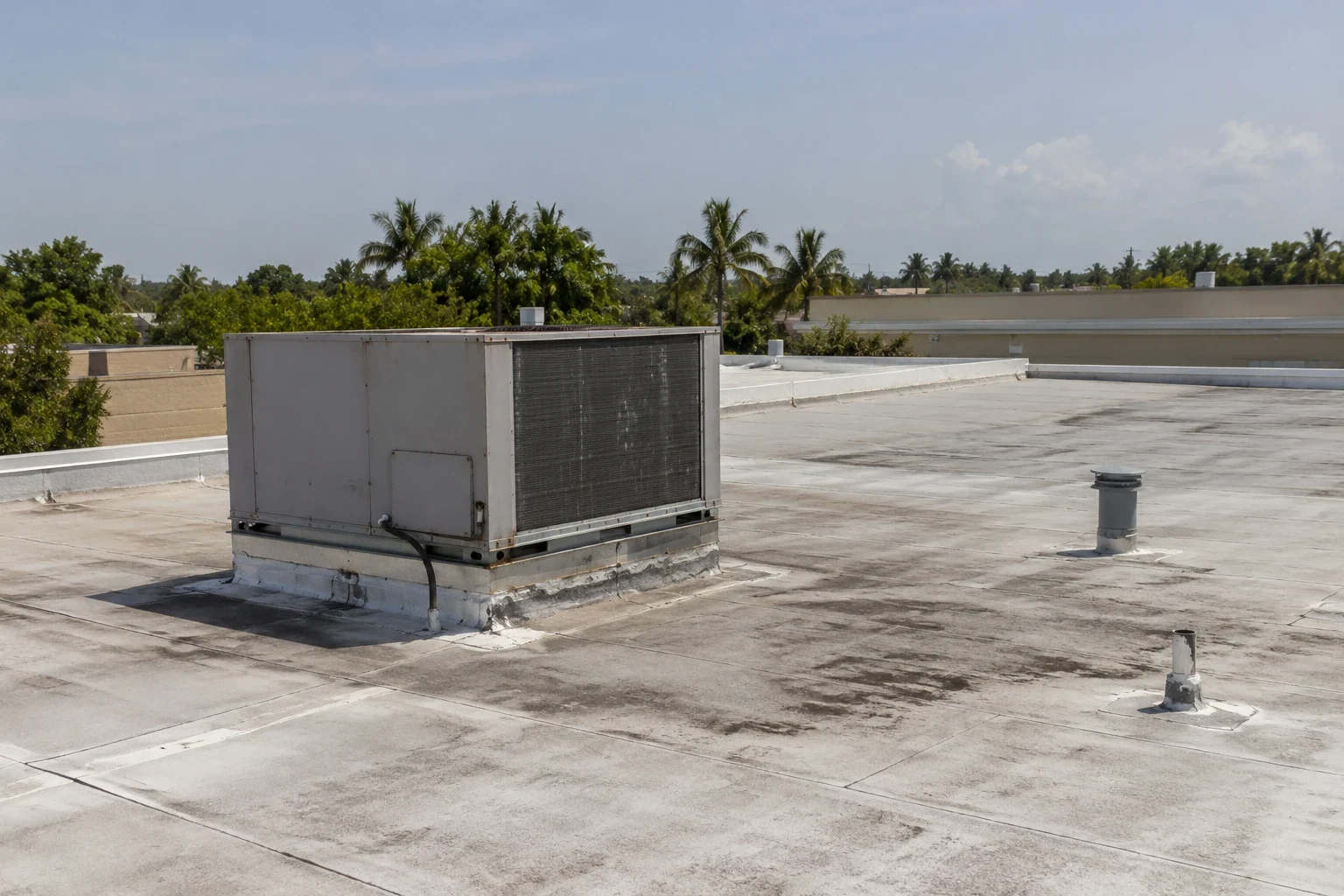
A district may have several roof systems across classrooms, offices, gymnasiums and additions. The school name does not tell us whether a section has TPO, built-up roofing, metal or another assembly. We inspect the surface, seams, flashings, edges and past repair materials. If work has been completed in phases, the roof map should show where each system begins and ends.
On low-slope sections, TPO may be one system to evaluate. On other buildings, a different membrane or multi-ply assembly can fit the substrate and use. We compare actual conditions, rooftop traffic and drainage instead of assuming a district uses one standard roof.
Campus operations may connect school facilities with nearby institutional buildings. Owners comparing education and public-service properties can review college and university roofing and government building roofing needs. Their roof assemblies still require separate inspection.
Build a project scope the district can review
A single failed flashing may call for a repair. Recurring leaks across multiple rooms, wet insulation or broad seam failure can support a larger capital review. We map the affected roof areas and show what remains after each option. That helps a facilities team compare repair, coating or replacement with the building still in use.
A written scope should name roof sections, access conditions, interior protection, staging, removal assumptions and daily dry-in. If concealed deck or insulation damage appears after removal, we document the condition and follow the district’s approval process. Bid documents can identify alternates separately, so a necessary correction is not confused with optional work.
A commercial roof replacement assessment can consider insulation, drainage, flashing and edge details together. A photo-backed condition report can give administrators and maintenance staff a shared record for planning.
Keep the campus roof record current
Schools change room names, add equipment and shift programs between buildings. A roof file should keep a plan, system notes, leak history, inspection photos and repair limits together. We label areas using names the district already uses, such as west classroom wing, gym or kitchen addition. Later visits can compare the same detail instead of relying on an old work order that only says “north roof.”
Lafayette is also named among the destinations connected by the Johnston Street-Louisiana Avenue corridor plan. The parish school system uses its own campus map, building schedule and repair history to guide the roof recommendation.
Call when a ceiling mark returns, a drain backs up or a contractor has opened the roof for another trade. We can inspect the affected zone, document what is visible and explain the next repair or planning step.
Questions About School Roofing
Can roof work take place during the school year?
A phased plan can limit work to defined roof zones and schedule noisy tasks around school needs. The district identifies access rules, student routes and rooms that need protection. We coordinate each phase and secure the roof at day’s end.
What should be checked after a classroom leak?
Start with the reported room and inspect the roof above and around it. We check seams, curbs, drains and transitions, then document the path we can support. Water may travel before it reaches the ceiling.
Does summer automatically make reroofing easier?
Summer can open useful work windows, but maintenance staff, programs and deliveries may continue. We confirm the calendar, access limits and building use before setting phases or material deliveries.
How do you protect a gym or cafeteria below the work?
We identify what is stored or operating below each roof zone, then set staging and protection with the facilities contact. The crew keeps open areas limited and closes each shift with a dry-in check.
When should a district move from repair to replacement planning?
Repeated defects, moisture spread and the condition of seams, insulation and edges all inform that decision. We map the findings and explain what a repair would leave in place before comparing a larger scope.