Drone Roof Inspection for Commercial Buildings in Lafayette, LA
Home / Commercial Roofing Services / Drone Roof Inspection for Commercial Buildings
Talk With Our Lafayette Team
Tell us the roof size, access limits, and the conditions you need documented. We can decide whether drone imagery belongs in a broader inspection plan.
Call 555-555-5555
Plan a roof image review
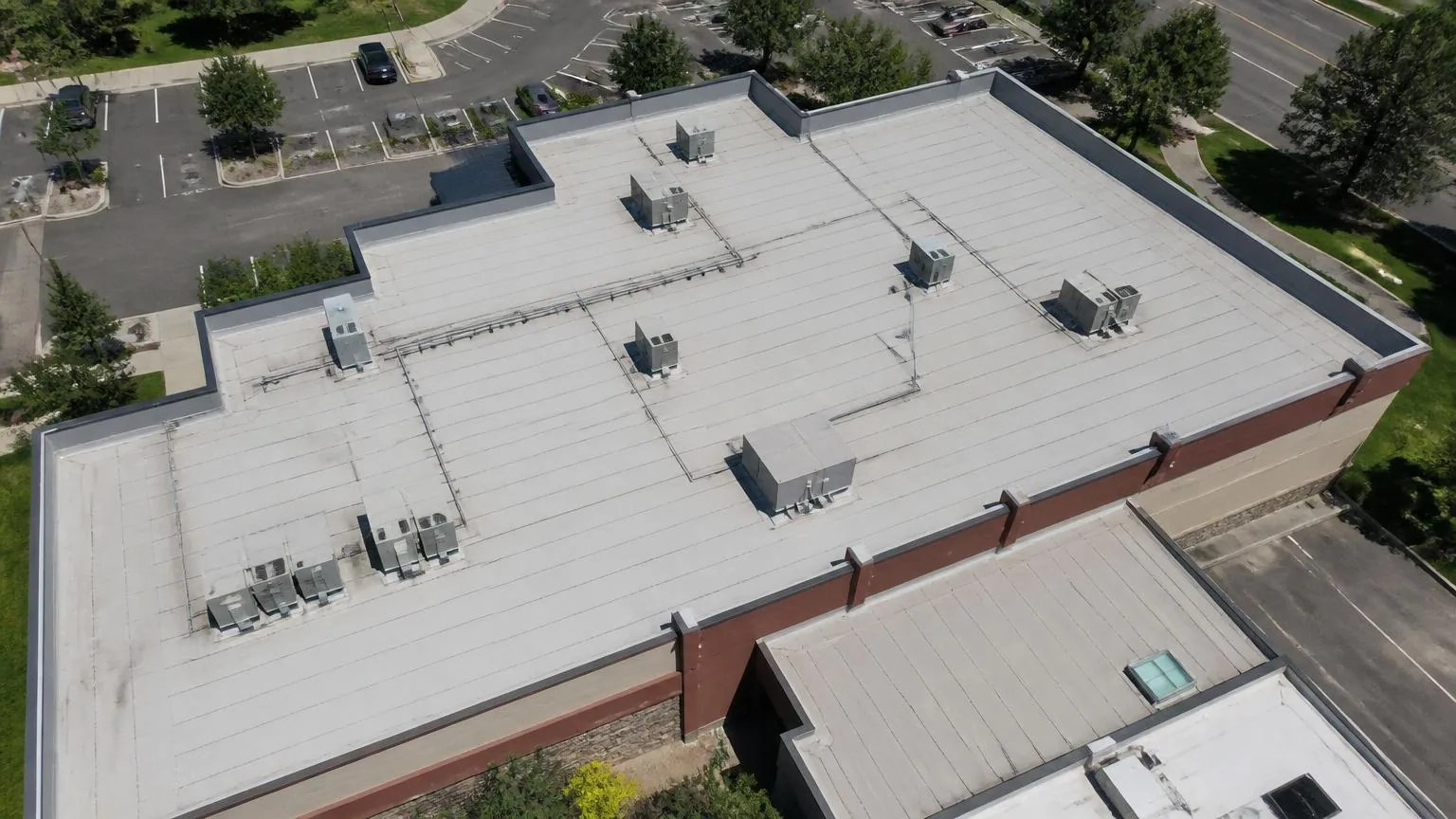
A broad roof can be difficult to review from one ladder access point. Drone imaging gives a useful view of roof fields, equipment clusters, edges, and areas that are awkward to reach on foot. We use the images to document visible conditions and guide a closer review. In Lafayette, LA, a campus, industrial property, or multi-tenant building may have more roof area and access limits than one person can assess from a single vantage point.
The image is a record of the surface at a particular time. It does not test insulation, confirm attachment, or replace hands-on checks at seams and flashing. We combine overhead views with roof access when conditions allow and mark any limits in the report. UL Lafayette reports over 2.1 million square feet of campus structures spread across a campus larger than 150 acres; those figures describe buildings, while each roof needs its own measurement. Lafayette is one local example where a phased visual record can help organize a large property review.
Map the surface before the close look
We set a flight and image plan around roof access, obstructions, wind, visibility, and property operations. The goal is a set of usable views, not a dramatic aerial. Overlapping images can help show a roof section, equipment layout, edge conditions, and apparent ponding. We identify the building and roof areas, then organize images so a facilities contact can connect a finding with a location.
Before launch, we confirm the property contact, safe takeoff area, people movement, and any restrictions relevant to the site. High winds or rain can prevent clear capture, so the schedule may change. For a commercial location near the Lafayette Regional Airport, flight planning must account for the surrounding airspace and applicable operating requirements. We do not promise a flight until access and conditions have been reviewed. When a close physical check is needed, a hands-on inspection can supplement the image set.
Use images to find the next question
Overhead photos can reveal displaced items, open-looking seams, surface debris, damaged equipment screens, or a drain area with standing water. They can also help compare roof zones before and after a repair. A mark in an image is a clue, not a diagnosis. We verify suspicious details from a safe position and describe what remains uncertain if the image cannot show the layer or joint clearly.
Lafayette receives substantial rainfall over the year, and the airport's long-term normal is 60.50 inches. Aerial images taken after suitable weather can help document where water appears to linger, but they cannot measure ponding depth or prove the cause. We look at drain paths and surface slope in context, then recommend a closer visit if the issue affects repair scope. A ponding-water assessment can examine the drainage condition itself.
Pair overhead views with hands-on checks
Some conditions need a person on the roof. We inspect seams, fasteners, flashing corners, penetrations, curb bases, and membrane transitions directly when access is safe. A drone cannot tell whether insulation is wet, whether a seam is bonded, or how a concealed layer is attached. If moisture is a concern, infrared imaging or selected core cuts provide different evidence than a surface photograph.
The report makes clear which observations came from imagery and which came from a physical inspection or test. That distinction helps an owner weigh the next step. For instance, an apparent opening may be a shadow, while a true separation needs a compatible repair. An infrared moisture survey can investigate hidden wet areas, and a seam evaluation can test the joining detail where needed.
Work around Lafayette conditions
Warm temperatures, rain, and wind affect image quality and safe access. We choose a workable window, protect sensitive equipment and people below, and reschedule if visibility or wind is unsuitable. A clear image set depends on roof surface contrast, shadows, nearby structures, and the angle of view. We describe any area that could not be captured well rather than treating a partial view as complete coverage.
The Johnston Street-Louisiana Avenue corridor connects businesses, schools, UL Lafayette, and Moncus Park, with city work addressing drainage and access. Commercial activity along a route like that can make roof access and launch positioning a practical consideration. We coordinate with the property contact and keep imagery focused on the roof areas under review. If a leak becomes active while inspection is underway, emergency response is available around the clock, including holidays.
Receive a usable image record
We organize selected images with roof locations, visible observations, and follow-up items. The owner can see which section or equipment area each note refers to. If a repair is recommended, we identify the visible clue and the physical check that confirms the scope. If the image only supports monitoring, we say so. A clear record helps facility staff, property managers, and roof crews discuss the same location.
For a large property, repeat imagery can support comparison across inspections when capture conditions and viewpoints are similar. The comparison should account for differences in weather, lighting, and roof access. UL Lafayette's published campus building area is useful context for the scale of its estate, though each roof needs its own mapped limits. A photo-backed condition report can connect drone imagery with written observations and repair priorities.
Choose the next inspection method
Drone work is useful when broad visual coverage or access documentation is the main question. A hands-on inspection fits seam, flashing, or attachment concerns. Infrared or core testing may be warranted when hidden moisture could change the repair limit. We discuss the question first, then choose a method that can answer it. The site may need more than one kind of inspection, but each method should have a clear purpose.
A roof with active water entry needs prompt protection while testing is arranged. Our emergency response is available any time, weekends and holidays included. For planned work, the images and follow-up notes can feed into roof asset planning or a maintenance schedule. The result is a useful visual record tied to decisions, not an aerial file without a roof action attached.
Questions About Drone Roof Inspection for Commercial Buildings
What can a drone roof inspection show that a ladder view misses?
Overhead views can document broad roof sections, equipment patterns, edges, and areas with visible debris or apparent ponding. They help locate a concern for closer review. They do not confirm seam bonding, insulation moisture, or concealed attachment. We mark image observations and state when a hands-on check is needed.
Can drone images confirm a commercial roof leak?
Images may show a visible opening or water pattern, but they rarely establish the full entry path by themselves. We compare the roof view with interior reports, inspect details on foot when safe, and recommend testing if hidden moisture could change the repair. The report separates clues from confirmed findings.
Will you fly near Lafayette Regional Airport?
We review the site, airspace, operating requirements, weather, and property access before scheduling. A flight is not assumed just because the roof is nearby. If conditions or restrictions do not support safe image capture, we explain alternatives such as a hands-on inspection from approved access points.
Can images be compared after a repair?
Yes, when viewpoints and capture conditions are similar, imagery can help document visible changes. We pair the images with a roof location and repair notes, then account for lighting, weather, and access differences. A close-up inspection is still needed to verify work at seams and flashing.