
Commercial Roof Drains and Scuppers in Lafayette, LA
Home / Commercial Roofing Services / Commercial Roof Drains and Scuppers
Talk With Our Lafayette Team
Tell us where water collects and which outlets are involved. We can inspect the drains, scuppers, crickets, and membrane connections, then outline a practical correction.
Call 555-555-5555
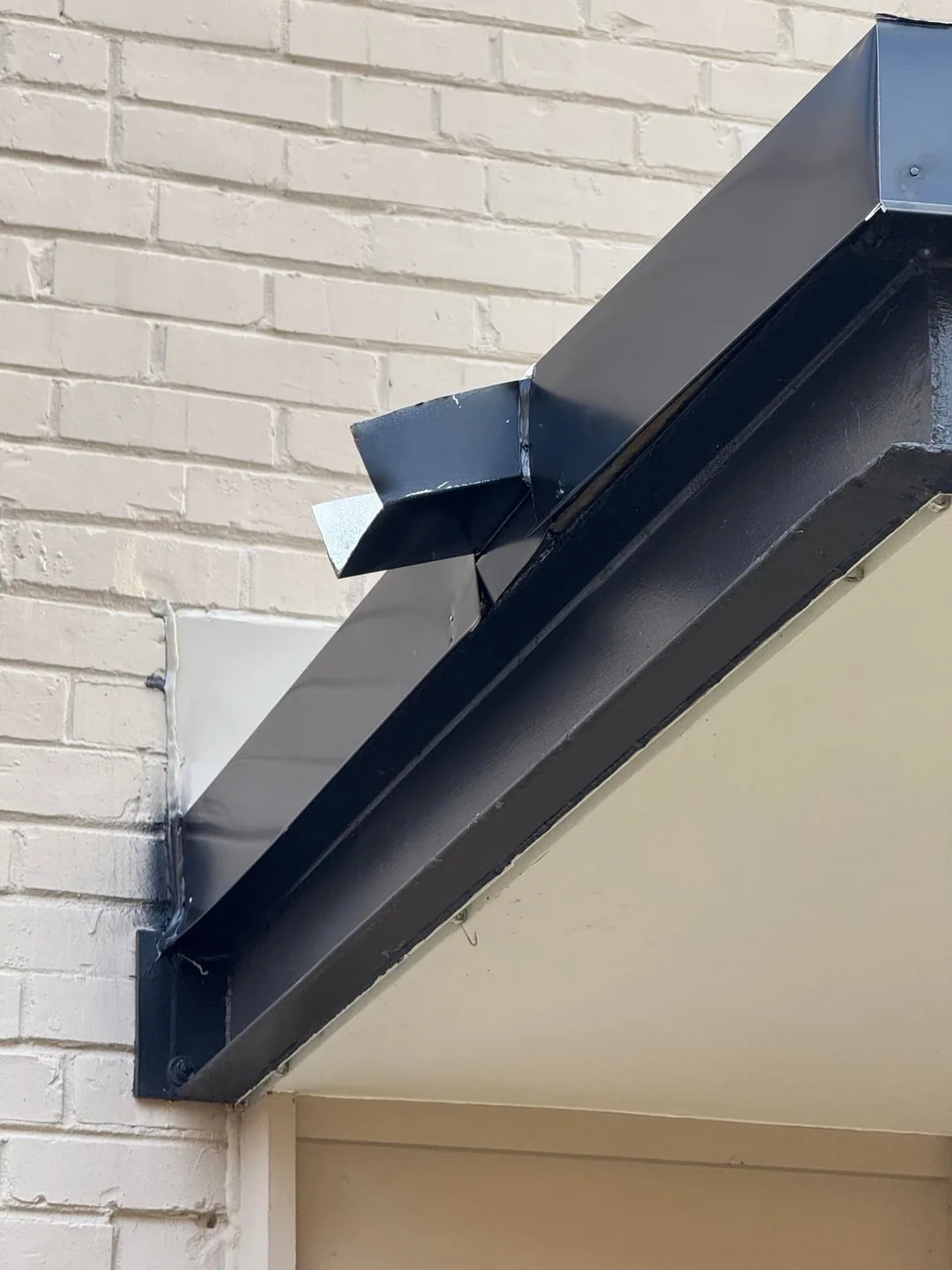
Trace the roof's water path
A shallow pool beside a drain can come from debris, a settled section, or a detail that keeps water from reaching the outlet. We trace the flow before recommending a correction. On a commercial roof, the drain bowl, strainer, membrane connection, overflow route, and nearby slope all work together. Lafayette, LA, receives substantial rain, so a slow path deserves attention before repeated ponding keeps seams and flashing wet.
We inspect how water moves across the roof, where it collects, and whether it can leave through a primary drain or scupper. A building near Downtown Lafayette may have a different roof layout from one in a LEDA business park, but the same basic questions apply. The correction may be cleaning, a membrane detail repair, a cricket adjustment, or a broader slope change. Scheduled maintenance can keep debris and small drain issues from sitting unnoticed between storms.
Follow water from high point to outlet
We start above the ponded area and follow the roof surface toward its outlet. A drain may be clear while a low section prevents water from getting to it. A cricket or saddle can redirect flow around a curb or equipment base, while a tapered system may guide water toward a drain. We check for blocked channels, abrupt changes in slope, and details where water is held against a seam.
Photos and roof notes show both the collection point and its path. That matters when an owner sees water at one drain but the cause lies upslope. In the airport's 1981-2010 table, the annual rain figure is 60.50 inches; June accounts for 7.08. The local rain pattern makes a working drain path practical, but it does not tell us whether a particular roof has ponding. We measure and observe the roof itself before proposing work.
Inspect the drain and its membrane tie-in
A roof drain includes more than the opening visible from above. We check the strainer, bowl, clamping ring, membrane connection, and surrounding flashing for debris, movement, corrosion, or separation. A loose ring can leave a route for water even when the drain is open. An undersized or obstructed outlet may also need attention beyond a quick cleanout.
We look inside the accessible drain path where practical and confirm that discharge is not backing up at the roof. The scope states whether the task is cleaning, replacing a damaged component, correcting the membrane termination, or investigating the downstream connection. A ponding-water repair review can separate a slow outlet from a low roof section. If the roof membrane is being restored, coating preparation should leave the drain detail open and correctly finished.
Check scuppers and secondary outlets
Scuppers and overflow openings need a clear route through the parapet or edge. We check whether debris, leaves, sealant, or a prior patch narrows the opening. The membrane and metal around the outlet must remain tied together so water does not bypass the intended path. Where an overflow is present, we note whether it appears clear and whether its location provides a visible secondary route.
A primary drain and an overflow opening do different jobs. The overflow is not a substitute for routine drain maintenance, and a roof should not rely on one hidden path if another outlet is obstructed. We document the actual arrangement and identify work that needs a plumbing or building review beyond roofing. If roof edge discharge is part of the problem, edge metal and gutter work can address the perimeter detail without confusing it with the drain bowl itself.
Use crickets to guide water around obstacles
A rooftop curb can interrupt a drainage path and leave water on its uphill side. A cricket or saddle creates a small slope that directs flow around the obstruction. We inspect existing crickets for separation, compression, ponding, or a termination that sends water into another low area. The right shape depends on the roof layout and outlet location, not simply on adding material beside the curb.
Where the larger field has settled, tapered insulation may help redirect water, but the design needs a known deck and drain relationship. We identify high and low points, check how added thickness meets flashings and edges, and confirm the drain elevation can receive the flow. The Johnston Street-Louisiana Avenue project in Lafayette addresses drainage and access across an 8.5-mile commercial corridor; on a roof, a similar focus on path and outlet helps define the correction. Tapered insulation and cover board may be part of a broader slope plan.
Protect the roof while drainage work proceeds
Drainage work can involve removing a strainer, opening membrane at a bowl, or adjusting insulation around a curb. We stage materials, protect the opening, and secure the area before crews leave. Rain timing matters during that work. If water is active inside, emergency response is available around the clock, weekends and holidays included, while the permanent correction is prepared.
For an occupied property, roof access and work below the drain need coordination. We discuss ceiling protection, equipment below, tenant routes, and any temporary restriction around the work zone. A repair record notes what was cleared or changed, then identifies whether water should be monitored after the next rainfall. When broader roof work is planned, a repair scope for the membrane can be coordinated with the drain correction so the finished detail remains continuous.
Confirm the outlet after the correction
After work, we inspect the drain connection, membrane tie-in, scupper opening, and the path leading to the outlet. We remove construction debris and check that strainers and overflows remain accessible. A controlled water check may be useful when conditions permit, but the final review also depends on the roof's slope and current weather. We record any remaining low point rather than imply that a local repair regraded the entire roof.
River Ranch's commercial district includes offices, retail, grocery, restaurants, healthcare, banking, and professional services. That mix reinforces why a roof correction should leave clear access and a maintenance record for the building contact. We can add drain locations, observed ponding, completed work, and follow-up items to a photo-backed condition report. A scheduled maintenance visit can check the outlet again and keep debris from rebuilding at the same point.
Questions About Commercial Roof Drains and Scuppers
Why does water remain on the roof when the drain looks clear?
A clear drain cannot pull water across a roof section that has settled or slopes away from the bowl. We trace the surface path, inspect nearby crickets, and check whether the drain connection is working. The scope may call for a slope correction rather than another cleaning.
What does a cricket do around rooftop equipment?
A cricket or saddle creates a sloped path that sends water around a curb or similar obstruction. We check its shape, attachment, and tie-in with the surrounding membrane. If the wider roof has a low point, the cricket alone may not correct the drainage problem.
Can a roof scupper leak even when water exits through it?
Yes. The opening may drain while the membrane or metal connection around it is split or loose. We inspect the outlet, wall transition, and edge detail, then repair the failed connection with compatible materials. We also check whether the outlet stays clear.
Should an overflow drain be treated like the main drain?
They have different roles. The primary outlet handles routine flow, while an overflow provides a secondary route if water rises. We inspect each opening and its membrane detail, then state whether cleaning or repair is needed. The overflow does not remove the need to maintain the main drain.