
Modified Bitumen Roofing in Lafayette, LA
Home / Roof Systems / Modified Bitumen Roofing
Talk With Our Lafayette Team
Tell us where water has appeared and what repair work has been done. We will review the plies, seams and drainage, then explain which repair or replacement option fits the roof.
Call 555-555-5555
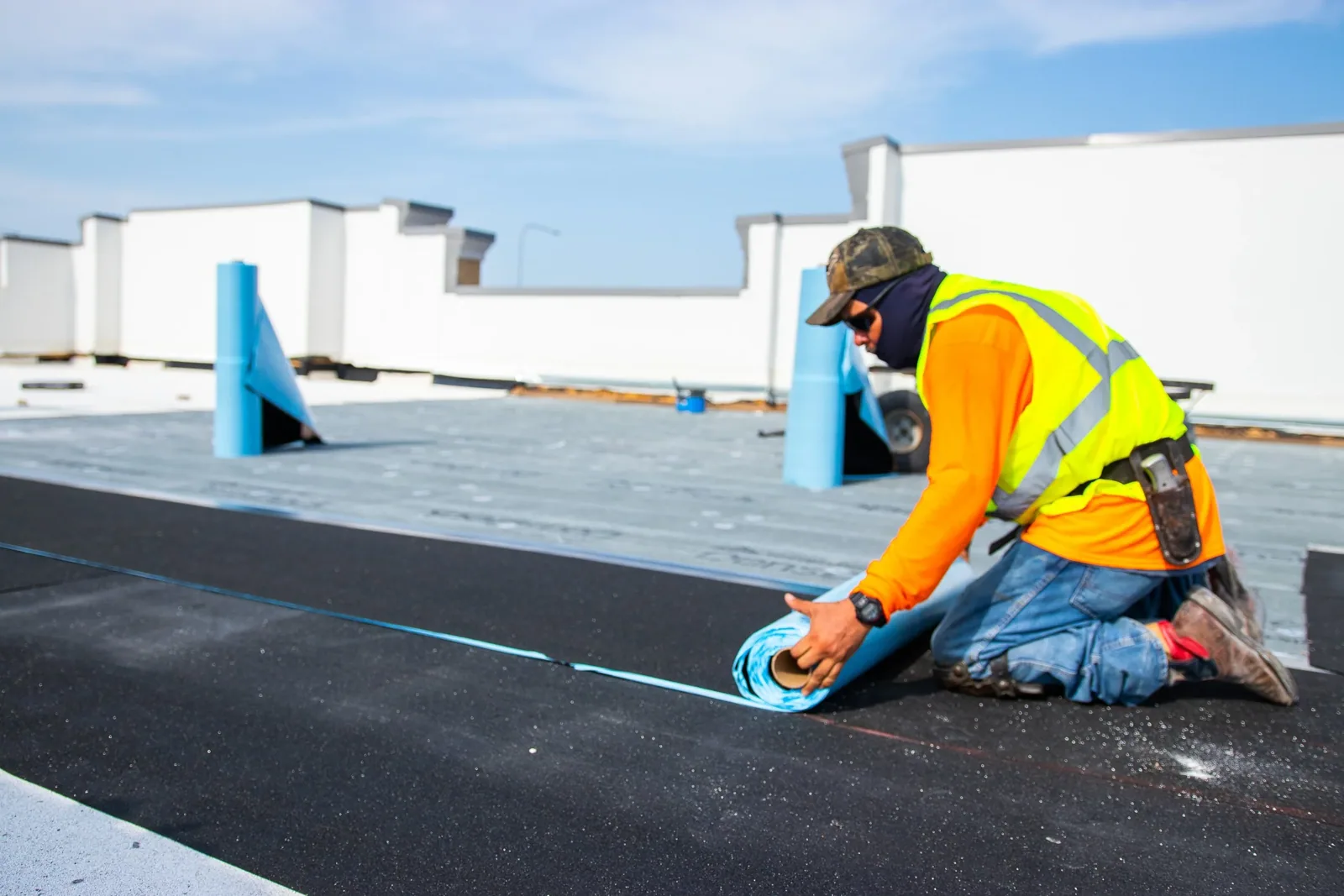
Have the modified-bitumen roof inspected
A blister or open lap on a modified-bitumen roof can start small and still let water reach insulation or deck. We look at the membrane surface, seams, flashing and roof history before proposing work. The system may use SBS or APP modified bitumen, and the installed layers matter. We identify what is on the roof before choosing a repair method.
In Lafayette, buildings near Downtown Lafayette, the Johnston Street-Louisiana Avenue corridor and the LEDA business parks have different uses and exposures. A roof over a service space may see regular foot traffic; another may have equipment concentrated at one edge. We connect the inspection to the building, not just the membrane label.
Identify the plies and surfacing
Modified bitumen roofing combines bitumen with polymers and reinforcement. SBS and APP products differ in formulation and installation approach. The assembly may include one or more plies, insulation, cover board and a surfacing layer. A granular cap sheet, coating or mineral surface can change what is visible during inspection. We review records where available and examine exposed edges or repair areas for clues.
We check for blisters, ridges, splits, exposed reinforcement, granule loss and open laps. A blister may contain air or moisture; opening it without a plan can worsen the condition. We document its size, location and surrounding surface. If cracking follows a seam or transition, we inspect the adjoining layers before deciding whether a local repair can hold.
Temperature, sunlight and water affect the assembly differently across a roof. Lafayette's airport climate normals show July and August daily highs above 92 degrees. That local heat context makes surface condition and maintenance history useful to review, but the inspection determines the actual material state.
Follow laps and flashing transitions
Side laps, end laps and flashing edges are important water-control points. We inspect for separation, incomplete adhesion, movement and previous patches. At walls and curbs, the membrane needs a secure termination that fits the system. Metal edges, pitch pockets, drains and penetrations each require a detail suited to their shape and exposure.
Some roofs receive hot asphalt or torch-applied work, while others use cold-applied or self-adhered products. The existing method affects repair choices and fire precautions. We identify the installation type where possible and follow project safety requirements. We confirm the substrate and existing layers before selecting compatible repair materials.
A regional April report describes a supercell that spawned two tornadoes on the Lafayette-Breaux Bridge stretch and produced widespread hail. After a storm, we look for impact marks, displaced surfacing, punctures or edge movement and compare those observations with the roof history. The event does not establish damage at a particular property; the roof itself must show the condition.
Check the roof's water route
Modified bitumen can tolerate normal exposure only when seams, flashing and drainage remain serviceable. We inspect drain bowls, scuppers, overflows and low areas. June's airport normal reaches 7.08 inches, the highest monthly figure; all months together total 60.50 inches. That volume makes a blocked outlet or slow low spot consequential, especially where water collects against an older lap.
We note whether water drains freely, whether debris has accumulated and whether the surface shows recurring ponding. A drain correction may be separate from membrane work. If the roof has settled or the slope is inadequate, simply patching the cap sheet does not improve runoff. The scope should identify each condition and state what the proposed work will address.
When an interior leak is active, our commercial leak service can trace the entry point and stabilize a defined area. For a planned project, drain and scupper work can be evaluated with the membrane scope. We review the roof as a connected surface rather than treat each drain as an isolated fitting.
Choose a repair method with care
A repair may work when damage is limited and the surrounding material is dry and firmly attached. We remove loose surfacing as needed, prepare the area and apply a compatible patch or flashing detail. Repair edges must seal to sound material. If moisture has spread beneath the membrane, a surface patch could leave the underlying problem in place.
We look at patch history, blister patterns and the number of open laps. Several repairs concentrated around one transition may call for a detail correction. Defects spread across the field may point toward a broader restoration or replacement. The recommendation explains what is confirmed and what additional inspection may be needed.
A commercial roof inspection can record the visible condition and likely repair boundaries. We can also prepare a condition report with photographs for owner review. If the system is near the end of useful service, replacement planning can address deck, insulation, flashing, edge metal and drainage together.
Compare the assembly with other systems
Modified bitumen may fit roofs that need a multi-ply construction or established service paths. The best assembly depends on substrate, fire requirements, slope, roof traffic and project details. We can compare it with built-up roofing or a single-ply option such as EPDM. Each has different seams and repair considerations.
Material selection should follow the work environment. An occupied building may require phased removal and a reliable daily tie-in. A roof with heavy mechanical service may need durable paths and well-detailed penetrations. Near the Johnston Street-Louisiana Avenue corridor, offices, businesses and schools sit along an 8.5-mile planned route. That describes varied building activity, not a common roof design. We inspect each structure to understand its requirements.
If an overlay is under consideration, we check moisture, attachment and code requirements first. An existing roof cannot simply receive new layers without confirming that the assembly can accept them. The written comparison should identify removal assumptions, added weight considerations and how new flashing meets existing walls and edges.
Keep records of repairs and changes
Repair records help identify a recurring problem. We note the roof area, membrane type where known, work performed and nearby details to watch. A later visit can compare the same seams and drains rather than rely on memory. Property teams should also record changes made by mechanical, electrical or sign contractors.
Downtown Lafayette includes retail, offices, services, restaurants and residences in a mixed-use setting. A manager may coordinate roof work with several occupants. Clear photographs and area labels make it easier to share a roof condition without confusing one tenant's space with another. We can list immediate repairs separately from longer-term recommendations.
Call after an interior stain, open lap or storm observation. We will inspect the modified-bitumen surface, trace water where possible and explain a repair or replacement path. Emergency response is available nights, weekends and holidays when water threatens occupied space.
Questions About Modified Bitumen Roofing
How do SBS and APP modified bitumen differ?
They use different polymer modifiers and can have different product and application requirements. We identify the installed system where possible, then follow its repair and installation instructions rather than select a method from the surface alone.
Can a blister in modified bitumen be repaired?
Sometimes. We assess its size, whether it contains moisture and how firmly the surrounding plies are attached. A patch may suit an isolated condition; widespread blisters or wet material can require a larger correction.
Does granule loss mean the roof is failing?
Granule loss is one observation, not a complete diagnosis. We check the exposed surface, seams, water path and repair history to determine whether the loss is isolated or part of broader deterioration.
Can modified bitumen go over an older roof?
A recover depends on the existing layers, moisture, attachment, structural capacity and applicable code. We inspect and document those conditions before recommending an overlay or tear-off.
What happens if a leak appears during a storm?
Our emergency response is available nights, weekends and holidays. We can assess the active water entry, take practical protective steps and plan a permanent repair once conditions allow a full inspection.