Built-Up Roofing in Lafayette, LA
Home / Roof Systems / Built-Up Roofing
Talk With Our Lafayette Team
Share the roof's repair history and the areas showing blisters, cracking or water entry. We will inspect the BUR layers and drainage, then lay out a practical repair or replacement path.
Call 555-555-5555
Get a layered-roof assessment
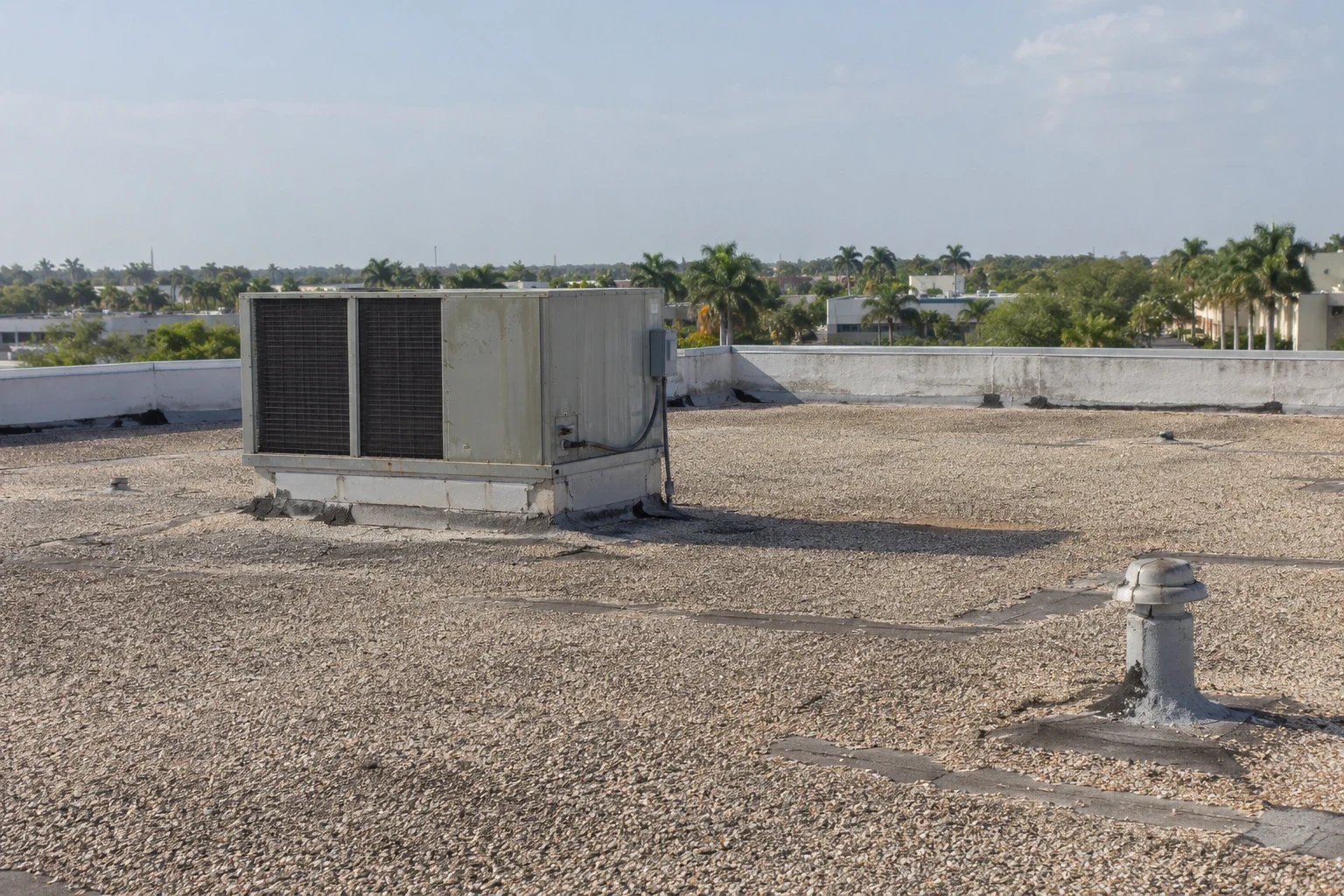
Built-up roofing is a layered assembly, so a surface defect may involve more than the top ply. We inspect the surfacing, seams, edges and roof details, then determine whether the layers below appear sound. The repair plan depends on what is loose, wet, cracked or separated. A patch over an unstable layer can move the problem rather than solve it.
Lafayette's older commercial properties around Downtown and newer activity near Ambassador Town Center do not share one roof history. Our inspection checks the building itself, its drainage and its prior repairs. The goal is to understand how the built-up system is performing today.
Read the layered construction
A built-up roof, often called BUR, uses alternating reinforcing plies and bituminous material, commonly finished with a surfacing layer. The assembly can vary by age, product and installation. We look at exposed edges and existing repair cuts where available to understand the layers. If records identify the material, we compare them with what is visible.
On the surface, we check for blisters, ridges, cracks, bare areas, loose gravel or other surfacing loss. Those conditions do not all mean the same thing. A small bare area may need repair; widespread exposed bitumen or ply separation may signal broader wear. We photograph the location and inspect surrounding details before deciding how far the scope should extend.
Older repairs can include incompatible mastics, patches over wet material or multiple cover layers. We note those repairs because they affect adhesion and future removal. If the assembly is opened, concealed conditions may differ from the surface view. A scope should describe how that discovery will be recorded and approved.
Find the water entry and drainage issue
A leak may travel through several roof layers before reaching an occupied room. We compare the interior mark with the nearest roof details, seams, penetrations and drainage areas. Lafayette Regional Airport's precipitation normals total 60.50 inches a year, with 7.08 inches in June. That seasonal rain makes low areas and outlet condition useful parts of a BUR inspection.
We check drain bowls, scuppers, overflows and the surface slope around them. Gravel or debris can cover a detail, so we inspect carefully before disturbing the roof. If water is ponding, we determine whether an outlet is blocked or whether the surface is low. A membrane repair by itself will not change the drainage geometry.
Where an outlet needs attention, drain and scupper work can be included in the recommendation. If a leak is active, commercial leak repair can help stabilize the entry point. We explain what is known, what remains concealed and what inspection or testing would improve the repair boundary.
Check for separation and trapped moisture
Blisters can form between layers. Their cause may involve trapped air, moisture or adhesion loss. We document their size and location and avoid opening a blister without a repair plan. If there is evidence of widespread moisture, targeted testing can help show whether the affected area is limited or broad. No single visual clue should set the entire replacement scope.
We also inspect parapets, curbs, skylights and metal edges. A BUR field may remain serviceable while a flashing transition has opened. Loose gravel can hide cracking near a curb; a wall termination may have pulled away even if the field looks intact. Our flashing and penetration work can address these details when the broader assembly is sound.
Heavy rain and warm-season heat are part of Lafayette's roof environment. The actual surfacing condition, shade, age and previous maintenance tell us how a specific BUR assembly has responded. We describe those observations rather than assign one exposure to an entire district.
Repair the affected layers
A local repair may be appropriate when damage is confined and the surrounding roof remains firmly bonded. We remove loose material as needed, prepare the surface and build the repair to suit the existing layers. The patch should bridge sound material and restore the weathering surface. If water has reached insulation or deck, those components must be evaluated as part of the repair.
Repeated blistering, widespread ply separation or wet insulation can make patching a temporary measure. We mark repair locations, compare their distribution and explain whether a broader restoration or replacement should be considered. A commercial roof inspection can record the condition and prioritize immediate work against later capital planning.
For a sound substrate and suitable existing system, a coating or recover may be evaluated, but it must meet adhesion, moisture and assembly requirements. A new modified-bitumen assembly is another multi-ply option. We compare those paths with the roof's use, edges, slope and expected service access before proposing work.
Compare BUR with other assemblies
Built-up roofing is one choice for low-slope buildings. A single-ply membrane such as EPDM or TPO may suit a different project. Assembly weight, deck, fire requirements, traffic, equipment and access all matter. We use the project documents and roof findings to compare actual systems, not a list of product advantages in isolation.
At a property in River Ranch, office and retail tenants share a commercial district with healthcare, professional, banking and food-service uses. Around Acadiana Mall, retail and event activity creates a different operating schedule. Those local references help frame access discussions, but they do not indicate the condition or construction of an individual roof.
For an occupied property, work can be divided into manageable roof sections with daily tie-ins. We identify noisy work, staging, material lifts and areas below that need protection. The building contact sets any tenant or customer restrictions, and the roofing plan records the sequence before the roof is opened.
Preserve a record of the roof
Maintenance notes should identify the roof area, repair material and nearby details. Photographs help staff find the same seam or drain on a later visit. If the roof has multiple layers or past repairs, mark those facts for anyone who plans future work. A reliable record reduces guesswork when the roof is inspected again.
We can prepare a photo-backed roof condition report with observations, repair priorities and areas that need follow-up. For a multi-building property near the Johnston Street-Louisiana Avenue corridor, roof-area labels should match the owner's building names. River Ranch offers another example of a mixed tenant environment where access and recordkeeping may involve several property contacts.
Call if gravel shifts, a blister grows, a seam opens or water appears inside. We will inspect the relevant layers and roof details, then explain whether a repair, further testing or replacement review is warranted. Emergency response is available after hours, on weekends and holidays for active leaks.
Questions About Built-Up Roofing
What should I look for on an older built-up roof?
Loose or missing surfacing, blisters, cracks, exposed bitumen and separated plies deserve review. We also inspect drains, wall transitions and past patches because the top surface alone does not show the full assembly condition.
Can gravel be removed to repair a BUR?
Some repair details require clearing surfacing from a defined area. We use a method suited to the system and replace or protect the surface as specified. We also check for damage beneath the gravel before closing the work.
Does a blister mean water is trapped below?
Not always. A blister can have different causes, and opening it without preparation can create a leak. We document it and use further checks when moisture or ply separation is suspected.
Can built-up roofing be coated?
A coating may be considered only if the roof is dry, stable and compatible with the selected system. We inspect adhesion, surfacing, repairs and drainage before recommending restoration.
When is a BUR beyond repair?
Widespread wet material, repeated layer separation, damaged deck or extensive surface failure can shift the decision toward replacement. We map the affected areas and compare that extent with the remaining sound roof.