
PVC Roofing in Lafayette, LA
Home / Roof Systems / PVC Roofing
Talk With Our Lafayette Team
Share the roof history and any exhaust or process information. We will inspect the membrane and transitions, then explain whether a repair or PVC project fits the building.
Call 555-555-5555
Review your roof exposure and system
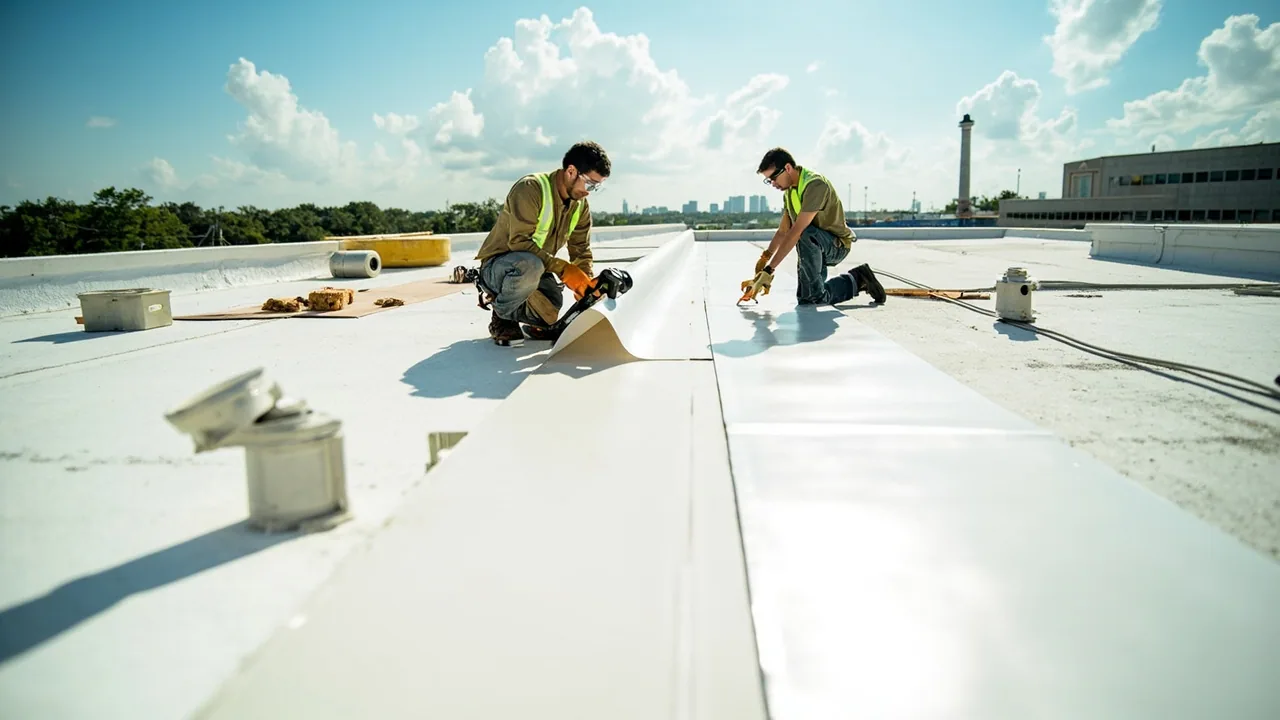
Kitchen exhaust, rooftop service and chemical contact can change which membrane belongs on a commercial roof. PVC is a thermoplastic single-ply system with heat-welded seams, often considered where grease or certain chemical exposures matter. That does not make every PVC product suitable for every building. We inspect the roof, identify the exposure and compare the system requirements with the actual use.
In Lafayette, a restaurant near Downtown, a service property along Ambassador Caffery Parkway and an industrial building near Broussard's US 90 corridor may have very different roof demands. We connect the material choice to what happens on the building, not to a generic label.
Identify what reaches the roof
Start with the equipment and exhaust pattern. A kitchen hood can discharge grease-laden air near the membrane. A process line may release substances that require a different material review. We ask what is used, where it exits and whether the existing roof shows residue, discoloration or surface change. A roof inspection cannot replace a chemical-resistance review, but it can help establish the exposure that the designer or manufacturer should evaluate.
Grease buildup can affect more than the sheet. It may collect at curbs, near exhaust fans or along a service path. We check those transitions and the drainage route. If residue has accumulated, cleaning must use methods compatible with the membrane and any manufacturer guidance. Strong solvents or abrasive tools can damage roofing and should not be used casually.
The plan should identify exhaust locations and future equipment changes before a new membrane is selected. Our equipment-curb and support service can address the roof detail around rooftop units, while the mechanical contractor handles fan and duct work. If the source of an odor or discharge is uncertain, the owner should identify the operating process before material selection.
Inspect welds and flashings
PVC sheets are joined with hot-air welds. On an existing roof, we inspect the seam edges, patches, corners and changes in plane. A lifted edge may indicate incomplete welding, contamination or movement. We test suspect areas where practical and look beyond the first visible defect. A seam repair should extend into sound material and meet the system's detail requirements.
Flashing is a common point of attention around exhaust curbs, pipes, skylights and parapets. We inspect the membrane turn-up, termination, cover and nearby field sheet. If an exhaust fan vibrates or a curb moves, a repair may fail again unless the equipment condition is corrected. We identify that coordination need rather than promise that sealant at the top will solve it.
Wind and rain also expose weak transitions. Lafayette Parish has a documented hurricane-preparedness history, so edge securement and water-entry details deserve careful review before storm season. We do not assign storm damage from location alone. We document lifted flashing, displaced metal or punctures and compare them with the owner's roof history.
Check drainage before selecting a repair
Grease, leaves and construction debris can narrow a drain path. We check outlets, scuppers and low points near exhaust equipment, then look for ponding or staining around seams. Lafayette receives substantial rain through the year. A roof that drains slowly can keep a weak weld under water and complicate a repair window.
When the outlet is clear but water remains, the roof may have a low area or an insulation transition that directs runoff poorly. A new membrane will not correct every slope issue. We explain whether the visible condition calls for drain maintenance, a tapered insulation design or a broader roof project. The recommendation should also consider overflow routes and safe access for future cleaning.
For a defined outlet concern, our drain and scupper inspection can document the detail. If water has entered the building, commercial leak repair can trace and stabilize the affected area. Those services begin with inspection of the roof conditions; they do not assume the membrane is the only source.
Compare PVC with the alternatives
PVC may suit some grease or chemical exposures, but the specific formulation, thickness, reinforcement and detail set matter. The owner should provide the project exposure information and confirm suitability with the specified system. We install according to product requirements and project documents. We do not substitute a system based on color or a broad claim about chemical resistance.
For other low-slope buildings, TPO roofing or KEE roofing may be considered. Each membrane has distinct material properties and repair methods. Traffic, rooftop equipment, insulation, fastening and future service access all influence the choice. We compare these factors with the building's use and the condition of the existing assembly.
For a roof that can remain in place, a recover or restoration might be evaluated after moisture and adhesion conditions are checked. If the system has widespread failure, replacement planning can address the roof as a complete assembly. We identify whether insulation, deck, drains or edge details should be included so the proposal reflects more than the field membrane.
Plan around the business below
A roof project can affect kitchen operation, deliveries, tenants and service access. We coordinate roof access and noisy work with the person responsible for the building. If a restaurant must continue service, material staging and exhaust shutdowns require advance agreement. We do not control the operating kitchen, so the facility contact sets any required shutdown or work window.
Oil Center and Kaplan include different business types and activity patterns. The roof recommendation still comes from the specific structure, but the site schedule may need to fit tenants, customers and delivery routes. We set a clear work boundary, protect open areas before crews leave the site and report any concealed condition before expanding scope.
After work, the owner benefits from a record of membrane type, repair locations, flashing details and equipment changes. A condition report with photographs can help maintenance staff track future observations. A crew returning later can compare actual roof conditions with the recorded baseline.
Choose the work from the evidence
A focused patch may be enough for an isolated seam or flashing defect on a sound roof. Replacement may make more sense when weld failures repeat, the membrane is brittle or moisture is widespread. Coating is not a default fix for PVC, and any proposed restoration must meet compatibility and preparation requirements. We explain the visible evidence and what testing would change the recommendation.
Our scope identifies where work will occur, how the surface will be prepared, which materials and details are included, and how the finished area will be checked. If the actual exhaust exposure is uncertain, we note what information is needed from the owner or design team. That keeps a material decision tied to documented use.
Call after a PVC seam opens, residue appears near a fan or water returns. We will inspect the roof, review operating conditions and set a practical repair step. For active water entry, our response extends beyond business hours, including weekends and holidays.
Questions About PVC Roofing
Is PVC the right membrane for a restaurant roof?
It may be considered where grease exposure is present, but the exhaust pattern and specified product requirements matter. We inspect the roof and review the operating conditions before recommending PVC or another assembly.
Can PVC roofing resist every chemical?
No. Resistance depends on the substance, concentration, temperature, duration and membrane formulation. The project team should identify the exposure and confirm compatibility with the selected product information.
How do you repair a failed PVC seam?
We check whether the sheet is clean and sound, then prepare and weld a compatible repair detail. The work area may need to extend beyond the visible opening if the seam or substrate is damaged nearby.
Does grease residue mean the membrane has failed?
Residue alone does not prove a leak or membrane failure. We inspect for surface change, seam damage, flashing concerns and blocked drainage, then explain whether cleaning, repair or additional evaluation is needed.
Can PVC be installed over our existing roof?
A recover depends on the roof condition, moisture, attachment, code and selected system requirements. We inspect and identify any testing needed before deciding whether to remove, recover or replace the existing assembly.