
EPDM Roofing in Lafayette, LA
Home / Roof Systems / EPDM Roofing
Talk With Our Lafayette Team
Share the leak location and any past repair notes. We will follow the water path, inspect the membrane details and outline a repair or replacement decision for your Lafayette roof.
Call 555-555-5555
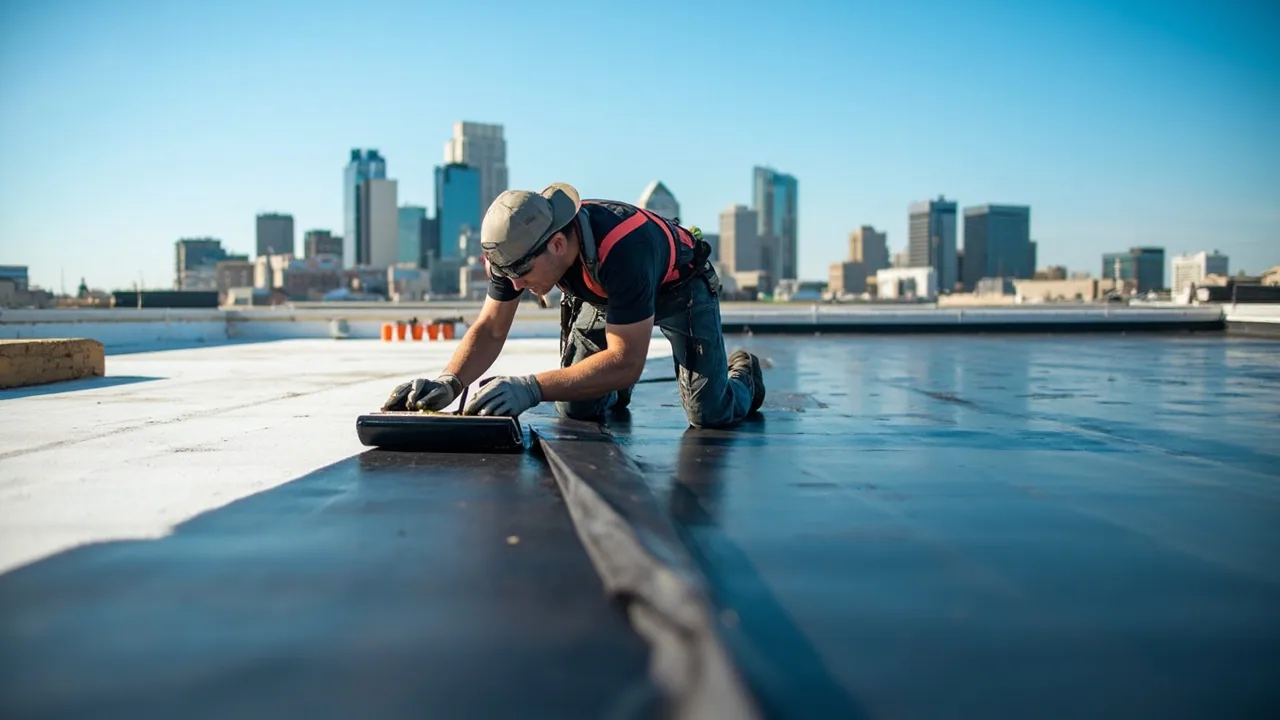
Check the EPDM before the next leak
A black EPDM sheet can hide a small split until rain finds it. The first clue may be a soft ceiling tile, a damp wall edge or a slow drip after a storm. We trace the roof area above the symptom and inspect seams, flashings, penetrations and drainage. Then we explain whether a localized repair can address what we found.
Lafayette roofs near River Ranch, the Cajundome and the Johnston Street-Louisiana Avenue route serve different buildings and schedules. We look at the roof in front of us. Membrane thickness, adhesive, attachment and previous repairs all affect the right next step.
Know what is on the roof
EPDM is a synthetic rubber membrane used on low-slope roofs. Sheets may be fully adhered, mechanically attached or ballasted, depending on the assembly. Seams and perimeter details use system-specific materials. Before repair, we identify the membrane, attachment where visible and the products used in past work. A patch that is incompatible with the existing sheet can peel or make later work harder.
We inspect for cracks, punctures, shrinkage, open seams, fish-mouths and surface damage. The black surface may show weathering, but a color change alone does not establish a leak. We check whether the sheet has pulled from a wall or curb, whether a lap edge has lifted and whether repair material remains bonded. If the roof has been coated or patched, we note those layers too.
EPDM movement can show up at terminations, penetrations and long seams. We look for tension, wrinkles or a sheet that has shifted away from a detail. The cause may involve attachment, substrate changes or previous repairs. Our findings describe the visible condition and the boundaries of any proposed correction.
Trace how water moves
A roof leak is not always directly below the opening. Water may travel along the deck or insulation before it reaches a ceiling. We compare the reported interior location with nearby drains, wall transitions, laps and equipment. Lafayette's airport climate record places annual precipitation at 60.50 inches, with June averaging 7.08 inches. Heavy seasonal rain gives weak seams and slow drainage repeated chances to show themselves.
We examine roof drains and scuppers for blockage, standing water and signs of backup. If water collects near a seam, we check the seam and the drainage path instead of treating the pond as proof of failure. A low area may call for drainage correction. A clean outlet can still serve a roof with inadequate slope. We separate these conditions in the scope.
For recurring drainage concerns, drain and scupper service can identify cleaning or detail work. If moisture beneath the sheet is suspected, moisture mapping may guide further verification. The method and its limits are explained before testing is used to set repair boundaries.
Inspect seams and terminations
EPDM seams rely on a clean surface and compatible seam materials. We inspect the lap edge for separation, contamination, wrinkles and older patch layers. At corners, walls and curbs, we look for a secure turn-up and a termination that remains attached. A roof can have a sound field sheet yet fail at a transition that sees movement or water pressure.
Perimeter conditions deserve a separate look. Edge metal, parapet caps and termination bars may move or loosen. Wind can stress these areas, while service crews may leave cuts or unsecured components near equipment. Lafayette's documented hurricane-preparedness context makes perimeter review sensible, but we use visible roof evidence to determine whether storm damage occurred.
When a pipe, conduit or rooftop unit has been changed, the flashing may no longer fit. We ask about recent work and identify the parties involved. A penetration and flashing repair can address roofing details, with the equipment or electrical contractor responsible for its own system connections.
Select a compatible repair
Small punctures and isolated seam openings can often be repaired when the surrounding membrane remains sound. We prepare the surface, remove loose or incompatible material and install a repair that meets the system requirements. The patch needs a clean bond to the existing sheet and enough sound material around the defect. We check adjacent conditions before closing the work.
Widespread shrinkage, repeated seam separation, wet insulation or damaged deck may call for more than spot repairs. We explain how much of the roof is affected and what a repair would leave in place. A commercial roof repair may suit a contained defect; repeated repairs across the roof may make replacement the clearer option.
If an existing EPDM assembly is being considered for a recover, we review moisture, attachment and the proposed new system. A recover is not appropriate over every roof. Our roof recover assessment documents the conditions that govern that choice. Where the existing membrane is beyond repair, a full roof plan can include insulation, edges, drains and new flashing rather than just a replacement sheet.
Compare systems by exposure and detail
EPDM may be suitable for some low-slope buildings, while TPO, PVC or modified bitumen may better match other conditions. The comparison should account for roof use, access, attachment, chemical exposure, drainage and details. We do not recommend a membrane based only on its familiar name or appearance. The product requirements and building conditions must line up.
For a project near the Duson, building use and work scheduling may be important alongside the assembly. A modified-bitumen system or TPO membrane can be included in a comparison when the roof design supports it. A roof inspection establishes which options deserve review.
River Ranch includes office and retail tenants across professional, food, banking and healthcare uses. Those properties illustrate varied operating needs, not a single roof profile. We ask about foot traffic and equipment service, inspect the actual assembly and document any conditions that could affect material choice.
Track the EPDM roof after repair
Once a repair is complete, a roof record helps maintenance staff locate the work and watch nearby details. We identify the repaired section, photograph the seam or penetration and note any drainage item that still needs attention. A later service visit can then compare current conditions with the earlier record.
Roof access should be controlled after repairs. HVAC, electrical and sign contractors can create punctures or leave debris near drains. The property team can route service personnel to approved paths and report any new work. A maintenance visit can check seams, terminations, drains and past repair areas on a planned schedule.
Ask for an inspection when an EPDM lap opens, a sheet pulls away from a wall or an interior mark returns. We can assess the membrane and explain whether the issue is isolated or part of a broader pattern. Emergency response is available nights, weekends and holidays when water is actively entering a building.
Questions About EPDM Roofing
Can a punctured EPDM roof be patched?
Often, if the sheet around the opening is sound and the repair materials are compatible. We inspect the puncture, nearby seams and substrate, then size the repair to bond to stable membrane.
Why does an EPDM seam open?
A seam can separate through aging, contamination, poor bonding, movement or an incompatible past repair. We inspect the lap and surrounding assembly before deciding which condition needs correction.
Is black EPDM hotter than a white membrane?
Dark and reflective surfaces absorb and reflect sunlight differently, but indoor conditions also depend on insulation, ventilation, controls and building use. We can discuss system options, but a roof color alone does not predict utility use.
Can water travel under EPDM before it appears inside?
Yes. Water may follow a deck or insulation path away from the opening. We compare the interior symptom with roof seams, penetrations, walls and drains before selecting a repair location.
When should EPDM be replaced instead of repaired?
Replacement becomes more relevant when failures are widespread, shrinkage affects details, moisture is extensive or the deck is compromised. We document those conditions and compare the remaining repairable area with a new assembly.