Commercial Roof Heat and UV Damage Repair in Lafayette, LA
Home / Roof Damage Repair / Commercial Roof Heat and UV Damage Repair
Talk With Our Lafayette Team
Tell us where the surface has changed or a leak returned. We will identify the existing material, check for moisture, and discuss repair options.
Call 555-555-5555
Check heat-worn roof details
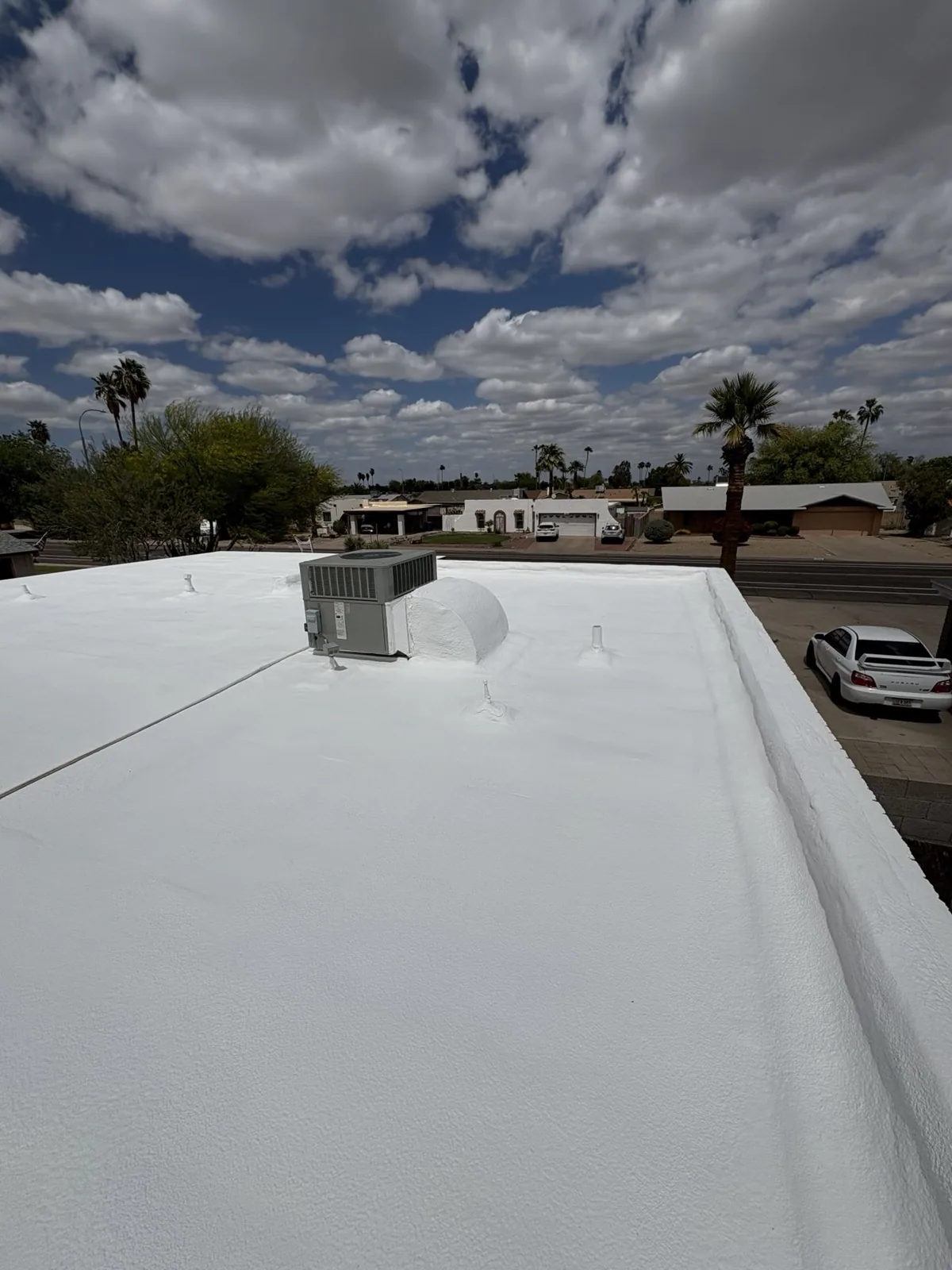
A membrane that has turned brittle around a curb may have spent years under sun and rooftop heat. A coating can chalk, thin, or lose adhesion; sealant can crack where metal and roof material move at different rates. We look at the surface and the detail together, then check whether the change reaches the waterproofing layer. Lafayette Regional Airport climate normals list July and August mean daily highs above 92 degrees Fahrenheit. That is useful local context for heat exposure, but the condition and repair history of the roof still guide the work.
Heat and ultraviolet exposure do not affect every assembly in the same way. We identify the roof type, coating, patch history, and moisture condition before recommending a repair. A photo survey can show patterns across roof zones, while close inspection checks bond and flexibility. If cracked coating is allowing water in, a roof coating restoration assessment can determine whether a compatible renewal is possible. We also inspect nearby seams for openings caused by movement or aging.
Read surface changes before choosing material
Surface color alone does not tell us how much life remains. We check for chalking, exposed scrim, blisters, cracks, shrinkage, loose granules, and a coating that has separated from the roof. Around curbs and penetrations, we look for dried sealant and gaps where materials meet. At laps, we inspect for movement and loss of bond. Those observations show whether a small repair can address the area or whether deterioration runs farther.
We compare south- and west-facing areas with shaded zones where access permits. Rooftop equipment can create hot spots or service paths with more foot traffic. We note whether a surface change is isolated to those conditions or repeated across the roof. A maintenance file with product history helps identify what coating or membrane is already present. We do not apply a new layer over an unidentified surface.
Lafayette's 2021 International Building Code and 2021 International Existing Building Code are listed in city references for commercial and existing-building work. When a repair becomes part of a larger reroof or insulation change, the project team should confirm applicable code review. We describe the roofing materials and scope without making an approval claim.
Check moisture before adding a protective layer
A reflective coating can be useful only on a suitable roof. If moisture is trapped beneath the membrane, another layer hides the condition and makes future repair harder. We check drains, seams, flashings, soft areas, and interior reports first. Moisture readings or a targeted opening can help establish whether the substrate is dry. An infrared scan may help map suspect areas when weather and construction allow.
Water entry often starts at a detail rather than across the broad field. A crack in a curb corner or a seam that has pulled back can let rain pass into insulation. We document the path and inspect below the membrane where needed. If wet insulation is found, the repair may require removal before any coating or patch proceeds. Our infrared moisture survey can support a wider assessment, but findings are confirmed against roof construction and direct inspection.
For the Johnston Street-Louisiana Avenue corridor, the city project addresses drainage, utilities, safety, congestion, and access across an 8.5-mile route. That public work is separate from private roof conditions, but it underscores how water management and access shape local building work. We evaluate drainage on the roof itself, not from a street project or neighborhood assumption.
Choose repair, coating, or replacement
A localized crack or failed curb detail may need compatible sealant or flashing rather than a full coating. A coating restoration can make sense when the roof is dry, well attached, and compatible with the selected product. We confirm coverage, adhesion, surface preparation, and drainage before proposing that work. If the existing membrane is brittle or wet, a coating is not a substitute for removing damaged layers.
Repair material depends on the assembly. Silicone and acrylic coatings have different properties and application conditions. TPO and PVC require welded membrane repairs; EPDM uses its own tapes and primers. A metal roof needs attention to fasteners, seams, and corrosion. We can compare silicone coating and acrylic coating only after the existing surface is identified.
When deterioration appears throughout a roof zone, a replacement or recover may offer a more reliable scope than repeated patches. We compare the affected area, wet insulation, edge condition, existing layers, and disruption to the building. Our proposal describes the work and concealed-condition limits so the owner can assess the decision.
Plan checks for Lafayette's warm season
Regular roof maintenance helps catch brittle details before water reaches the interior. We record coating thickness or visible wear where measurable, check sealant at penetrations, clear drains, and inspect seams and edge metal. High-traffic routes receive a closer look after equipment service. A roof map lets the facilities team compare the same locations from one visit to the next.
LEDA manages four business parks across Lafayette Parish to support industrial and commercial development. A property in a business park may have different equipment access and operating needs from an office or retail site. The park name does not establish the roof type. We ask about operations, roof history, and access rules, then plan the inspection for the specific building.
Our preventive roof maintenance can document repairs, watch items, and future checks. If the roof needs a capital decision, a roof capital plan can group immediate work with projects that can be scheduled later. The inspection record gives managers a practical basis for comparing options.
Keep the heat and UV findings in context
We close the visit with photos of representative surface conditions, repaired details, and areas needing future review. The record identifies the roof system and any coating product we could verify. If the surface was too wet or dirty for a bond check, we note that limit and recommend a return inspection. A clear note helps prevent an incompatible layer from being added later.
At the Opelousas, buildings support laboratories, offices, testing, consulting, and technology incubation. Those uses show why a facility manager may need to coordinate roof work with equipment and scheduled activity. We do not infer a roof condition from the use. We arrange the inspection and repair around the actual building needs.
If heat-related cracking has reached a lap, our flashing repair or seam repair can address the specific opening. Arrange an inspection when a coating flakes, sealant splits, or the membrane feels brittle. We will check moisture first and explain which repair fits.
Questions About Commercial Roof Heat and UV Damage Repair
Does a faded roof coating mean it has failed?
Not by itself. We check adhesion, thickness, cracks, exposed surface, seams, and moisture before deciding whether renewal or a different repair is needed.
Can you coat over an older coating?
Only after identifying the existing product, checking bond, and confirming compatibility. The roof must also be dry and sound. We explain preparation and any test area needed before proposing application.
How does heat affect a roof seam?
Materials expand and contract, which can stress an edge or prior repair. We inspect the lap for opening, wrinkles, or loss of bond and use a repair method suited to that membrane.
Will an infrared survey show whether insulation is wet?
It can help identify temperature patterns that merit a closer check. Weather, roof assembly, and scan timing matter. We confirm suspect areas with direct inspection or a targeted opening when needed.
When should we consider reroofing instead of another patch?
Broad brittleness, recurring failures, wet insulation, and weak attachment can make repeated local repairs impractical. We document those conditions and compare a larger section or replacement scope.