
Commercial Roof Coating and Restoration in Lafayette, LA
Home / Commercial Roofing Services / Commercial Roof Coating and Restoration
Talk With Our Lafayette Team
We can inspect the roof surface, test questionable areas, and explain whether a coating scope is practical for your Lafayette property.
Call 555-555-5555
Check whether restoration fits
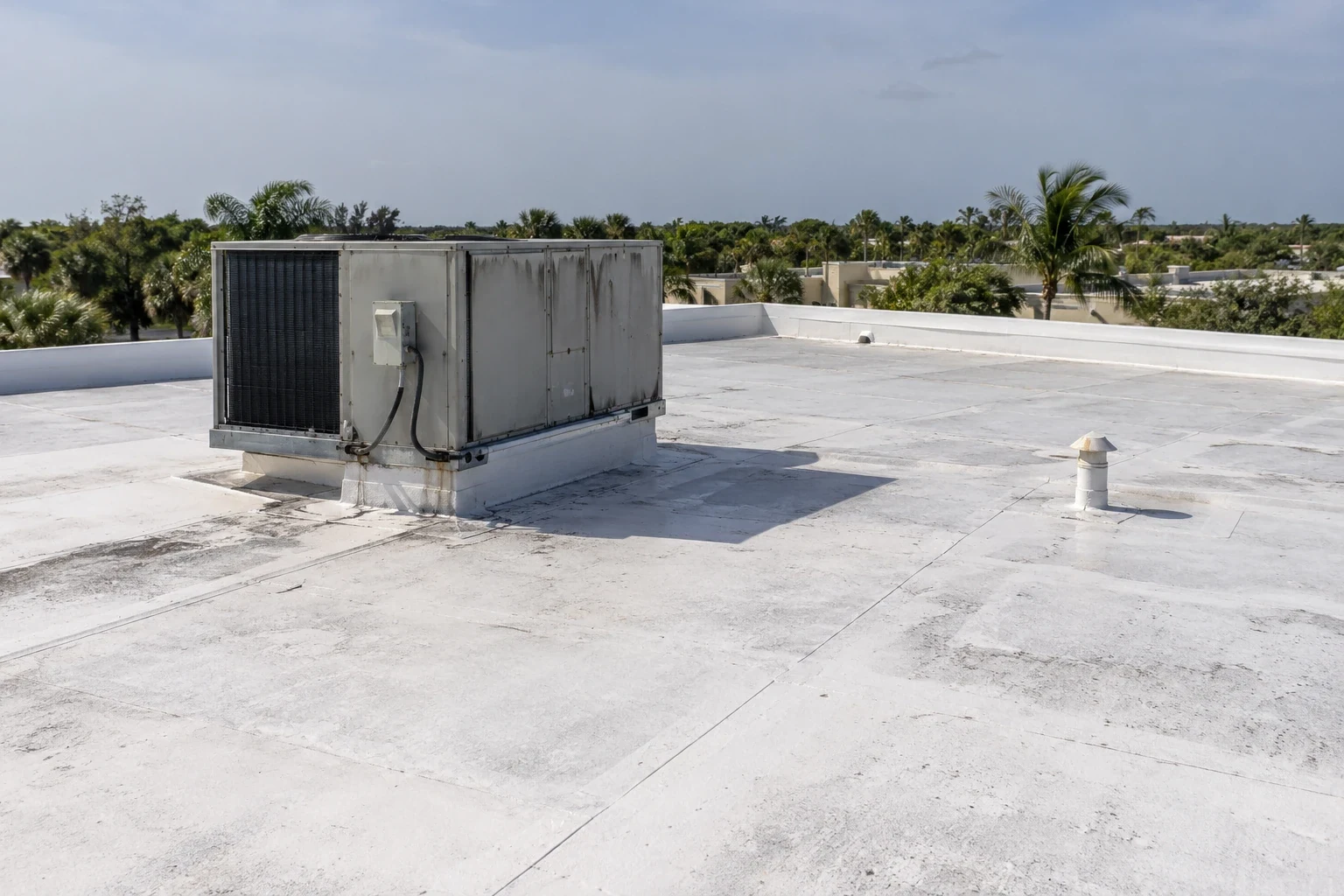
A roof coating is a restoration option for a surface that is still sound enough to prepare and protect. It cannot make wet insulation dry, repair a weak deck, or bridge a moving joint without proper detail work. We inspect the existing assembly, test questionable areas, and decide whether coating fits the roof's condition. In Lafayette, LA, intense summer heat makes surface exposure part of the conversation, but moisture and drainage set the first limits.
The assessment covers membrane adhesion, seams, flashings, penetrations, ponding, and areas with prior patches. We also identify whether the roof is compatible with silicone, acrylic, or another system, then explain preparation and repair needs. A commercial property near Kaplan may have a different roof configuration from an office in the Oil Center; we judge the existing surface, not the district name. A roof inspection can establish the conditions that coating would need to address.
Confirm the surface can be restored
Coating starts with a roof that can hold a new layer. We look for broad blistering, loose membrane, saturated insulation, rust, unstable patches, and deck movement. Areas that cannot support adhesion need correction or removal. If moisture is trapped below the surface, coating can conceal a problem rather than solve it. Infrared imaging or selected core cuts can help investigate suspected wet sections before the owner chooses restoration.
We map the test areas, inspect the existing coating or membrane, and record where the substrate changes. A roof may qualify in one section and need replacement in another. The scope should state those boundaries and explain how transitions will be handled. If broader moisture or deck concerns appear, a moisture survey can clarify the limit. For areas that do not qualify, we can compare tear-off and replacement rather than coating over a weak base.
Match the coating to the roof
Silicone and acrylic coatings behave differently and suit different conditions. We look at the roof material, slope, drainage, expected water exposure, surface preparation, and the system instructions before proposing one. A coating should not be selected by color alone or treated as a universal membrane. Compatibility matters at seams, existing patches, metal transitions, and penetrations, where adhesion and movement can change.
Preparation often includes cleaning, repairing open details, and applying primers or reinforcement where the system calls for them. We identify areas that need fabric or liquid flashing, then define how the coating will terminate at drains, walls, edges, and equipment. If the substrate has loose areas, those must be stabilized first. Silicone coating systems and acrylic coating systems each need a scope suited to the roof rather than an assumption that one product solves every condition.
Prepare the details before the field
Most coating work depends on the details being ready before the broad surface is covered. We repair open seams, loose flashing, punctures, and failed sealant, then clean the surface to the system requirements. Dirt or moisture can interfere with adhesion. We also check whether drain bowls and scuppers will remain clear after the coating adds thickness around them.
At a pipe, curb, skylight, wall, or metal edge, the transition needs its own treatment. A field coat alone cannot replace a sound flashing connection. We specify reinforcement and termination methods for each detail in the scope. For a damaged lap, seam repair work may come before the coating. Drainage concerns can require drain or scupper correction so water does not remain against the restored surface.
Choose a workable coating window
Application conditions affect how coatings spread, cure, and bond. We review temperature, surface moisture, forecast rain, dew, wind, and access before setting the work sequence. Lafayette Regional Airport's climate normals show July and August mean highs above 92 degrees. That heat can affect surface and material handling, so the crew follows the selected system's limits and checks actual conditions on the roof.
Rain planning is just as important. At Lafayette Regional Airport, June carries a 7.08-inch rain normal, and the yearly precipitation figure is 60.50 inches. Those records frame the local wet-season question, but a project window depends on the current forecast and roof conditions. We divide work into areas that can be completed and protected appropriately. If the building remains occupied, we coordinate access, equipment protection, and any temporary route changes with the property contact.
Weigh restoration against replacement
A coating can add a protective surface over a sound roof and may defer tear-off when the assembly qualifies. It does not reset the age of the whole roof or correct an underlying deck problem. The useful comparison includes preparation, repairs, coating thickness, detail reinforcement, access, and future inspection needs. We explain what restoration addresses and what conditions will remain outside the scope.
Building owners along the Johnston Street-Louisiana Avenue route may be planning work around businesses, schools, and other daily activity. The city's project along that corridor addresses drainage and access, making site logistics a real planning factor for commercial work. We set staging and roof access with the property contact, then protect the work area each shift. a phased occupied-building plan can help coordinate larger restoration work without treating all roof areas as one work zone.
Record the coating and follow-up
After application, the property record should show the repaired locations, coating system, coverage areas, and conditions that were excluded. We photograph details and note any areas to monitor. That lets a future inspection distinguish a new defect from an old repair. Routine maintenance still matters because debris, equipment work, and water flow can affect the roof after restoration.
Emergency response remains available around the clock, including weekends and holidays, if a new opening admits water. For planned follow-up, a condition report with photos can preserve what was completed and what needs another look. We can also connect the restoration record to roof asset planning so future budget decisions use the actual roof history.
A coating decision depends on a sound, dry, compatible substrate and details that can be prepared continuously. The evaluation should identify wet or deteriorated areas for removal, not simply estimate coating from total roof area. It should also describe how drains, penetrations, seams, and terminations will be cleaned and reinforced. If those conditions cannot be corrected or reliably reached, a coating may leave the underlying problem in place; compare that risk with a partial replacement or full re-roof scope.
Questions About Commercial Roof Coating and Restoration
How do you know if a commercial roof can be coated?
The surface must be stable and compatible, and moisture or deck problems need to be addressed first. We inspect seams, flashings, patches, drainage, and suspect wet areas. Testing can confirm whether selected sections are sound. The written scope identifies what qualifies for coating and which areas need another repair path.
Will coating stop ponding water on my roof?
A coating does not correct a low point or blocked outlet by itself. We check how water reaches drains and scuppers, then include any needed correction before the coating is applied. The slope and drainage conditions determine whether the surface can be restored as planned.
Can coating work be done in Lafayette's summer heat?
The selected system has application limits for temperature and surface conditions. We check the roof and forecast, then schedule within those requirements. The airport normals show high summer temperatures, but the work decision follows actual conditions on the building. Rain and dew also affect the window.
How should I compare coating with a new roof?
Compare the existing assembly condition, moisture findings, preparation and repair scope, drainage details, and expected maintenance. Coating can protect a sound roof, while widespread wet insulation or a weak substrate may call for replacement. We lay out both scopes when the inspection supports a meaningful comparison.