Commercial Roof Seam Failure Repair in Lafayette, LA
Home / Roof Damage Repair / Commercial Roof Seam Failure Repair
Talk With Our Lafayette Team
Tell us where the seam has separated and whether water has reached the building. We will identify the membrane, mark the repair limits, and explain timing.
Call 555-555-5555
Have an open lap inspected
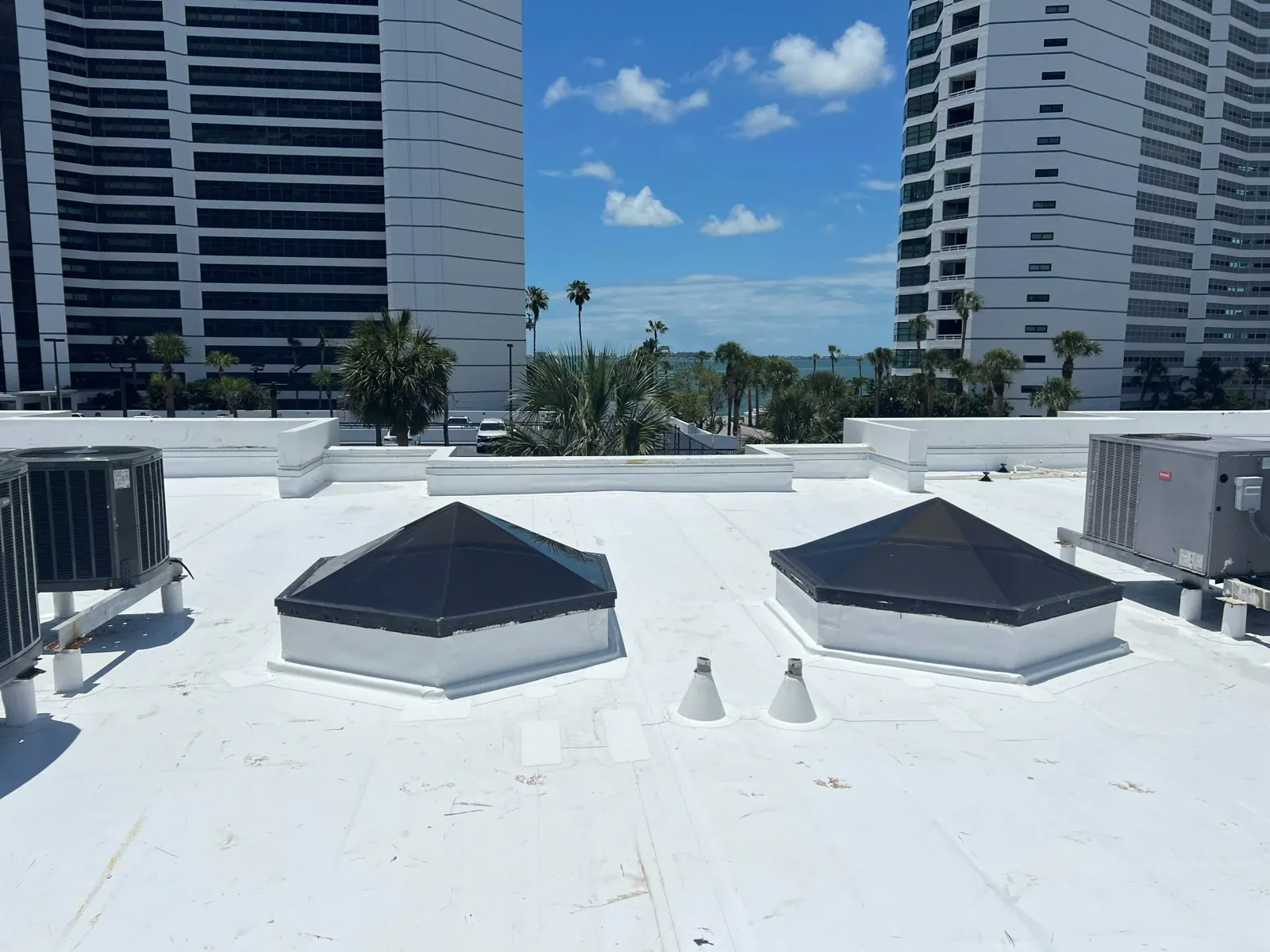
A seam can separate by inches before anyone sees water indoors. On a commercial roof in Lafayette, that small gap gives heavy rain a direct path below the membrane. We inspect the full lap, nearby patches, and the surface that should bond to it. The repair must stop at sound material, not at the first place where a split becomes hard to see. After a June storm or a long wet stretch, that close look can tell whether a local weld or a wider membrane section is needed.
We identify the roof type first. TPO and PVC seams are heat welded; EPDM uses compatible tapes and primers; modified bitumen and built-up systems have different lap details. A patch that ignores the existing material can leave a weak edge. If the split followed wind or debris impact, our wind damage roof repair inspection can document the related roof area. A broader condition review can include photos and a written roof condition report.
Find where the bond stopped holding
We inspect the seam from both sides of the visible opening. On a welded membrane, we check for skipped welds, fishmouths, wrinkles, contamination, and movement at the lap edge. On a tape-seamed roof, we look for adhesive failure, dirt, water, and a tape edge that has curled away. Granules or surface wear can hide an opening on asphaltic roofs, so we look at the lap and the material around it.
Nearby details matter. We check intersections at curbs, drains, patches, and changes in plane, because water can enter at one detail and travel along another. A ceiling stain is noted, then compared with roof conditions above. Moisture readings or a small opening can help confirm whether insulation is wet. We can arrange an infrared survey when the roof construction and weather support useful readings.
After a long rain, a seam inspection should cover the lap, its termination, and the closest roof opening. Lafayette's wet-season conditions make that follow-up useful, while a site's own photos and repair notes establish what changed. We distinguish observed condition from the likely repair cause.
Prepare a compatible patch or seam reset
For a thermoplastic membrane, we prepare the surface and weld a patch that extends onto sound material. We probe the finished weld and record the repair limits. A repair may need an overlap strip or a larger piece if the original seam is contaminated or distorted. EPDM repairs use the specified cleaner, primer, and seam tape. Asphaltic laps may require compatible reinforcing fabric and surfacing. We do not select a product until the existing assembly is known.
A seam can fail because the surrounding sheet has become brittle or thin. In that case, sewing a narrow patch onto weak material will not solve the larger issue. We check for multiple nearby failures, trapped moisture, prior coating, and old repair layers. A small repair is appropriate when the surrounding membrane is dry, flexible, and well attached. Broader replacement becomes a discussion when deterioration runs beyond the lap or moisture affects several sections.
Our scope describes preparation, repair material, lap dimensions, access, weather conditions, and what happens if hidden damage appears. Lafayette's 2021 International Building Code is the city's commercial building reference, with specified chapters excluded; the project and local review determine any requirements that apply. We can provide a clear repair record without guessing at approvals.
Keep rain from entering the roof assembly
Rain that crosses an open seam may wet cover board, insulation, or the deck. The visible drip can appear far from the entry because water follows slope, flutes, or framing. We compare the roof map with interior reports, then check the likely travel path. If moisture is confirmed, the repair may include removal and replacement of affected material before the membrane is closed.
Lafayette Regional Airport normals show 60.50 inches of annual rainfall and a 7.08-inch June normal. That local pattern makes a vulnerable lap worth addressing, but it does not set the repair scope by itself. We inspect after the surface dries enough to prepare a bond. A wet substrate can compromise a patch, so temporary protection may be the practical first step.
For active water entry, our emergency roof repair response runs day and night, every day of the week. We can protect the opening, limit interior exposure, and return for permanent seam work under suitable conditions. For an owner dealing with repeated standing water nearby, we also check the ponding water condition rather than treating the seam as the only concern.
Plan work around Lafayette building use
Seam repairs may need roof access over occupied space, active equipment, or tenant areas. We confirm the work zone, ladder or lift location, staging, and interior protection with the site contact. When a repair crosses a loading path or customer entrance, we plan material movement to keep people clear. The tenant schedule also affects the time available for noise, unit shutdowns, or ceiling access.
Downtown Lafayette combines retail, office, services, restaurants, and residential uses in the city plan. A property there may need a different sequence than a distribution building in one of LEDA's business parks. We do not assume roof type from its use or location. We ask for available roof plans and repair history, then confirm conditions during the inspection.
If several laps are involved, a marked roof plan makes the scope easier to review. We label each seam and show which area needs immediate work, which can be monitored, and which needs further testing. The owner can then sequence repairs across the building without losing track of open items.
Check seams before another leak report
Seam checks belong in maintenance, particularly after mechanical work or severe weather. We look for lifting edges, fishmouths, wrinkles, open corners, and patches that have begun to peel. Rooftop traffic deserves attention too: a tool cart or sharp object can scrape the sheet and stress a seam. Marking the damage promptly helps keep the affected area visible for repair.
Our maintenance visits can record seam conditions by roof zone and compare photos over time. If repeated failures appear, we can review whether the cause is a substrate problem, material age, movement, or prior preparation. A maintenance note should say what was observed and what action followed, not just that a roof was checked.
Owners near Oil Center and other Lafayette districts can arrange the same roof-specific inspection. We document the system at the property rather than relying on the neighborhood name. When a seam opens, a targeted repair may be enough; when several areas show the same pattern, a broader condition review helps guide the next budget decision.
Questions About Commercial Roof Seam Failure Repair
Can you weld a seam while the roof is damp?
No. A clean, dry surface is needed for a reliable weld or adhesive bond. We can provide temporary protection and return when conditions allow the permanent repair.
How do you know whether a seam split is isolated?
We probe nearby laps, check patches and intersections, and look for moisture beyond the opening. If the membrane remains sound around it, a focused repair may work. Multiple weak seams point to a wider review.
Does every open seam require replacing the roof section?
The surrounding membrane and substrate set the scope. A sound, dry field can accept a compatible patch. Brittle material, wet insulation, or repeated failures can make a wider replacement the better use of labor.
What should we tell you before a seam inspection?
Share when the leak appeared, where it shows indoors, any recent rooftop service, and whether temporary work was done. Photos and prior repair notes help us focus the first visit.
Can a seam repair be completed during business hours?
Often, but access, noise, equipment, weather, and tenant activity decide the sequence. We coordinate the work zone and any interior protection with the site contact before beginning.