Commercial Roof Edge Metal, Coping, and Gutters in Lafayette, LA
Home / Commercial Roofing Services / Commercial Roof Edge Metal, Coping, and Gutters
Talk With Our Lafayette Team
Tell us where water is showing and whether the problem involves coping, gutters, or a roof seam. We can trace the detail and outline a repair scope.
Call 555-555-5555
Inspect the roof edge and runoff
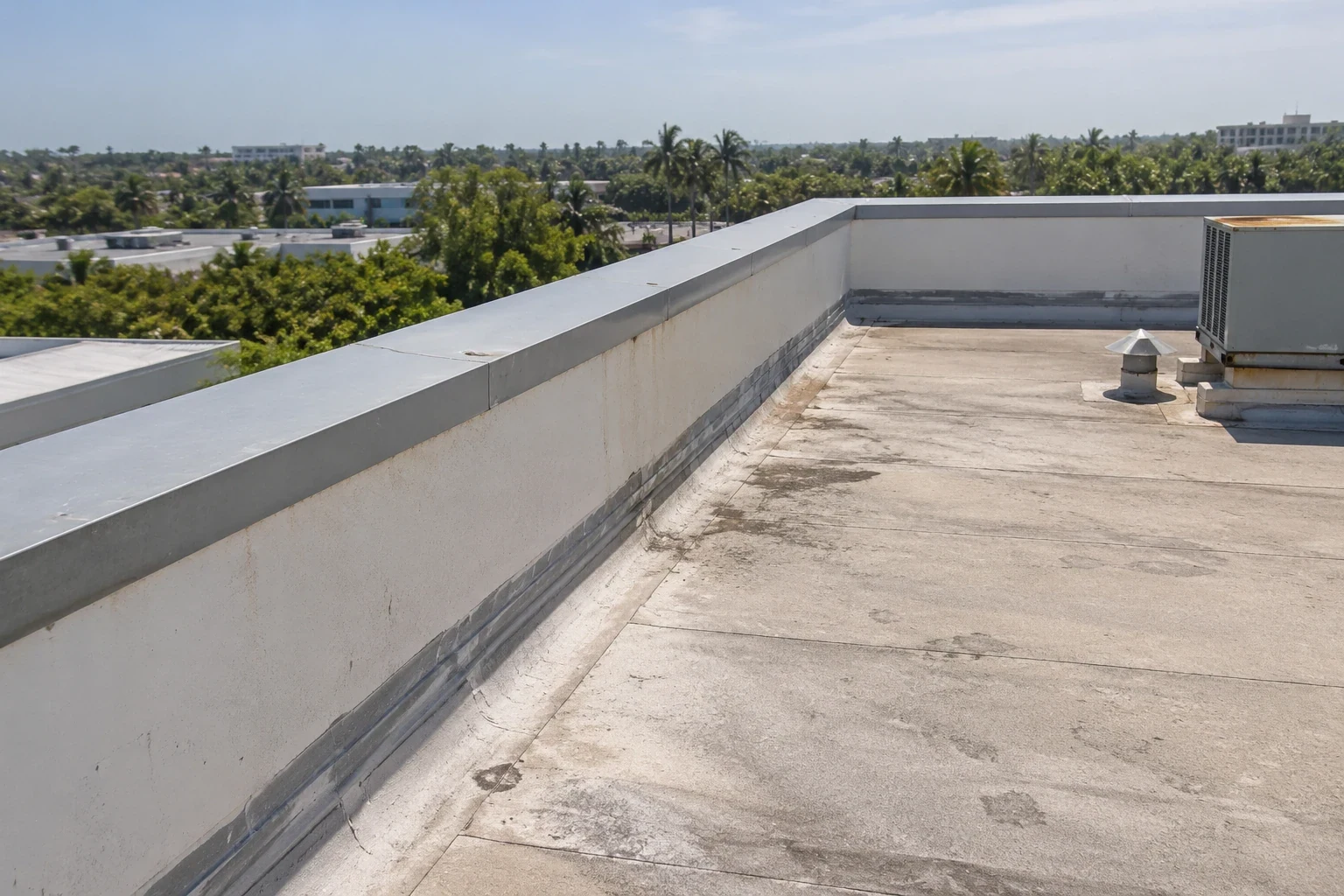
A rust line below a coping joint can point to a small opening that sends water behind the edge. We inspect the perimeter, fasteners, laps, sealant, membrane termination, and runoff path before choosing a repair. Lafayette, LA, sees warm-season storms and heavy rain, so the edge has to shed water while holding the roof assembly in place. The visible metal is only one part of that connection.
We look at how the roof meets the parapet or wall, where water leaves the building, and whether gutters or downspouts are keeping the discharge path clear. A commercial property along the Johnston Street-Louisiana Avenue corridor may have access needs different from a building in a business park, but the detail review is tied to the roof. A roof inspection can include edge conditions alongside the membrane and drainage system.
Inspect the roof's perimeter joint
We check metal laps, cleats, fasteners, seams, sealant, and the membrane termination beneath or beside the edge. Movement, corrosion, loose sections, or open joints can allow water behind the roof edge. A coping cap may look straight from the ground while its splice or attachment has loosened. We photograph each affected area and identify whether repair can stay local or needs a longer run.
The roof surface and edge have to work together. If the membrane has pulled away, a new bead of sealant over exposed material may not restore the connection. We review the substrate, metal profile, attachment, and termination method, then write a scope that explains preparation and tie-in. A wind-related roof review can document uplift or displacement when those signs are present. The repair should reconnect the roofing system to the perimeter, not just hide a gap.
Check securement and wind exposure
Perimeter details see pressure changes and movement that can loosen metal or expose the membrane edge. We inspect attachment spacing and condition, end joints, corners, and transitions where the roof edge meets walls or equipment. The applicable design requirements depend on the building and project. Lafayette's commercial building references include the 2021 International Building Code and ASCE 7-16 wind charts; a repair inspection still begins with the actual assembly and observed condition.
We do not infer a failure from the weather alone. A storm may make a loose joint visible, while age or earlier work may also contribute. We note movement, displaced fasteners, torn membrane, and water entry separately. If replacement or recover work is underway, perimeter terminations belong in that broader scope. A replacement plan should account for the new membrane's edge connection, and an overlay review must account for any added height at the perimeter.
Keep coping and flashing tied together
Coping caps protect parapet tops, while flashing ties roof membrane to vertical surfaces. Their joints need room for movement and a secure path that sheds water outward. We look for open splice joints, loose cleats, split corners, failed sealant, and water marks below the parapet. The metal profile and wall construction guide the repair, so we measure the affected run before ordering replacement sections.
At a corner or wall return, a short repair can leave another opening at the next joint. We follow the full transition and check where the membrane ends beneath the metal. A repair might involve resecuring a section, replacing a damaged length, or rebuilding a flashing transition. Flashing detail work can address penetrations and vertical transitions elsewhere on the roof, while this scope concentrates on the perimeter and parapet cap.
Follow gutters and downspouts to discharge
A gutter is useful only if water can move through it and discharge away from the building. We check hangers, seams, end caps, outlet openings, downspouts, and areas where debris or a crushed section restricts flow. Overflow stains can show a problem at the gutter or a leak at the roof edge. We distinguish those paths before choosing a metal repair or a membrane repair.
Lafayette Regional Airport's climate record shows 60.50 inches of annual rainfall, including a June normal of 7.08 inches. That amount makes drainage capacity and clear downspouts practical concerns, though the property's own runoff path must be inspected. We note where water exits and whether a leader is connected or blocked. Roof drain and scupper work may be needed where the roof's internal outlets are part of the same drainage problem.
Choose a repair that fits the metal
Metal type, thickness, finish, profile, and existing attachment affect the replacement section. We identify what is present and how it connects to the membrane or wall. A repair should use compatible components and fasteners, with joints arranged to shed water. The scope can include lift access, staging, removal, disposal, and temporary protection for the roof opening.
Work at an occupied storefront or office may need to keep entries clear and limit time near customer or tenant routes. The Johnston Street-Louisiana Avenue corridor connects business areas with schools, UL Lafayette, and Moncus Park. On a property near that active route, the property contact can help coordinate delivery and staging. We set a safe work zone and explain any temporary access change before removing edge metal or opening the roof detail.
Document the completed edge repair
At closeout, we check the attachment, joints, membrane connection, and runoff route. Photos show the repaired length and any adjacent section that should be monitored. If the gutter or downspout remains outside the scope, the record says so. This makes it easier to distinguish a roof edge correction from later maintenance on the building's drainage system.
A facility manager can add the findings to the roof history and revisit them after significant weather or scheduled maintenance. The city's plan identifies Downtown, Oil Center, Johnston, and other mixed-use centers as active commercial areas, each with its own access and building conditions. We keep the report specific to the property inspected. For repeated upkeep, a maintenance visit can check fasteners, joints, and outlets before another repair is needed.
At the perimeter, water control and wind resistance meet. A review should trace how the membrane terminates, how metal joints are secured, and where the gutter receives runoff. Look for open seams, movement, corrosion, loose fasteners, and signs that water is bypassing the intended path. Repair details need to suit the existing substrate and adjoining materials; a new metal edge that does not connect cleanly to the membrane can move the leak instead of correcting it.
Questions About Commercial Roof Edge Metal, Coping, and Gutters
Can a loose coping cap cause a roof leak?
Yes. Water can enter at a splice, corner, or failed connection beneath the cap and move into the wall or roof assembly. We inspect the coping, cleats, flashing, and membrane termination together, then identify how much of the run needs correction.
Should gutters be replaced when the roof membrane is replaced?
That depends on their condition and how they connect to the roof edge. We check hanger security, seams, outlets, downspouts, and the membrane termination. If the gutter is serviceable, it may remain; if it restricts drainage or no longer connects cleanly, include correction in the project scope.
Why does water run behind a gutter during heavy rain?
The gutter may be clogged, undersized for the runoff path, loose at the edge, or disconnected at a joint. We inspect the roof edge and gutter together, then trace where water enters or spills. A clear outlet and secure attachment both matter.
Can edge metal be repaired without replacing the whole roof?
A localized metal or flashing defect can often be addressed on its own when the surrounding roof and attachment remain sound. We check nearby membrane, corners, joints, and water marks before defining the repair limit. A wider failure may need a larger perimeter scope.