
Commercial Roof Condition Reports in Lafayette, LA
Home / Roofing Capabilities / Commercial Roof Condition Reports
Talk With Our Lafayette Team
Tell us how the report will be used and which buildings need review. We will inspect the accessible roof areas and connect each photo to a clear next step.
Call 555-555-5555
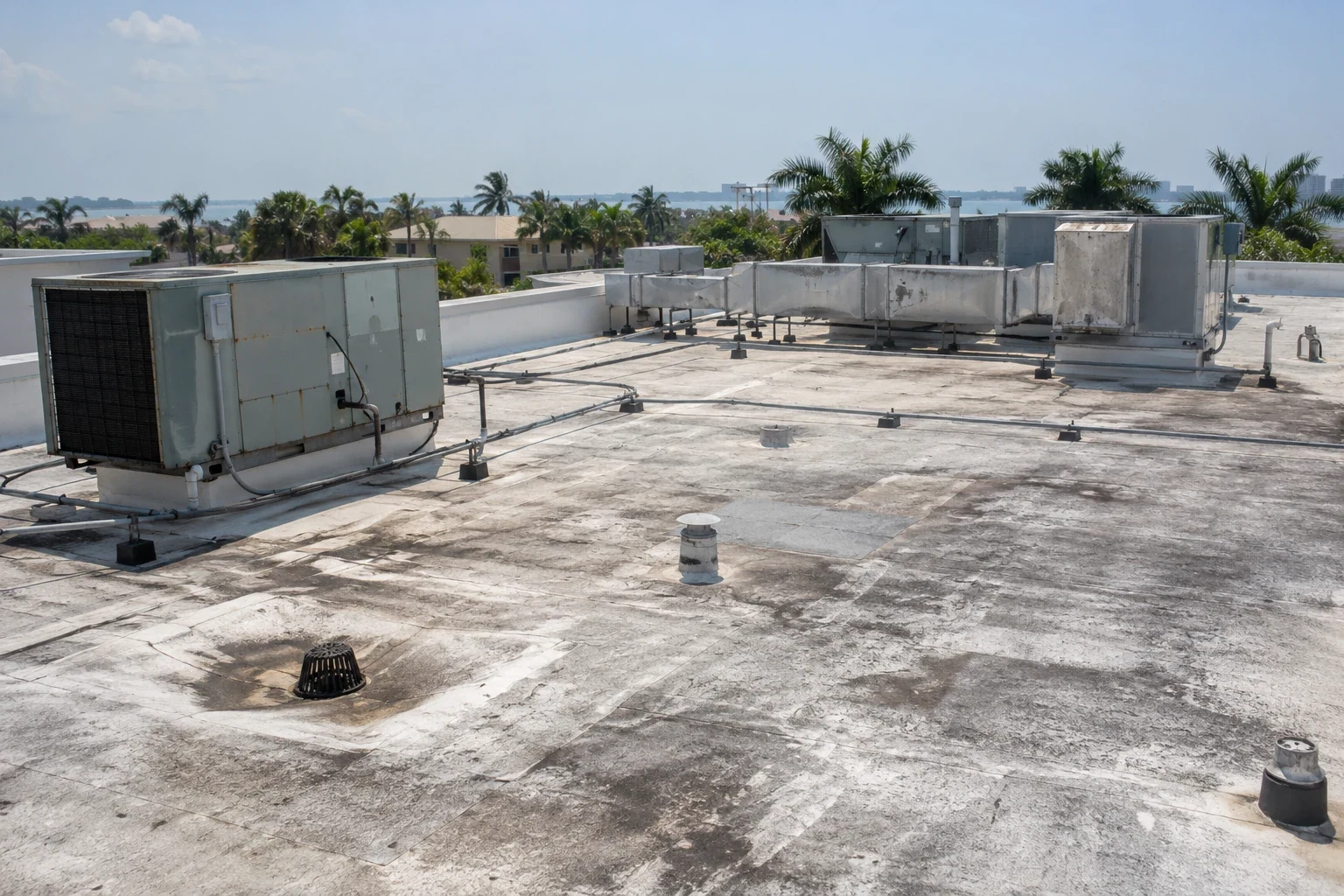
Get findings you can locate
A photo of a roof defect is only useful if the next person can find it. We prepare condition reports that label the building, roof zone, visible issue, and recommended next step. The report can show an open seam, a soft area, a blocked drain, or a curb detail that needs more testing. It also says what the inspection could not confirm. That helps an owner compare repair scopes without treating a photograph as a diagnosis of hidden layers.
For a Lafayette property, the record should fit its use and access conditions. The parish's employer base includes healthcare, higher education, schools, manufacturing, energy services, and logistics. Each facility may need a different inspection window or interior check. We document the roof itself and note operational limits that affected the visit. A condition report can support capital planning or a recurring roof asset record without substituting for the owner's project review.
Show what was inspected and what was not
The opening page identifies the property and inspection date, the areas reached, and any conditions that limited access. We record the roof system where it can be identified, plus drains, curbs, seams, edges, and other details that affect the observed issue. If a roof plan was supplied, zone labels can match its markings. When no plan exists, we use plain location references so the owner can follow the report.
Photos should answer a question. A wide view shows the roof area; a closer view shows the condition. We add a caption with location and observation, such as an open lap on the south side of a rooftop curb or ponding at a drain path. We avoid a stack of unlabeled pictures that leaves the reader to guess which building or detail they show.
UL Lafayette's facilities extend across multiple buildings in the heart of town. A property-by-property key helps campus staff match a report to the structure inspected. We report only the roof areas actually visited and avoid carrying one building's findings onto another.
Separate observation from confirmation
A report distinguishes what is visible from what has been tested. A ceiling mark is an interior observation; an opened membrane with wet insulation is a confirmed assembly condition. Infrared patterns can point toward a suspect area, but they need direct review in context. We state whether the inspection included probing, moisture readings, a test cut, or only a visual review.
Each finding can include a location, photo reference, urgency, and next action. We may recommend a repair, a closer moisture check, a maintenance visit, or a follow-up after rain. Where conditions remain concealed, the report says what would need to be opened or tested. That wording helps an owner understand what is known before approving work.
Heavy Lafayette rainfall makes drain paths and open laps useful review points. We record the roof condition itself rather than treating local weather as proof of a leak. We tie recommendations to the observed condition and the building's own history.
Give repair items a clear order
Findings are more useful when grouped by practical next step. Active water entry and exposed material may need immediate attention. A dry seam with an aging patch may call for planned repair or monitoring. A suspected wet area may need a test before a larger scope is priced. We explain the reason behind each group so the owner can compare urgency with access, budget, and building operations.
A property near the Oil Center may include office and service uses, while the Johnston Street-Louisiana Avenue corridor links businesses, schools, and UL Lafayette across 8.5 miles. Those local settings can affect how a repair is scheduled. We note tenant access, delivery hours, or rooms that should remain protected when the owner provides that information.
A report can reference related work without turning into a proposal. We may identify a needed roof repair, drain service, or moisture survey as a next step. The owner can then request a scope for that work using the same roof-zone references.
Keep the report current after repairs
After a repair, we can add closeout photos and describe the material installed, area addressed, and any remaining condition. A later inspection can compare those roof zones with the original findings. If the repair was temporary, the record should state that and identify the permanent work still needed.
For a mixed-use commercial area such as Downtown Lafayette, staff changes can separate the person who saw a leak from the person who approves roof work. A dated report preserves the details without relying on someone's memory. It can accompany roof plans, maintenance notes, warranty paperwork, and contractor proposals.
We can also create a concise report for lender review, insurance documentation, or a property acquisition when the inspection scope supports that use. A due-diligence report has its own limits and timing needs. The intended use should be clear before the inspection so we can identify required access, records, and follow-up questions.
Read the next step without decoding roof jargon
The conclusion should tell the owner what to do next in direct terms: repair the open lap, clear and retest the drain, check suspected moisture, or monitor a stable area. We explain any condition that could change the scope after opening. The report avoids assigning a remaining-life figure unless the supporting evaluation justifies it.
At Opelousas, university research and economic development are part of the site's role. We identify the structure and access window in each report so a facilities contact can match photos to the correct roof. We inspect the identified structure, label the findings, and leave a usable record. Arrange an inspection if you need current photos, repair priorities, or a second look at a recurring condition.
For post-storm documentation, we can capture hail-related surface findings or an opening from wind damage. The report will state what we observed and which repair step follows.
A useful condition report is organized so another person can act on it. Include a roof plan or clear location key, dated photographs, visible symptoms, inspection limitations, and a prioritized next step for each finding. Keep recommendations proportional to the evidence: a confirmed open seam can support a repair scope, while concealed moisture may call for targeted testing. The owner should be able to distinguish routine maintenance from urgent water control at a glance.
Use consistent severity labels only when the report defines them. For example, explain whether a priority reflects active water entry, a safety concern, or planned maintenance, rather than relying on color alone. Include the date and weather context when it helps interpret a finding, and preserve original photos so later reviewers can see what changed.
Questions About Commercial Roof Condition Reports
What should a roof condition report include?
It should identify the property, inspected areas, roof system when known, photos with locations, observed conditions, moisture checks, limits, and recommended next steps. We include those details in plain language.
Can a report confirm hidden moisture without opening the roof?
Not in every assembly. Thermal patterns or surface clues can point to an area for testing. We state what was measured and whether direct confirmation is still needed.
Will the report include a repair price?
A condition report explains findings and recommended work. A repair estimate can follow once access, materials, and scope are clear. Keeping the two records separate makes each easier to review.
Can you prepare reports for several properties?
Yes. We can use consistent labels and photo fields while reporting each building and roof independently. Shared formatting does not combine their conditions or repair recommendations.
What if you could not inspect part of the roof?
We identify the area and reason access was limited, then recommend a return or another safe inspection method. The report does not imply that an unvisited area was clear.