
Ponding Water Roof Repair in Lafayette, LA
Home / Roof Damage Repair / Ponding Water Roof Repair
Talk With Our Lafayette Team
Tell us where water remains and when you last saw it. We will inspect the drain path and roof layers, then explain the repair choices.
Call 555-555-5555
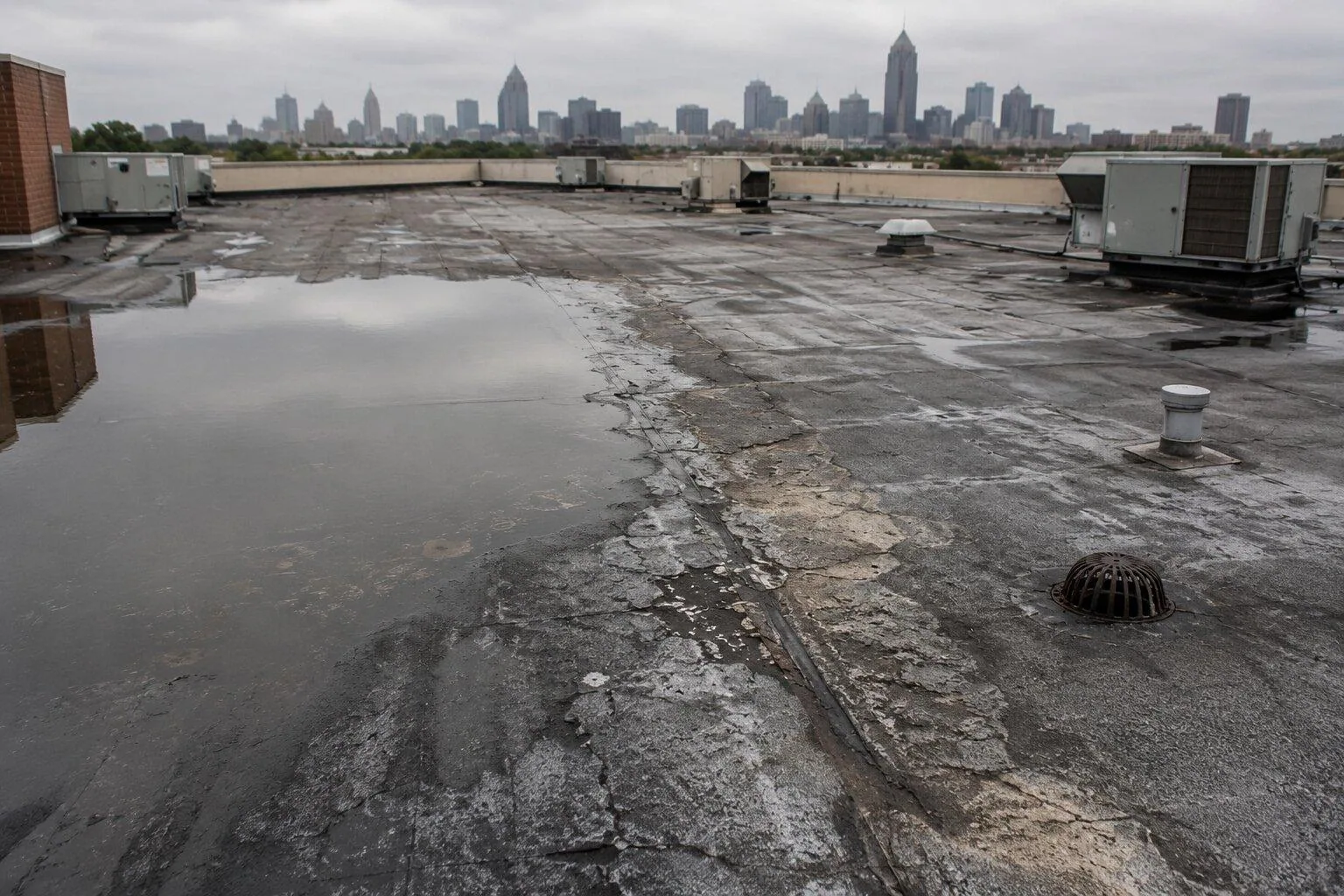
Get a clear answer on standing water
A shallow pool that remains after the rest of a Lafayette roof has dried deserves a closer look. The water may sit over a clogged drain, a low deck area, compressed insulation, or a membrane repair that changed the flow. The pool alone does not identify the cause. We check its outline, depth, nearby seams, drains, and interior conditions, then record what the roof is doing after rain. Lafayette Regional Airport's climate normals list 60.50 inches of annual precipitation, including 7.08 inches in June. That amount makes drainage details a working part of the roof system, not a cleanup item to leave until later.
Our repair starts by separating water that is simply moving slowly from water held by a structural or insulation depression. We clear the drain path where appropriate, inspect the surrounding membrane, and look for moisture in the assembly. If a drain or scupper is part of the problem, we can address it with roof drain and scupper repair. When a wider roof area needs review, our commercial roof inspection maps the low spots and their relationship to seams and equipment.
Follow the water after the rain stops
First, note how long the water remains and where it gathers. We compare the pool's edge with drain bowls, scuppers, gutters, roof slope, and the path water should take across the membrane. Leaves or sediment can block a drain, but an open drain does not prove that the roof is pitched correctly. A level check and repeated observations may be needed to distinguish a maintenance issue from a settled area.
We inspect the surface beneath and around the pool. Look for soft membrane, open laps, seam wrinkles, pond marks, algae, or a prior patch that interrupts flow. The water can put additional time and stress on a seam. We check the closest penetrations and curb corners because those details can leak even when the pool sits several feet away. Lafayette's June precipitation normal reinforces why a blocked outlet should be treated before another wet period, while the actual repair still depends on this roof's condition.
The work zone gets photographed and marked. Where safe, we compare wet and dry areas and check the underside for stains or moisture. An infrared moisture survey can help when roof conditions permit it; a probe or small opening may be needed to confirm wet insulation. Our notes separate observed water from confirmed moisture below the membrane.
Find whether the low spot is surface or structure
A depression can come from more than one layer. Insulation may have compressed, the deck may have deflected, or a past repair may have built up the surrounding surface. We check the roof plan, visible framing where accessible, and repair history before deciding whether a patch will help. Adding material at the edge of a pool can redirect water, but it cannot correct a low substrate by itself.
At Lafayette's mixed commercial centers, roof use varies. River Ranch is planned as a mixed-use commercial district, with office and retail activity that can create different access windows from a warehouse or school. The location identifies where to meet; an inspection confirms which assembly is installed. We ask how the space operates, then arrange access and repairs to protect tenants and interior finishes.
When insulation is wet, we identify the limits and discuss removal, replacement, and membrane tie-in. If the roof remains dry below the pond, a drainage correction or compatible surface repair may be enough. Our cover-board and insulation work addresses affected layers, while a coating may suit only an assembly that is sound and compatible. Coating over trapped moisture is not a fix.
Choose a correction that changes the flow
When debris is the cause, drain cleaning and a check of the outlet may resolve the immediate condition. A damaged drain bowl or open connection needs a repair that ties into the surrounding membrane. If the pool follows a low section, options can include localized slope correction, tapered insulation in a broader project, or replacement of wet material. We explain the boundaries and identify what cannot be known until the surface is opened.
The roof system guides the materials. TPO and PVC seams are heat welded; EPDM details use compatible primers, tapes, and flashing. Built-up and modified-bitumen assemblies require their own repair sequence. Metal roofs need attention to fasteners, laps, and water paths rather than membrane patching. For a documented comparison of available systems, we can review TPO roofing or modified bitumen in relation to the existing assembly.
We also discuss what happens if the condition stays open. Persistent water adds load and may expose weak laps, accelerate surface deterioration, or seep through a detail. Those effects are not automatic; they depend on pond depth, duration, assembly, and maintenance. Our proposal states the observed condition and separates urgent water-entry repair from a larger drainage project.
Keep drains clear through Lafayette's wet months
A repair lasts longer when the outlet remains accessible. We can note drain locations, overflow paths, and roof areas that collect leaves or sediment in a maintenance record. After heavy rain, a quick check from a safe access point can show whether water is moving as expected. We can also schedule recurring preventive roof maintenance to clear drains, review seams, and report changes before a ceiling mark appears.
The Johnston Street-Louisiana Avenue corridor spans 8.5 miles and includes businesses, schools, and neighborhoods. The city's project addresses drainage among other corridor needs. At an individual building, roof drainage remains a separate inspection question. We can arrange a visit near that route and document roof-specific conditions without assuming that nearby properties share a drainage problem.
Our written report uses roof zones, photographs, and clear repair limits. Related flashing failure repair may be needed at a curb, while an open lap calls for seam failure repair. A manager can see which drain was checked, what water remained, whether insulation was tested, and what follow-up is recommended. If interior access is needed, we coordinate with the property contact to compare ceiling conditions with the roof map.
Know when a repair needs another survey
One visit may not show how a roof performs in every storm. If the pond is shallow or weather has been dry, we can note that limitation and return after rain. If insulation testing is inconclusive, a targeted opening may answer the question. We explain the cost drivers in practical terms: how much wet material must be removed, whether the drain connection is accessible, how far a membrane tie-in reaches, and how the repair affects tenant operations.
Commercial activity and deliveries can affect staging and access. We plan with the site contact and protect the route below the repair area. Weather, drying, substrate condition, and cure times set the schedule.
Arrange an inspection if water remains after surrounding areas drain, a ceiling mark appears, or a drain backs up. We will trace the flow, check the assembly, and lay out the next repair step in plain language.
Questions About Ponding Water Roof Repair
How long should a commercial roof hold water after rain?
The roof design and conditions matter. We note the depth, location, and time after rain, then check whether the outlet is clear and the surface has a low area. A single observation cannot establish the cause.
Can clearing the drain solve ponding by itself?
A blocked outlet can be the entire problem, but we inspect the drain bowl and surrounding membrane before closing the call. If water still collects after the drain is clear, the slope or roof layers need a closer check.
Will a coating remove a low spot?
Coating protects a compatible, sound surface; it does not raise a depressed deck or dry wet insulation. We first identify why water remains, then decide whether a coating belongs in the repair scope.
What if the pool is near equipment or a roof seam?
We inspect the nearest curb, penetration, lap, and drain path. Ponding can expose an existing weak detail, but distance alone does not prove a leak. Photos and moisture checks help set the repair boundary.
Can you check the roof again after a storm?
Yes. A follow-up after rain can show whether the water clears and whether a repair changed the flow. We can also record the result in a maintenance report for the building team.