
Metal Roof Retrofit in Lafayette, LA
Home / Roof Systems / Metal Roof Retrofit
Talk With Our Lafayette Team
Tell us which fasteners, panels or transitions leak and what repairs have been tried. We will document the metal condition and explain whether repair, coating or retrofit fits the roof.
Call 555-555-5555
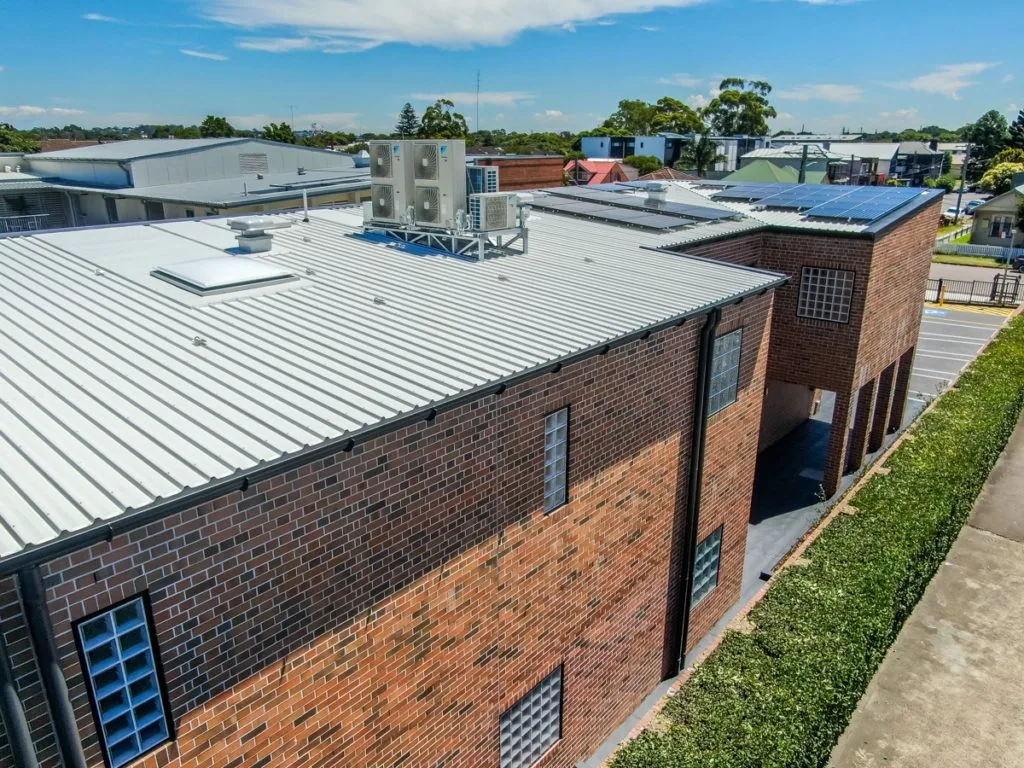
Inspect the exposed-fastener roof
A metal roof can leak at the fasteners long before a panel looks worn out. The washer may split, a screw may back out or a lap may admit water under wind-driven rain. We inspect the panel seams, fasteners, ridge and edge details before recommending a repair or retrofit. The right approach depends on the existing metal and what lies beneath it.
Exposed-fastener roofs serve commercial and industrial buildings across the Lafayette market, including properties near Broussard's US 90 energy corridor and LEDA business parks. Their service use and roof geometry vary. We follow the evidence at the building rather than treat every ribbed panel roof alike.
Check fasteners and washers
Each exposed screw creates a potential water path. We look for backed-out fasteners, missing washers, loose heads, rust streaks and enlarged holes. A washer that has hardened or cracked may no longer seal against the panel. Tightening every screw is not automatically the answer. Overdriving can deform metal or damage a washer that still has life.
Fastener spacing and panel attachment also matter. We inspect representative areas, then expand the review where failures cluster. The pattern may point to movement, age, installation or a specific exposure. A repair can replace failed screws with compatible components, but stripped holes or corrosion may require a more involved correction.
Under the panel, purlins and insulation influence how a retrofit can be attached. A roof inspection can identify visible concerns, but concealed framing or deck capacity may need confirmation from a qualified design professional. We do not use a surface check to certify structural adequacy.
Read laps, ridges and panel condition
Side laps, end laps, ridge caps, valleys and eaves direct water over a profiled surface. We look for separated laps, sealant failure, corrosion, panel movement and damaged closures. A panel may have a puncture from a falling branch or service work. A leak near a lap can also begin higher on the roof and travel along a rib.
Rust should be assessed for depth and extent. Surface oxidation may be treatable after proper preparation, while perforation or section loss can call for panel replacement. Paint or coating over active corrosion may delay visible change without restoring the metal. We document affected areas and explain what needs to be removed, repaired or protected.
The Lafayette region has documented hurricane preparation and severe weather. Wind can drive rain into weak laps and edge details, but storm history is not proof that a specific roof has damage. We inspect for physical evidence, note the location and distinguish older wear from a recent event when records allow.
Trace water before choosing a retrofit
Interior stains may appear away from a screw or lap. We trace the roof profile, check insulation and deck where accessible, and inspect transitions above the reported area. Gutters and downspouts can overflow if debris blocks them. Valleys and lower transitions may collect water from a broad metal surface.
June carries the wettest monthly airport average at 7.08 inches; the yearly precipitation total is 60.50 inches. That rainfall makes functioning gutters and clear discharge paths important on metal buildings. We inspect how water leaves the roof and whether downspouts discharge away from vulnerable walls or entrances.
For a defined leak, commercial roof leak repair can stabilize the affected area. A gutter and edge-metal review can address perimeter details. If the leak source remains unclear, we document the next inspection or testing step rather than coating the whole roof as a guess.
Compare repair, coating and retrofit
Localized work may suit isolated fastener or flashing failures. A broader retrofit can be considered when many fasteners are failing but the existing panels and supporting structure remain suitable. Options may include a new panel system, an approved retrofit assembly or coating restoration. Each route has preparation, attachment, drainage and load considerations.
A coating does not tighten a panel or replace a failed fastener. Our metal roof coating assessment begins with surface condition, corrosion and adhesion checks. A retrofit assembly needs details at ridges, eaves, penetrations and wall transitions. Structural review may be required before adding components or changing loads.
If the existing roof's layout calls for a different profile, standing-seam metal roofing may be compared with other options. A low-slope addition might use TPO roofing and need a dedicated metal-to-membrane transition. We describe those junctions separately in the project scope.
Account for the operating site
Metal retrofit work can involve long panels, lifts and material staging. We confirm access, overhead hazards, occupied areas and delivery routes before mobilizing. For industrial properties, equipment operation and vehicle movement can affect when a roof area is reachable. The facility contact provides site restrictions and identifies areas requiring protection.
Broussard's US 90 route carries oil, gas, maintenance and production companies and connects toward I-10. The local business mix is a reason to ask how a property operates, not evidence about its roof. We plan access with the owner and identify any interruption, restricted route or equipment coordination before the crew arrives.
For high roofs or large footprints, an overhead roof survey may help with broad visual documentation when conditions allow. We still inspect critical fasteners and transitions at close range. Aerial images show location and pattern; they do not confirm every attachment beneath a metal panel.
Set repair limits and follow-up
A clear retrofit scope identifies the existing panel, planned preparation, fastener work, corrosion treatment, new components and perimeter details. It should also name areas that need structural or engineering review. If removal exposes damaged framing or wet insulation, the contract should define how the crew records the condition and gets authorization for a change.
We can provide a photo-backed condition report to mark leaks, fastener groups, panel corrosion and work completed. The property team can retain it with maintenance records. After repair, planned visits can check screws, washers, gutters and sealant at penetrations, especially after severe weather or other roof access.
Call when fasteners loosen, rust spreads or water returns after a patch. We will inspect the metal, trace the leak path and compare a targeted repair with a retrofit. Emergency response is available after hours, weekends and holidays if water is entering the building.
Questions About Metal Roof Retrofit
Can loose metal-roof screws simply be tightened?
Sometimes, but first we check whether the hole, panel and washer remain serviceable. An overdriven or stripped screw can create a larger leak path. The repair detail follows the condition of the metal and supporting attachment.
Does a roof coating stop exposed-fastener leaks?
A coating may protect a prepared surface, but it does not replace failed fasteners or correct loose panels. We inspect the roof and address attachment, corrosion, drainage and flashing before considering a coating.
When does a metal roof need a retrofit instead of repairs?
A retrofit may be considered when failures are widespread but the existing structure and panels can support the selected assembly. We document fastener patterns, corrosion and concealed conditions, and identify when engineering input is needed.
Can rusted metal panels be restored?
The answer depends on whether corrosion is superficial or has reduced the metal section. We inspect the affected panels and detail preparation, treatment or replacement based on what remains sound.
Will a retrofit add weight to the building?
Any added assembly changes loading. The specific system and building structure should be reviewed by a qualified design professional before approval. Our scope identifies roofing components and known conditions for that review.