
Standing Seam Metal Roofing in Lafayette, LA
Home / Roof Systems / Standing Seam Metal Roofing
Talk With Our Lafayette Team
Tell us where a seam, panel or flashing has changed. We will identify the system, follow the runoff path and explain the repair or retrofit choices for your Lafayette property.
Call 555-555-5555
Have the metal roof detail inspected
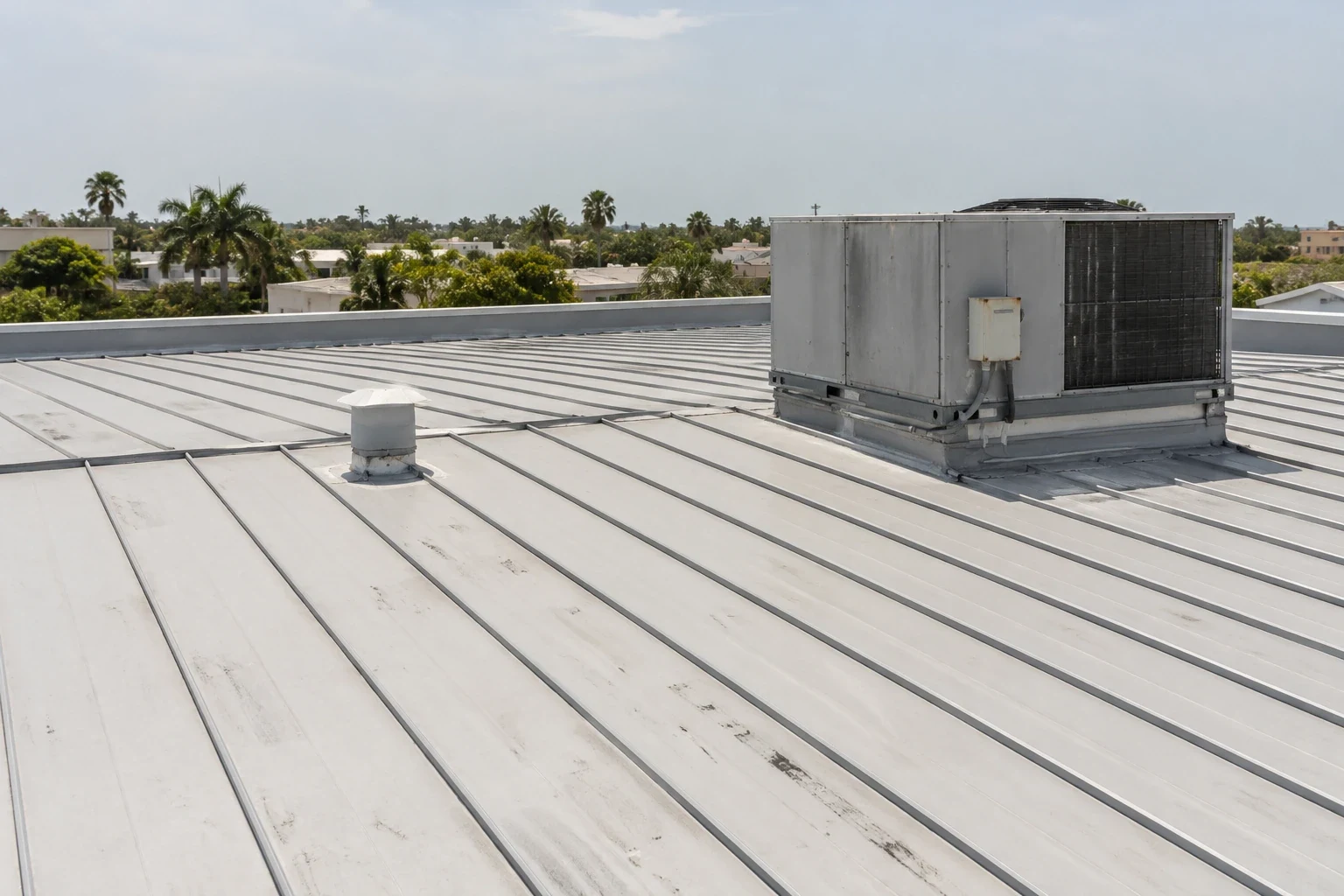
A standing-seam roof moves as its panels warm and cool. Clips and seams must allow the designed movement while keeping rain out. When a panel shifts, a seam opens or flashing pulls loose, we inspect the connection and the surrounding roof before choosing a repair. A metal roof needs details suited to its panel profile, not a patch copied from a membrane job.
Commercial and institutional properties near the University of Louisiana at Lafayette, the Cajundome and Ambassador Caffery Parkway include different roof geometries and operating needs. We inspect the particular panel system and document what the roof is doing before proposing work.
Identify the panel and seam
Standing-seam panels join at raised seams, with clips or other attachment details beneath the panels. Profiles and seam configurations vary. We identify the panel type where possible, inspect visible seam engagement and look for distortion, separation, corrosion and signs of movement. A roof plan or product record can help confirm details that are concealed.
Oil-canning, a wavy panel appearance, may be cosmetic or may accompany another issue. We check the seam, substrate, clip movement and panel edges rather than treat appearance alone as failure. Scratches, coating loss and rust also need context. A repair should address the affected metal and any water path below it.
At eaves and ridges, fasteners, closures and flashing meet the panel system. We check those transitions for gaps, loose metal and sealant that has lost adhesion. A sealant bead is not a substitute for a failed metal joint. We document the detail and explain whether repair can restore it or a larger panel replacement is needed.
Allow for panel movement
Metal panels expand and contract with temperature changes. The system's clips, seams and end laps accommodate that movement. If a fixed attachment binds the panel or a clip fails, stress can show up as buckling, pulled fasteners or an opening at a transition. We inspect for the source before tightening or sealing anything.
Equipment supports and walk paths can concentrate loads. Service crews may also drag tools across panels or attach equipment without preserving the seam detail. We ask about rooftop work and inspect the area around new supports, conduit or penetrations. If another trade changed the roof, we identify which correction belongs to that trade and which to roofing.
At Lafayette Regional Airport, the long-term daily-high average for both midsummer months sits above 92 degrees. Metal surface temperature and movement depend on exposure, finish and assembly. The local heat figure gives context, while panel geometry and attachment condition determine the inspection findings.
Trace leaks at edges and penetrations
Water entry can begin at a ridge, valley, end lap, eave, curb or wall transition. We follow stains and corrosion back toward likely entry details and check whether runoff is being directed into a joint. The flat-looking parts of a standing-seam panel may shed water well, while an interrupted seam or penetration needs a separate design.
Drainage varies by roof pitch and layout. We check valleys, gutters, downspouts, scuppers and areas where debris can back up. Lafayette's rainfall record includes 7.08 inches in June, the highest monthly airport normal. That makes clear runoff paths useful to review, especially where a metal roof meets a lower membrane roof or parapet.
A edge-metal and gutter inspection can address perimeter components. For an opening around a skylight or service penetration, flashing work must suit the metal panel profile. We do not seal a panel joint without confirming that water will continue to shed as intended.
Review storm marks before repair
After hail or high wind, we look for impact marks, displaced panels, opened seams, damaged ridge details and debris strikes. Lafayette's severe-weather record includes large hail and tornadoes in the area between Lafayette and Breaux Bridge. That regional history can inform inspection timing, but it does not establish damage to an individual building. We document the actual metal condition.
Some dents affect appearance without compromising water shedding; some impacts damage coatings or seams. We compare the size and location of marks with the panel and attachment details. If the owner is making an insurance claim, photos and a condition record can help organize the observed scope. We do not assign a cause where the roof evidence does not support it.
For a broader assessment, our commercial roof inspection can record the system and visible concerns. If water is entering, leak repair can stabilize the affected area while permanent metal work is planned.
Choose between repair and retrofit
A standing-seam roof may need a localized panel, seam or flashing correction. We identify whether the metal is sound around the defect and whether fasteners, clips or underlayment are involved. Replacing a small panel can require access to adjacent seams, so the work area may extend beyond the visible damage. The scope should explain that connection.
If the roof is an exposed-fastener system rather than standing seam, a different repair or retrofit may fit. Our metal-roof retrofit service can be evaluated for that assembly. A low-slope section may instead use TPO roofing or another membrane system. We compare roof geometry and transition details before choosing a direction.
When corrosion, failed seams or recurring leakage cover a broad area, replacement may be more practical than repeated spot work. We document panel condition, edge details, substrate concerns and tie-ins to adjacent roofs. The owner can compare the repair boundary with a full replacement scope.
Plan access for the building
Metal roofs can be slippery, and panel ribs change footing. Access, fall protection and approved walk paths should be settled before work begins. The property manager identifies roof access rules, occupied areas below and any restrictions on staging or lifts. We protect panels from tool damage and keep loose materials clear of gutters and valleys.
UL Lafayette reports a main campus footprint exceeding 150 acres; its buildings total more than 2.1 million square feet. A campus setting calls for building-specific access notes and labels. That campus fact does not say which roof systems are present; we inspect each structure before discussing panel work.
For a commercial location near Ambassador Caffery Parkway or within the LEDA Industrial Park, delivery access and operating hours still come from the property team. We coordinate a repair window, explain which areas need access and keep the work boundary clear.
Questions About Standing Seam Metal Roofing
Can you seal a leaking standing seam with roof cement?
A sealant bead may hide the opening while leaving panel movement or a failed seam unresolved. We inspect the joint and attachment, then specify a metal detail that restores water shedding without binding the panel.
Do dents mean a metal roof needs replacement?
Not automatically. We check whether impact affected the coating, seam, panel attachment or drainage. The repair decision follows the observed damage and the roof's broader condition.
Why does a standing-seam panel buckle?
Movement restraint, clip trouble, substrate changes or improper installation can contribute. We inspect panel alignment and attachment details before choosing a correction.
Can you repair a few damaged metal panels?
Often, if adjacent seams and the supporting assembly are sound. Access to the panel edges may affect the scope. We document the repair boundary and any nearby conditions that could change the work.
How is standing seam different from exposed-fastener metal?
Standing-seam panels join at raised seams and commonly conceal clips. Exposed-fastener panels use visible fasteners through the sheet. The profiles require different inspection and retrofit details.