
Restaurant Roofing in Lafayette, LA
Home / Property Types We Roof / Restaurant Roofing
Talk With Our Lafayette Team
Tell us where the leak appeared, what equipment was recently serviced and when the property can be accessed. We will inspect the roof and discuss a clear repair path.
Call 555-555-5555
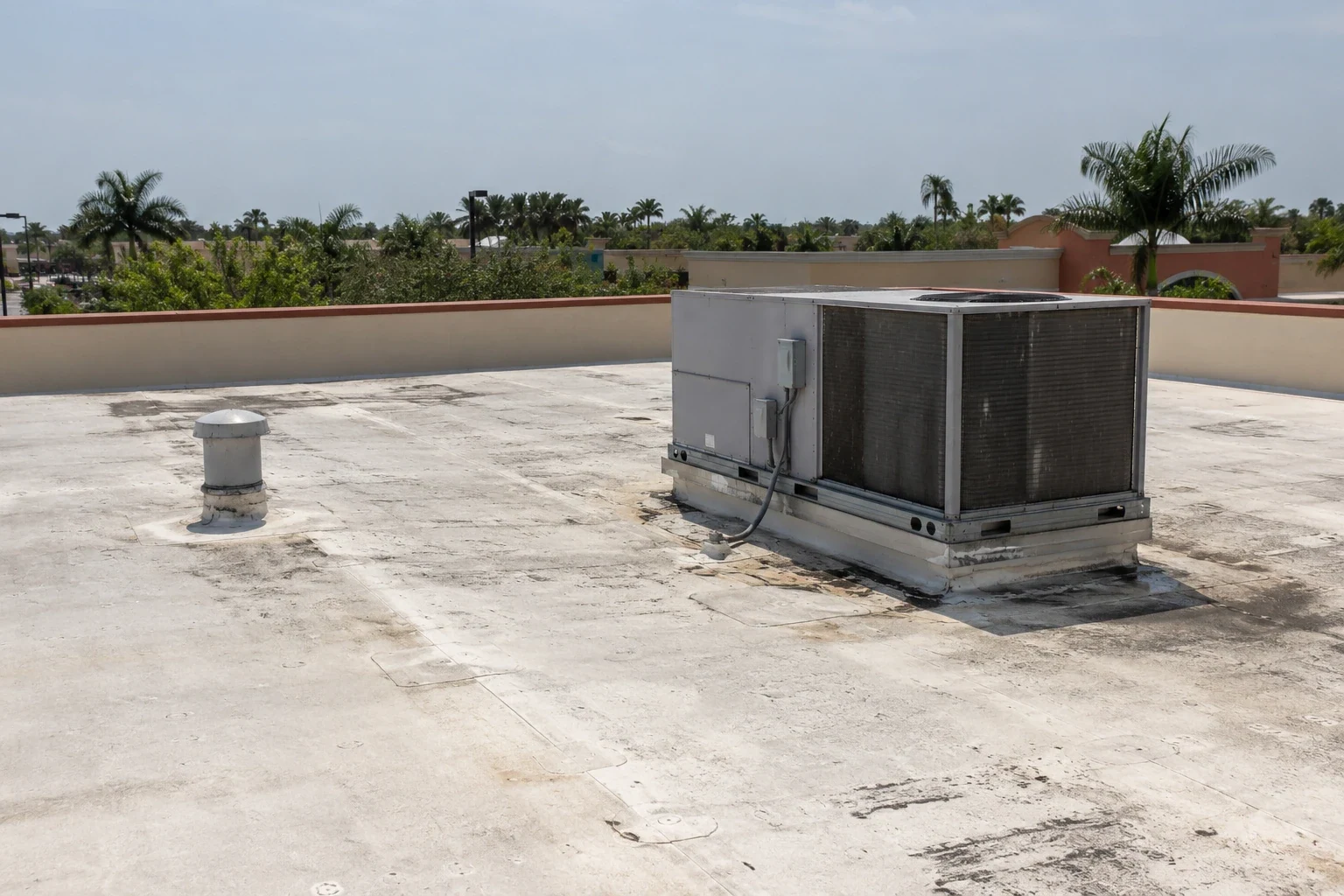
Review the restaurant roof and exhaust details
The kitchen is preparing for service when a stain appears near the exhaust hood. The roof opening may be at the fan curb, a pipe boot or a seam farther up the slope. We check the roof above the affected room, inspect the exhaust transition and follow the drain path before scoping a repair.
River Ranch includes food-service tenants alongside office, grocery, banking and healthcare uses. That mix gives Lafayette restaurant operators a local example of commercial properties with different schedules under one district; each kitchen still needs its own roof inspection because its exhaust, curb and drain layout is specific to that building.
Inspect the hood and fan curb
Kitchen exhaust fans, grease ducts, make-up air units and plumbing vents create roof penetrations that need compatible flashing. We look for lifted corners, open seams, movement around a curb and signs that an equipment vendor has disturbed the membrane. A fan that vibrates or a curb that has shifted can stress nearby details. We note the roof condition and coordinate equipment work with the mechanical contractor.
Grease can collect at an exhaust discharge and around service areas. The kitchen vendor follows its cleaning procedures; the roofing inspection checks whether the membrane, flashing and adjacent surfaces remain intact. We do not treat residue alone as proof of a roof defect. If the curb is sound but water is entering nearby, we extend the inspection to seams, walls and drainage.
Rooftop curb and support work can address the roofing tie-in. For a confirmed opening, commercial leak repair can correct a defined detail. The written scope identifies any equipment work that belongs to the restaurant’s HVAC vendor.
Trace stains around dining and prep areas
A water mark above a dining room may originate near a kitchen wall or equipment line. Water can travel across a deck before it becomes visible, so we inspect the roof area above and around the report. We compare the interior mark with curbs, pipe boots, seams, drains and perimeter flashing. A ceiling stain gives us a search area, not a confirmed entry point.
Restaurants store food, utensils, packaging and cleaning supplies in different rooms. Management tells us which areas need protection, who can approve interior access and when customers are present. If water is active after hours, emergency response is available nights, weekends and holidays. We can stabilize a roof opening and return to define the permanent work when conditions allow a close inspection.
A commercial roof inspection can compare multiple details around the affected room. We photograph the evidence and mark what is known versus what needs testing so the manager can decide whether a short service visit is sufficient.
Work between deliveries and service
Restaurant operations have delivery, prep, service and cleanup periods. A lift or material delivery can block a vendor route or guest entrance if the timing is not checked. We ask management about receiving hours, outdoor seating, fire access and when work noise will interrupt service. The plan identifies where materials will sit and which entrance remains open.
Some roof repairs can happen above the building without entering the kitchen. If an interior check is needed, the manager selects a time and confirms which rooms may be accessed. We keep the work boundary limited, maintain a dry-in and report any change before moving to another roof zone. The Johnston Street-Louisiana Avenue corridor is an 8.5-mile commercial connection through Lafayette; for a site there, we confirm the service entrance, lift position and staging area with the property contact before scheduling delivery.
Occupied-building reroofing can stage larger work around an operating restaurant. We set the work section, expected noise periods, daily closeout and access route with the property contact before mobilization.
Keep grease and rainwater out of the drain path
Grease deposits near a discharge and food-service debris near roof access can complicate maintenance. We inspect the drain bowls, scuppers, gutters and overflows, then note what is blocking the path. In the airport’s climate record, June averages 7.08 inches of rain; the annual precipitation normal is 60.50 inches. That local rainfall record supports keeping outlets accessible, even when the roof issue first appears around kitchen equipment.
A blocked drain can create standing water, but an open outlet does not fix a low area or a shifted roof detail. We photograph where water remains and check seams and penetrations around it. Drain cleaning, slope correction and membrane repair are separate work items. The scope should say which condition the repair addresses.
Drain and scupper service can address an obstructed outlet or damaged fitting. If ponding continues after cleaning, we can map the area and discuss a separate roof-plane review.
Select repairs for the installed roof
Restaurant buildings can have a low-slope membrane, modified bitumen, built-up roof or metal assembly. We identify the system before proposing a patch. Membrane seams and curb flashing use different details than metal laps or exposed fasteners. Prior coatings or repair layers also affect preparation and compatibility.
A restaurant with multiple locations may share maintenance standards with a grocery store roof program, while a lodging property with dining service may use hotel roofing coordination. Each address needs a separate inspection because kitchen equipment, exhaust, drain layout and access can differ.
We record the assembly, the observed defect and the materials proposed. If a replacement is being considered, the scope can include insulation, drains, curbs and edge transitions. A surface change alone will not correct a loose curb or a blocked outlet.
Keep vendor and roof records aligned
A restaurant may have separate service records for roofing, exhaust cleaning, HVAC and plumbing. Keep dates, equipment locations, roof photos and leak reports together. We can label roof zones by kitchen, dining room, loading area or suite, then note which detail was repaired and what remains for another trade.
River Ranch is a mixed-use commercial district with restaurant tenants alongside offices, grocery, banking, and healthcare uses. At each restaurant, the manager confirms operating hours, service entrances, and roof access before work begins.
Call when water appears near the hood, a mechanical service visit changes a curb or the roof drain backs up. We will inspect the related area, document the condition and give the owner a clear next step.
Questions About Restaurant Roofing
Can kitchen exhaust cause a roof leak?
A fan curb, duct penetration or disturbed flashing can admit water, but the equipment itself is not enough to diagnose the roof. We inspect the tie-in and nearby seams, then coordinate mechanical work separately.
Can roofers work without closing the restaurant?
Many repairs can be completed with a defined roof zone and a schedule for deliveries, guests and noise. Management identifies access limits, and we set staging and daily protection around them.
What should staff report when a leak appears in the dining room?
Share the room, time, weather and any recent work on the exhaust or HVAC. We compare those details with roof penetrations and drainage, then document the conditions that support the repair scope.
Is grease on the roof a sign that the membrane has failed?
Not by itself. We inspect the membrane, flashing and curb for an opening or damage. The restaurant’s exhaust vendor handles cleaning, while the roofing scope addresses a confirmed roof defect.
How should a restaurant plan for a full reroof?
Set delivery and service windows, guest routes, staging, noise limits and the order of roof zones. We document daily dry-in and identify who approves concealed-condition changes before work begins.