
Grocery Store Roofing in Lafayette, LA
Home / Property Types We Roof / Grocery Store Roofing
Talk With Our Lafayette Team
Share the affected department, equipment location and receiving limits. We will check the roof detail, document the findings and coordinate a repair plan with store management.
Call 555-555-5555
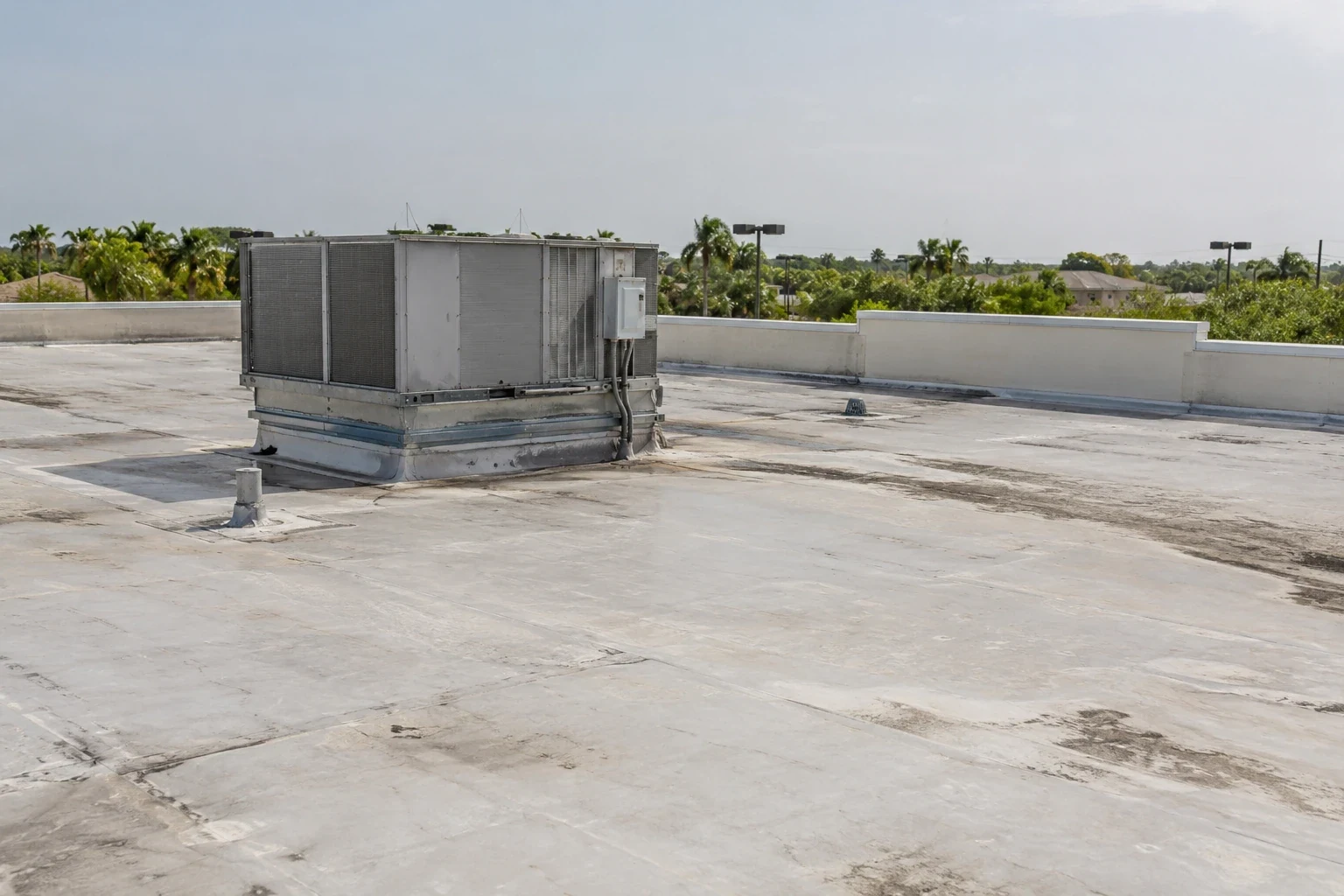
Inspect the grocery store roof
A refrigeration service call can bring a technician to a roof curb before store management knows a roof detail has changed. We inspect the curb, nearby seams and drain path, then compare those conditions with any interior moisture report. The roofer and refrigeration contractor may need separate scopes, but both should know which equipment area is involved.
River Ranch commercial district’s published tenant roster includes The Fresh Market, Ochsner Lafayette General, banks, law firms and outpatient health providers. The Scott I-10 and St. Mary Street corridor plan also records newer retail near I-10 and St. Mary Street, including grocery, farm-supply and restaurant uses. Those local examples give useful context for retail operations; they do not identify a specific store’s roof assembly or service schedule.
Check rooftop refrigeration details
Refrigeration piping, condensers, exhaust fans and electrical feeds create roof penetrations and support points. We look at flashing around each opening, curb corners, nearby seams and the path water takes past the equipment. If a technician has replaced a line or moved a unit, we ask for the service record and note the changed roof detail.
Condensation at a pipe or equipment cabinet can be mistaken for a roof leak. We inspect the roof surface and compare the interior report with the location of the penetration. The mechanical vendor can evaluate equipment drainage and condensate lines; our scope addresses the membrane, flashing and roof opening. That separation avoids assigning a roof repair to a plumbing or refrigeration issue.
Roof curb and support work can address the roofing transition at a unit. If water is entering now, commercial leak repair can address a confirmed opening. We record any follow-up needed from the equipment contractor.
Track water around drains and coolers
Water can collect around rooftop units, travel along the membrane and reach a ceiling away from the equipment room. We inspect drain bowls, scuppers, low areas and overflows, then note whether debris or a roof detail interrupts the path. Lafayette’s warm, humid conditions and heavy rainfall make regular drainage checks useful, while the observed roof condition tells us whether the need is cleaning or repair.
In the store, a wet ceiling near a cooler or freezer should be documented by time, room and extent. That record helps compare the interior sign with roof conditions and mechanical service dates. We do not assume that a temperature-controlled room means the roof is the source. A roof inspection checks the roof system and identifies where another trade should investigate.
Drain and scupper service can address a blocked or damaged outlet. For a wider view, a commercial roof inspection can map the surrounding membrane, penetrations and drainage area.
Keep receiving and customer routes open
Grocery deliveries, customer entry and waste pickup may use different sides of the building. We review truck paths, loading hours, fire access and marked pedestrian routes before setting a lift or staging materials. The manager identifies spaces that must remain open. The roof phase should leave a clear way to reach the store and a known route for vendors.
Some repairs can be completed above one roof zone while the sales floor remains open below. Noisy work, staging or temporary closure should be scheduled with management. We limit the open work area to what can be protected and closed by the end of the shift. If the schedule changes, the site contact needs to know before the next delivery or customer period.
Occupied-building reroofing can coordinate roof phases with ongoing operations. We set out work limits, daily dry-in and the contact responsible for approving changes.
Match the repair to the installed membrane
A grocery store can have a single-ply membrane, modified bitumen or metal roof, and additions may not match the original construction. We identify the material before choosing a patch. On a membrane, we inspect welded seams, lap edges and flashing. On metal, we check panel joints, fasteners and penetrations. Past repairs matter because an incompatible patch can complicate the next service call.
Cold rooms and back-of-house spaces may have equipment that requires frequent access above them. Cold-storage roofing considers that equipment and building use, while restaurant roofing often addresses exhaust and grease-related details. A grocery property can share some of those concerns, but we scope the roof based on the actual unit and its surrounding assembly.
If a roof has repeated leaks, wet insulation or widespread membrane wear, we document the extent before comparing repair and replacement. A new surface alone will not correct a drain issue or an unsealed curb.
Compare service calls with a larger project
An isolated pipe flashing can be a focused repair. Repeat leaks around several units or moisture across multiple bays may call for a wider assessment. We mark each defect by roof area and state what is visible, what is confirmed and what needs testing. That record helps an owner compare repair with a capital scope while keeping store operations in view.
Replacement documents should identify equipment coordination, curb work, staging, insulation, drainage, roof edges and daily protection. If a unit must be lifted, the mechanical contractor schedules that work and the roofer details the restored opening. Concealed deck or insulation damage should be reported and approved before the scope expands.
A commercial roof replacement assessment can consider the whole assembly. A service visit should still state which curbs, seams or drains were reviewed, so a later inspection has a useful starting record.
Keep roof and equipment history together
Store maintenance records can contain separate work orders for roofing, refrigeration, electrical and plumbing. A roof file should connect those dates with equipment locations, leak reports, photographs and repairs. We can label zones by department or roof area, then note any curb, line or drain that received attention.
River Ranch’s tenant roster includes The Fresh Market, while the Scott plan identifies grocery uses near the I-10 interchange and St. Mary Street. These references show that grocery activity sits within different Lafayette commercial settings. They do not establish whether another store has rooftop refrigeration, what equipment it uses or when deliveries occur. We confirm those details with the owner.
Call when a roof leak returns near an equipment curb, a technician has opened the membrane or a drain stays blocked. We can inspect the related roof detail, document our findings and explain the next repair step.
Questions About Grocery Store Roofing
Could a refrigeration problem look like a roof leak?
Yes. Condensate or a service line can leave moisture near a roof opening. We inspect the membrane and flashing, then note where the refrigeration contractor should check the equipment or drain line.
Can roofing work happen while the grocery store is open?
Often, with defined roof zones and a plan for receiving, entrances and customer paths. Management sets operating restrictions. We coordinate deliveries, staging and daily closeout with those limits.
What should we record when a cooler-area ceiling gets wet?
Note the room, time, extent and any recent equipment service. Those details help us compare the interior report with roof penetrations, drains and the surrounding membrane without assuming the source.
Do new refrigeration units require roof work?
A unit change can affect curbs, flashing or line penetrations. We inspect the roof tie-in and coordinate with the mechanical contractor so each trade handles its own connection and finish.
When is replacement more practical than another grocery roof patch?
Repeated defects, moisture spread, repair history and the condition of the underlying assembly inform that choice. We map the findings and explain what a new repair would leave in place.