Rooftop Equipment Curbs and Supports
Home / Commercial Roofing Services / Rooftop Equipment Curbs and Supports
Talk With Our Lafayette Team
Tell us where the equipment sits, what roof system is in place and whether a leak has appeared inside. We will inspect the transition, explain the findings and outline a practical repair or coordination plan.
Call 555-555-5555
Have a curb or support detail checked
A rooftop unit can run for years while its curb quietly collects trouble. Lafayette heat and hard rain test these transitions. We inspect the curb, membrane, fasteners, counterflashing and nearby drains together. Then we explain whether the detail needs a focused repair, a curb adjustment or coordinated roof work.
That inspection matters on busy properties along the Johnston Street-Louisiana Avenue corridor, across Lafayette, and in commercial districts near the LEDA Industrial Park. Every roof has its own layout, membrane and maintenance history.
Where equipment details fail
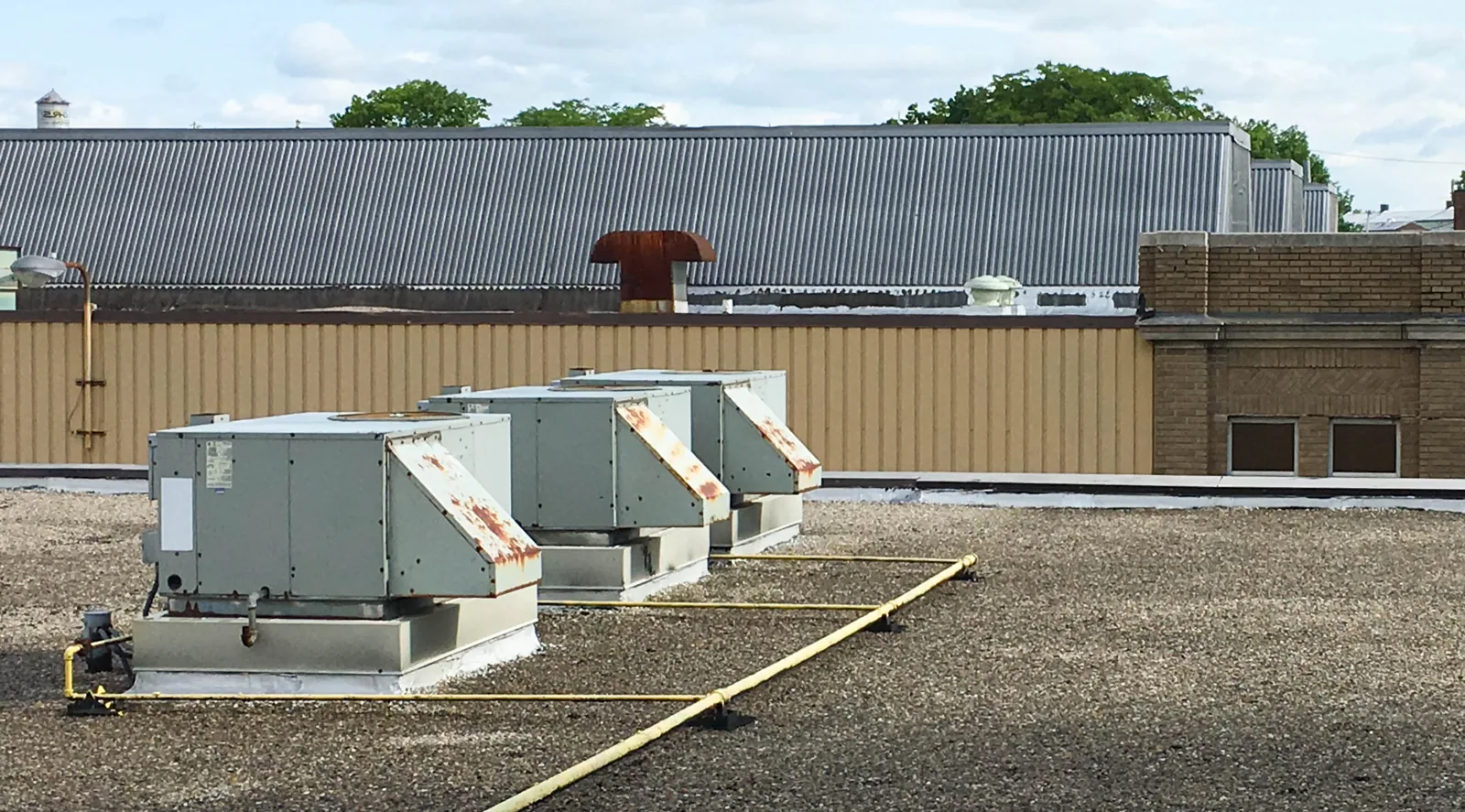
Curbs interrupt the roof surface. The membrane must turn up the curb without leaving a loose edge, open corner or pocket that traps water. Pipe supports create another kind of interruption. A support may bear on the roof, pass through it, or sit on a protective pad. Each arrangement needs a detail suited to its movement and load.
We look for split or lifted flashing, exposed fasteners, cracked sealant, crushed insulation, loose counterflashing and signs of water tracking beneath the membrane. Rust at a metal curb can stain the roof and signal that the metal edge needs attention. A gap at one corner may draw water inward even when most of the flashing appears intact. We document the location and condition before recommending work.
Rainfall is a practical concern here. June averages 7.08 inches in the airport's climate table, while the year totals 60.50 inches. That local pattern makes drainage around equipment worth checking during the same visit.
A closer look at the curb assembly
We identify the roof system first. TPO, PVC, EPDM, modified bitumen and built-up roofs use different materials and repair methods. A patch chosen without that information may not bond correctly or may complicate a future replacement. We check the existing flashing type, laps, termination bar, sealant, curb height and nearby field seams. We also note whether the curb sits level and whether equipment vibration appears to be affecting the detail.
We then trace water around the unit. Debris, low spots and crowded equipment can slow runoff even when a drain is nearby. We record ponding, clogged strainers and visible separation. If a leak has been reported, we compare the interior location with exterior evidence instead of assuming the curb is responsible.
For broader roof conditions, an inspection of the roof system can place the equipment detail in context. If moisture is suspected beneath the surface, an infrared moisture survey may help identify areas for verification. These services answer different questions. The inspection evaluates visible condition; a survey helps locate possible trapped moisture that should be confirmed before repair or replacement planning.
Supports should protect the roof
Pipe stands, conduit frames and service platforms can concentrate weight on a small area. We check for a stable base, protective separation and signs that a leg has shifted or cut into the membrane. If a support is loose, the roofing repair alone may not solve the problem. The equipment or piping may need a qualified mechanical contractor to secure or reposition it. We coordinate the roofing portion and identify where another trade's work is needed.
Pads must suit the membrane and the load above them. A hard edge can abrade roofing as equipment moves; a debris-trapping pad can keep it wet. We recommend a compatible detail rather than a generic patch.
When the equipment plan calls for new units or relocation, our roof insulation and cover board work may be part of a larger assembly decision. A commercial roof replacement can include curb coordination when the project documents call for it. Scope depends on the roof condition, equipment drawings and project sequence. We do not treat a curb repair as permission to alter mechanical equipment.
Repair without losing the roof context
A focused repair may be appropriate when the membrane remains serviceable and the affected transition is accessible. We remove failed materials as needed, prepare the surface and install compatible flashing. The repair should carry water away from the curb and tie into sound roofing, not merely cover the most visible opening. We inspect adjacent seams and corners before closing the detail.
Some curbs need more than a patch. If metal is deteriorated, the curb is too low for the roof build-up, or insulation is wet, a wider correction may be warranted. We explain what evidence supports a larger scope and what remains uncertain. When a leak is active, we can trace the entry path and stabilize the affected area.
On older roofs, previous repairs may conceal the original membrane or create layers that complicate a new tie-in. We record visible repair history and ask about prior service when available. A maintenance plan can track recurring details and drainage paths. Good records help the next technician compare conditions instead of starting from memory.
Working around operating buildings
Equipment access can involve tenant areas, locked roof hatches, alarms or scheduled shutdowns. Before work, we confirm the access route, roof loading limits and any site rules with the property contact. We protect the work area, keep tools and materials controlled, and coordinate around mechanical service where needed. We do not start work that requires a unit shutdown until the responsible facility team agrees on timing.
That approach is useful for mixed-use sites. PlanLafayette identifies downtown, Oil Center, Johnston near Acadiana Mall and Ambassador Caffery North among the parish's mixed-use centers. The building may serve offices, retail, restaurants and residences under one roof. We plan the work so that the customer knows which areas are affected, how roof access is managed and when the work area will be cleared.
At sites in Oil Center, we confirm access rules with the owner. A roof asset management program can keep recurring curb checks in the building record.
What the written scope should show
A useful scope names the curb or support, identifies the roof material where known, and states what will be removed, repaired or replaced. It should also describe the tie-in area and any access or shutdown assumptions. If the inspection cannot confirm concealed conditions, the scope should say what would trigger a change. Clear notes make it easier to compare a repair with replacement planning.
Photographs show both the roof location and the failed edge. We identify multiple curbs individually so the property manager or mechanical contractor can review each condition before scheduling.
Our aim is a durable roof transition and a practical next step. The recommendation may be a small repair, follow-up observation or coordinated project. We explain the difference in plain language and answer questions before work begins. There is no benefit in replacing a whole roof when a sound, accessible curb detail can be corrected. The reverse is also true: a repeated patch is not a lasting plan when the surrounding roof has reached the end of its service life.
Questions About Rooftop Equipment Curbs and Supports
Can you repair flashing around an existing rooftop unit?
Yes. We first confirm the roof material, curb condition and access. If the surrounding membrane is sound, a compatible flashing repair may be enough. If deterioration extends into the field, we explain the additional area and why it matters.
Do pipe supports need to be removed before roofing work?
Sometimes. It depends on the support design, piping load and repair access. We coordinate the roofing scope with the property team and mechanical contractor. We do not disconnect or move operating equipment without the responsible trade's direction.
Why check drainage when the leak is beside a curb?
Water can collect around a curb or travel from another roof detail before entering the building. Lafayette's heavy seasonal rainfall makes the surface path worth checking. We inspect nearby drains and low areas as part of tracing the entry point.
Can curb work be included during a roof replacement?
Yes. Replacement planning is a good time to review curb height, equipment layout and flashing transitions. We can coordinate the roofing detail with project drawings, while mechanical changes remain with the qualified equipment contractor.
What should our staff do before the crew arrives?
Share roof access instructions, equipment restrictions, site safety rules and any required service windows. Tell us whether a unit is critical to a tenant or process. We will confirm the work area and schedule with your contact before mobilizing.