
Hotel Roofing in Lafayette, LA
Home / Property Types We Roof / Hotel Roofing
Talk With Our Lafayette Team
Tell us which room or service area is affected and when guest access is restricted. We will inspect the roof, record the findings and coordinate the repair plan with management.
Call 555-555-5555
Schedule a hotel roof inspection
A guest reports water near a hallway light just as the front desk begins a shift change. The room above may be dry, while a roof detail farther away feeds the stain. We inspect the roof area, trace nearby seams and penetrations, then set a work zone the hotel manager can coordinate without guessing which rooms may be affected.
Opelousas includes a Hilton Garden Inn with an educational training facility for University students. Duson form a separate campus area with an arena and convention center. These Lafayette places support lodging, training and event activity, but each hotel’s roof system and guest schedule must be confirmed at the property.
Keep rooms and public paths usable
Guest rooms, lift lobbies, meeting space and service corridors do not share one access schedule. Management identifies occupied rooms, housekeeping windows, meeting bookings and restricted areas before roof work begins. We review where a lift can sit, how materials reach the roof and which entrances must remain open. A guest route should be clear at check-in, even if a roof phase is active elsewhere.
Noise can travel through the deck into a room or meeting space. We ask which hours are most sensitive and set disruptive tasks within agreed periods where practical. If a room needs interior inspection, the hotel confirms access and guest privacy procedures. We limit entry to the authorized area and report any change in the work plan.
Occupied-building reroofing can phase roof work around hotel operations. The daily plan sets the zone, access route, protection, noise activity and closeout check for the shift.
Locate the source before moving guests
Water at a ceiling fixture can come from a curb, seam, roof edge or drain area. It may travel across the deck before appearing in a corridor or guest room. We check the roof above and around the report, then compare it with roof openings and the route water can take. We document the visible evidence and identify any area that needs additional testing.
The hotel decides which room or corridor needs immediate protection. We can isolate a confirmed roof opening and stabilize it when conditions allow safe access. Emergency response is available nights, weekends and holidays for active water entry. After stabilization, we return to inspect the detail and define permanent repair limits with the property contact.
A commercial roof inspection can review a wider area around the leak. If the entry point is known, commercial leak repair can address the defect. Photos and roof-zone labels help management connect the work to the affected rooms.
Check rooftop units and guest-room penetrations
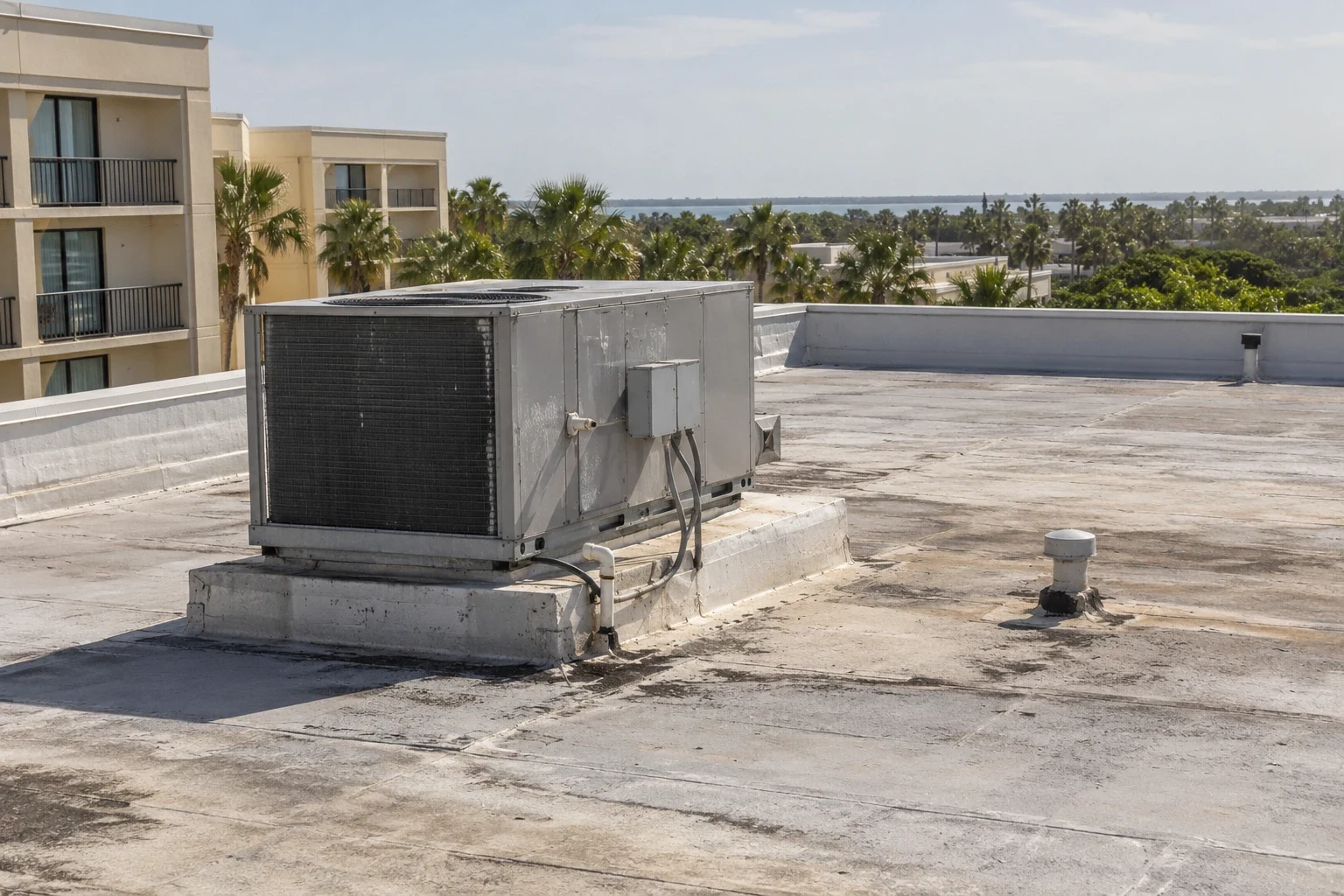
Hotels may have rooftop HVAC units, kitchen exhaust, plumbing vents, lift machinery and service lines. We inspect curb corners, pipe boots, seams and the membrane around each opening. A mechanical vendor may have moved equipment or added a line, so recent service records can narrow the inspection. We coordinate any lift with the equipment contractor and confirm who restores the roof tie-in.
Leaks can appear below a rooftop unit without starting at its curb. Water may enter at an upslope seam or collect near an overflow. We check drains and the surrounding roof plane before assigning the cause. If a repair is needed, the scope names the roof detail; it does not substitute roofing work for mechanical repairs.
Hotels with dining service may also need to consider restaurant roof details such as exhaust transitions. An apartment building has separate multifamily roof planning needs, especially around resident access. Similar uses do not establish a shared roof system.
Review drainage before the wet season
A slow drain can leave water near an equipment curb long after a storm. We inspect bowls, scuppers, overflows and gutters, then note ponding or debris that restricts the path. Lafayette Regional Airport’s annual precipitation normal is 60.50 inches, with 7.08 inches as the June normal. The local record makes drainage worth including in hotel maintenance, while the onsite roof determines whether a correction is needed.
Cleaning an outlet is different from changing the roof slope. We note if water remains after an outlet clears and whether seams or flashing show wear near the low area. A coating or membrane replacement will not correct the drain path unless that work is included in the scope.
Drain and scupper service can correct a blocked outlet or damaged fitting. We can document a larger ponding area separately and discuss options before including it in a project.
Choose a repair that fits the roof assembly
A hotel can contain different roof assemblies across original construction and later additions. We identify the membrane or metal profile and review the repair history before selecting a material. Single-ply seams, multi-ply surfaces and metal panel laps each need a compatible detail. If a coating or prior overlay is present, we check its condition and how it affects the next repair.
Work scope also depends on equipment access and roof traffic. A path used by service vendors may need protection, and drains should remain accessible after the work. We mark penetrations, edges and transitions in the inspection record so future maintenance can locate the same details.
If leaks recur across several sections or moisture is found in the assembly, we compare a targeted repair with a broader project. A commercial roof replacement assessment can consider insulation, flashings, drainage and edge metal together.
Plan for check-in, events and closeout
Material delivery, roof access and noisy work should be coordinated with front-desk staffing and scheduled meetings. Management can identify peak arrival periods, event room use and housekeeping access. We set the planned work area and provide a contact for changes. The crew secures each opened section before leaving and reports any condition that requires a decision the next morning.
For a hotel with dining or conference services, the roof plan should include exhaust equipment, access doors and loading areas. A lift position that blocks a service entry can affect more than one department. We review staging with the manager and record any temporary restriction in the project sequence.
Call when water reaches a guest area, a drain slows or rooftop equipment has been serviced. We can inspect the related roof area, document the findings and discuss repair timing with the hotel team.
Questions About Hotel Roofing
Can a hotel keep guest rooms open during roof work?
Often, when roof work can be divided into zones and access is planned with management. We identify noise periods, guest routes, room access and the daily dry-in before starting a phase.
What happens if a leak is reported after the front desk closes?
The manager can request emergency service overnight, on weekends or during holidays. Our initial visit can protect a confirmed opening, with the full repair scope set after a close look at the roof.
How do you limit noise in occupied rooms?
The hotel identifies sensitive areas and times. We schedule disruptive tasks within agreed windows when possible, tell management which roof zone is active and keep the work boundary controlled.
Could a rooftop HVAC repair be related to a ceiling leak?
It can be, especially if a curb or line penetration was changed, but the leak may also enter elsewhere. We inspect the roof detail and coordinate with the mechanical vendor on the equipment connection.
What should a hotel include in a roof replacement plan?
Set room and event access limits, material staging, lift locations, equipment coordination, drainage work and daily protection. We define the roof phases and the approval path for concealed conditions.