
Auto Dealership Roofing in Lafayette, LA
Home / Property Types We Roof / Auto Dealership Roofing
Talk With Our Lafayette Team
Tell us which bay or showroom area is affected and when vehicles or customers need access. We will inspect the roof detail, document findings and coordinate a repair plan.
Call 555-555-5555
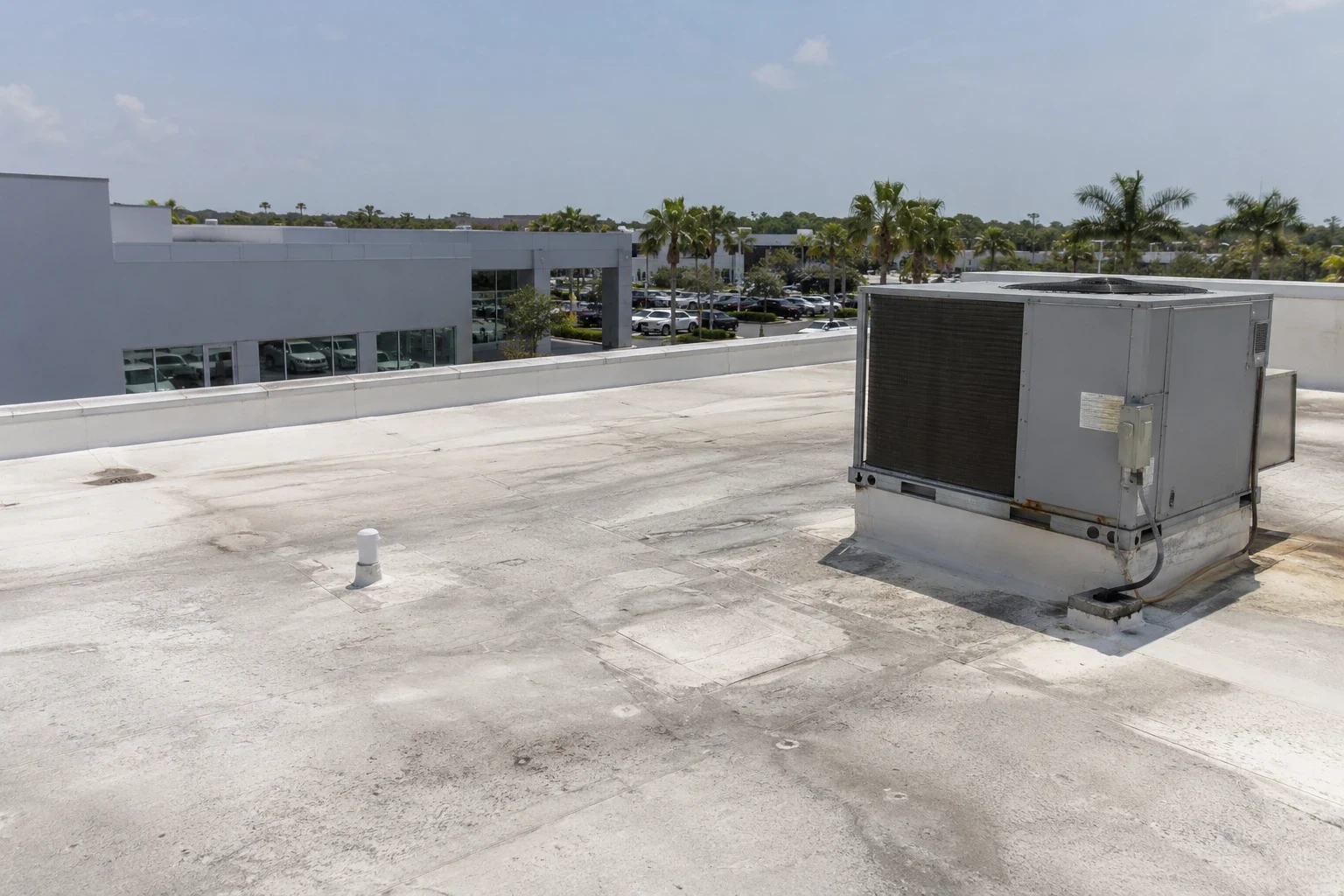
Inspect the dealership roof
A service advisor sees a drip near a bay door while technicians are moving vehicles. The roof opening could be over the shop, parts room or an adjacent showroom. We inspect the roof above and around the report, check equipment curbs and panel seams, then set a work zone that management can coordinate with customers and service staff.
Breaux Bridge I-10 and LA 328 corridor in Breaux Bridge is adjacent to a Mack and Volvo truck dealership along I-10. Billeaud Properties in Broussard fronts US 90 and Louisiana Highway 182 and has Union Pacific rail access. These local commercial sites illustrate different access and vehicle-service settings; they do not identify a separate dealership’s roof type or operating hours.
Keep showroom and service access working
A dealership can have a public entrance, vehicle display area, parts counter, shop bays and delivery doors. We review each route before staging materials or setting a lift. Sales staff identify customer hours and vehicle moves, while the service manager flags bay access, deliveries and areas that need protection. A work plan should say where the crew and equipment will be during each phase.
Showroom glass and vehicle inventory may sit below the roof work. We coordinate protection and debris control with the site contact. Loud operations can be scheduled in agreed windows where practical. If a phase shifts, management should know before a temporary barrier affects service or customer circulation.
Occupied-building reroofing can stage larger work around the dealership’s operating hours. The sequence identifies the active roof zone, vehicle paths, daily dry-in and who approves a change to the work boundary.
Trace water across sales and shop areas
A stain above a service bay may come from a curb, roof seam, wall or drain area several feet away. We compare the interior report with the roof above and nearby transitions, then look for moisture paths along deck joints and framing. We mark what is visible and where more testing may be needed.
The service manager can tell us when the drip appears, whether it follows rain and which equipment or ceiling area is affected. We also ask about recent HVAC, exhaust or signage work. A condensate line issue belongs to the mechanical system; a failed roof penetration needs a roofing detail. We inspect both the reported area and the path water could follow.
A commercial roof inspection can document the surrounding assembly. Once the entry point is confirmed, commercial leak repair can correct the detail without treating the nearest ceiling tile as the whole scope.
Check rooftop units, vents and exhaust
Shop ventilation, HVAC equipment, exhaust, signs and communications lines all meet the roof at penetrations or supports. We inspect curb corners, flashing, fasteners, seams and panel laps around these points. If a vendor has replaced a unit or added a line, the service record can help identify what changed. The equipment contractor handles unit work; our scope restores the roof tie-in.
Foot traffic to service equipment can wear a path across the surface. We look for damaged walk pads, loose fasteners, cut membrane and debris that blocks water flow. On metal roofs, panel movement and fastener condition matter. On a membrane roof, the seam and termination details need a compatible repair.
Rooftop curb and support work can address the roofing transition. If wind has moved edge metal or loosened a panel, we document that condition before discussing a separate correction.
Review visible storm damage by roof area
Hail and strong wind can leave different marks on metal panels, edge details and roof penetrations. A regional weather archive records a hail-producing storm with tornado activity on the Lafayette-to-Breaux Bridge stretch. That regional history makes post-storm inspection relevant, but it does not establish damage at every property. We look for visible impact, movement, punctures and displaced flashing on the dealership’s roof.
Photographs should show the affected area, nearby details and any interior sign. We separate observed damage from wear or previous repairs. If the building has both a metal shop roof and a membrane showroom section, each assembly gets its own notes and repair limits.
Where storm evidence is present, storm damage roof repair can document the affected roof areas. We can also help organize findings for the property owner’s claim process without making a coverage decision.
Compare repair with a wider roof project
A local split at one curb may need a service call. Repeated leaks across shop and sales areas, wet insulation or failing edges may call for a broader review. We map the condition by roof zone and explain what a focused repair would leave in place. That helps management compare repair, restoration and replacement on the same evidence.
Dealership owners comparing retail and production properties can also review big-box retail roofing and flex-industrial roofing. Loading, customer access and shop operations differ by building, so a scope from another format should not substitute for a site inspection.
A replacement plan can address insulation, drainage, roof edges, service routes and equipment curbs together. We note assumptions for vehicle staging and daily access before the project moves into procurement.
Keep service tickets with roof repairs
Dealership maintenance records may list an HVAC visit, exhaust repair, sign change and roof call separately. Keep those dates with photos and roof-zone labels. We can record whether a leak was traced to a curb, panel, seam or drain, then note the repair materials and any follow-up check.
Billeaud Properties’ roadway and rail access is documented separately from the nearby dealership’s use. At a dealership, the owner should identify vehicle routes and parts deliveries, while the roofer documents the actual roof assembly. Local access facts help frame coordination; the condition record remains tied to the property inspected.
Call when water reaches a service bay, a roof vendor has moved equipment or storm debris exposes a panel detail. We can inspect the roof, document the findings and discuss the next repair step with management.
A dealership's showroom, service bay, parts area, and customer parking can impose different access constraints even when they share a roof system. Map the affected zone, then plan equipment access and material staging to preserve service circulation. For leaks near rooftop units, inspect nearby curbs and penetrations as well as the membrane field; vibration or maintenance access may affect the detail. A phased repair plan should identify what can stay open and what needs temporary protection.
Questions About Auto Dealership Roofing
Can the showroom stay open during roof work?
Often, if staging and lift access are planned around entrances and vehicle display areas. Management sets customer and delivery limits; we define each work zone and closeout before the crew begins.
What should a service manager report about a roof leak?
Note the bay, time, weather and any recent equipment service. We compare those details with roof curbs, seams, panels and drains, then record what supports the repair scope.
Can a roof leak damage vehicles in a service bay?
An active leak can affect the work area below it. The dealership follows its vehicle protection procedures while we inspect the roof opening and secure a defined repair area.
Does hail damage require replacing every dealership roof?
No. We inspect each assembly and document visible impact, punctures, loose edge details and existing wear. The scope follows the affected areas and their condition.
How do you plan reroofing around vehicle deliveries?
We identify vehicle paths, delivery hours, lift placement and staging before setting phases. The daily plan keeps service access clear and states when a route may change.