
Storm Damage Roof Repair in Lafayette, LA
Home / Commercial Roofing Services / Storm Damage Roof Repair
Talk With Our Lafayette Team
Tell us what happened, where water appeared, and which areas need protection. We can inspect the roof, secure an opening, and document the repair work.
Call 555-555-5555
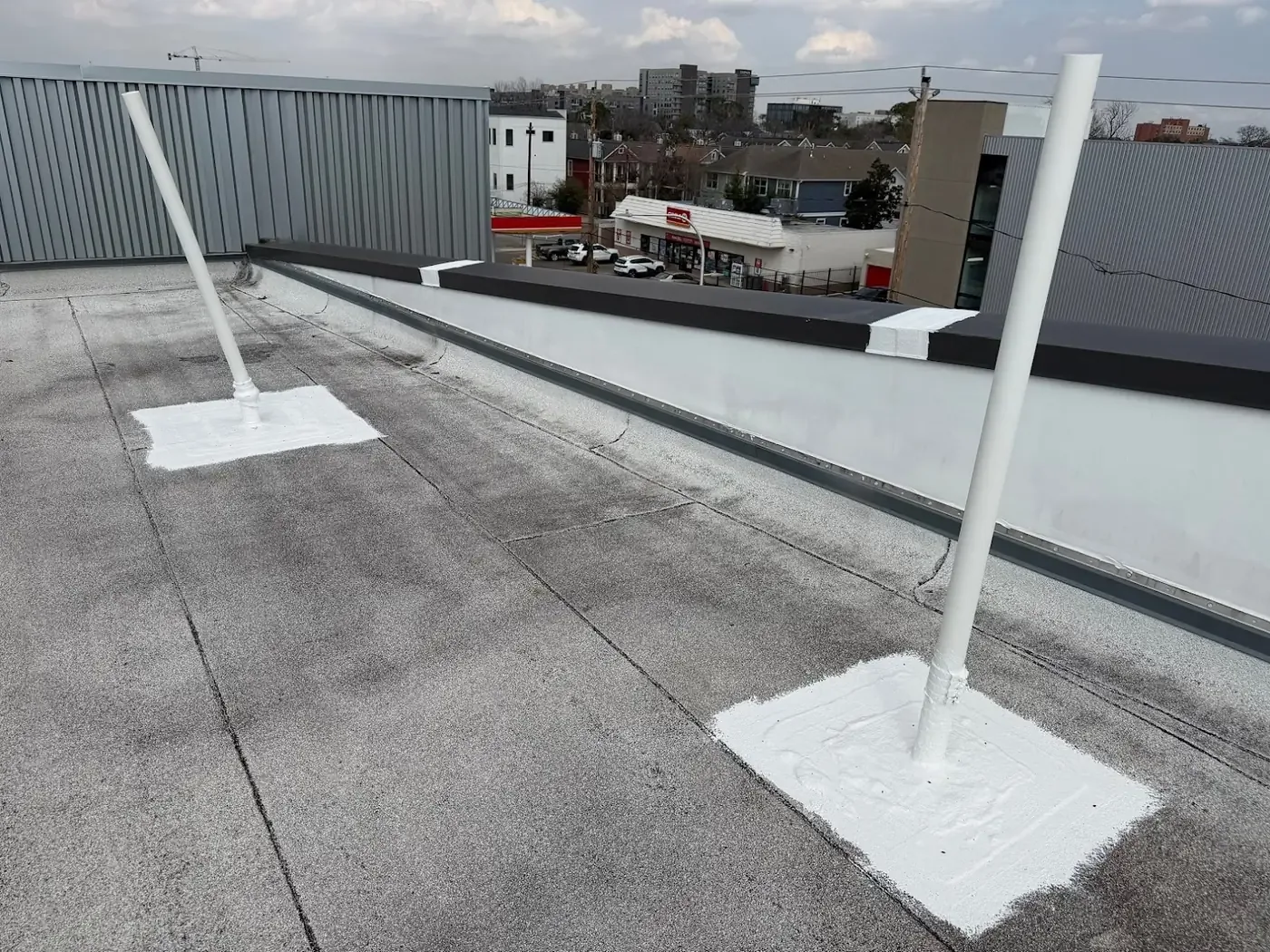
Document the storm damage
A branch on the roof or a row of bent coping is a reason to look closer, not a measure of the full damage. After severe weather, we inspect the roof surface, edges, seams, penetrations, and drainage, then document what changed. Lafayette, LA, prepares for tropical systems and also sees hail and tornado activity. The repair scope should follow the conditions found at this building, with temporary protection for any opening that cannot wait.
We ask when the weather passed, where water appeared, and whether anyone has already walked or patched the roof. Then we compare those reports with visible conditions and prior records. The National Weather Service documented a supercell with widespread large hail and two tornadoes between Lafayette and Breaux Bridge. That event is local context, not proof of damage at a specific address. Emergency roof protection is available around the clock, including holidays, when a new opening needs immediate attention.
Check safety before the roof
Keep occupants away from a leak area if ceiling materials sag or water is near electrical equipment. Do not send staff onto a wet roof to inspect a loose panel or fallen limb. Mark affected rooms, protect contents only when safe, and share roof access details with the response contact. If the roof surface or structure may be unstable, inspection waits until access can be made safely.
At a healthcare property on Ambassador Caffery Parkway, patient movement and critical services can shape the work window. The Our Lady of Lourdes regional campus provides 24-hour hospital service, so protection and communication need to account for continuous operations. We coordinate with the building contact, identify restricted areas, and keep a clear route for occupants. Temporary dry-in may be the first task; a full repair plan can follow once the roof is safe to evaluate.
Map what the weather changed
We look for displaced edge metal, open seams, punctures, loosened flashing, cracked curb corners, damaged rooftop equipment, and debris impacts. Hail can leave marks or fractures that need comparison with the roof material. Wind can move a panel or peel back a detail. Heavy rain may expose an obstructed drain or a low area that was not visible in dry conditions. Each observed item gets a location and a photo where useful.
Not every defect appeared in the same event. Age, prior repair, foot traffic, and maintenance can create conditions that storm weather makes visible. We separate recent damage from existing wear when the evidence supports that distinction. Lafayette's code references ASCE 7-16 wind charts for design loads; an inspection still records what is physically present, rather than infer a wind speed from a damaged seam. A hands-on roof review can document broader conditions beyond the reported area.
Match the repair to the damage
A puncture needs a compatible patch, while loose edge metal may require refastening or replacement of a damaged section. A split flashing corner needs a detail repair that ties into sound membrane. Hail damage can call for closer inspection across the exposed area before the repair boundary is set. We identify the system first, then prepare and repair the affected detail using materials suited to that roof.
Water can travel beneath a membrane after the point of entry, so we check for wet insulation around the damaged area. A localized defect may stay local. Repeated separation or broad moisture can change the plan. Wind-related roof repairs and hail damage reviews can focus the follow-up on the observed pattern. For a claim file, we can retain photos and a written account of the repair work performed.
Protect an opening before permanent work
If a storm leaves an opening, temporary protection can reduce further water entry while the permanent repair is prepared. The material and attachment method depend on the damage and roof surface. We state which area is covered and what remains exposed. When rain continues, a safe repair window may not be available, so the first response focuses on a stable dry-in and protection of the interior.
Lafayette's long-term airport data puts June's normal precipitation at 7.08 inches, and the yearly measure at 60.50. That local rainfall pattern makes a dependable stopping point important when storm work is underway. We review current conditions and sequence work in manageable areas. Around-the-clock emergency response is available on nights, weekends, and holidays, while the property contact receives an update on temporary protection and the next inspection step.
Build a clear storm record
A storm file is more useful when it separates the reported event from what the inspection found. We record the date reported, affected roof zones, visible damage, temporary measures, repair materials, and areas needing further testing. We can include photos and a site sketch so the property manager can locate each item. The record should not label a cause that inspection has not established.
Commercial locations around River Ranch include offices, retail, grocery, healthcare, banking, and professional services. On an occupied site, the file can note which areas were affected and how access or tenant activity shaped the repair sequence. We coordinate repair timing with the property contact and preserve a useful closeout for future maintenance. A photo-backed roof report can keep storm findings with the building's service record.
Decide what needs follow-up
After repair, we review whether the damage was isolated or part of a broader roof condition. Moisture readings, core samples, open seams, and repeated edge problems may call for further testing or a replacement comparison. A sound repair can address a localized storm opening, but it does not correct unrelated drainage, insulation, or deck issues. We list separate follow-up items instead of rolling every concern into one vague scope.
If the event affects several buildings, a consistent record helps managers compare damage without assuming each roof failed in the same way. Claim documentation support can organize inspection and repair records, while Rayne illustrates why building use belongs in the repair schedule. We explain what was corrected and what still warrants a close look.
After weather clears, document the roof before moving damaged material whenever site safety allows. Record the affected section, loose or displaced components, water entry, and temporary protection separately from permanent repairs. A prompt interior check can help connect ceiling staining to the roof map, but the stain alone does not establish the entry point. This sequence gives the owner a usable scope for immediate stabilization and a separate list of conditions that need further investigation.
Questions About Storm Damage Roof Repair
How soon should a commercial roof be checked after a storm?
A new leak, loose edge, or visible opening needs prompt attention. We first assess safety and protect active entry, then inspect the affected area and nearby details. If no damage is visible from a safe position, a documented roof review can still establish what was checked and what should be monitored.
Can you tell whether hail caused a roof defect?
We look for impact patterns that fit the roof material and compare them with older wear, repairs, and surrounding areas. The inspection records what is visible and whether testing is needed. A regional hail report alone cannot establish damage at one property, so the roof condition controls the repair scope.
What if the roof is still leaking after a temporary patch?
We revisit the protected area and trace whether water is entering at the original opening or a nearby detail. Temporary dry-in is intended to limit exposure, not replace the permanent repair. We update the protection and schedule compatible corrective work when the roof is safe to handle.
Can storm repairs be documented for an insurer?
We can provide photos, location notes, observed conditions, and a description of completed repair work. Those records may help the owner assemble claim information. Coverage decisions remain with the insurer, and our report distinguishes inspection findings from conclusions that require separate review.