
Holcim Elevate Commercial Roofing in Lafayette, LA
Home / Roofing Manufacturers / Holcim Elevate Commercial Roofing
Talk With Our Lafayette Team
Share the system records you have and point out the leak or repair area. We will confirm the material and explain the work that fits.
Call 555-555-5555
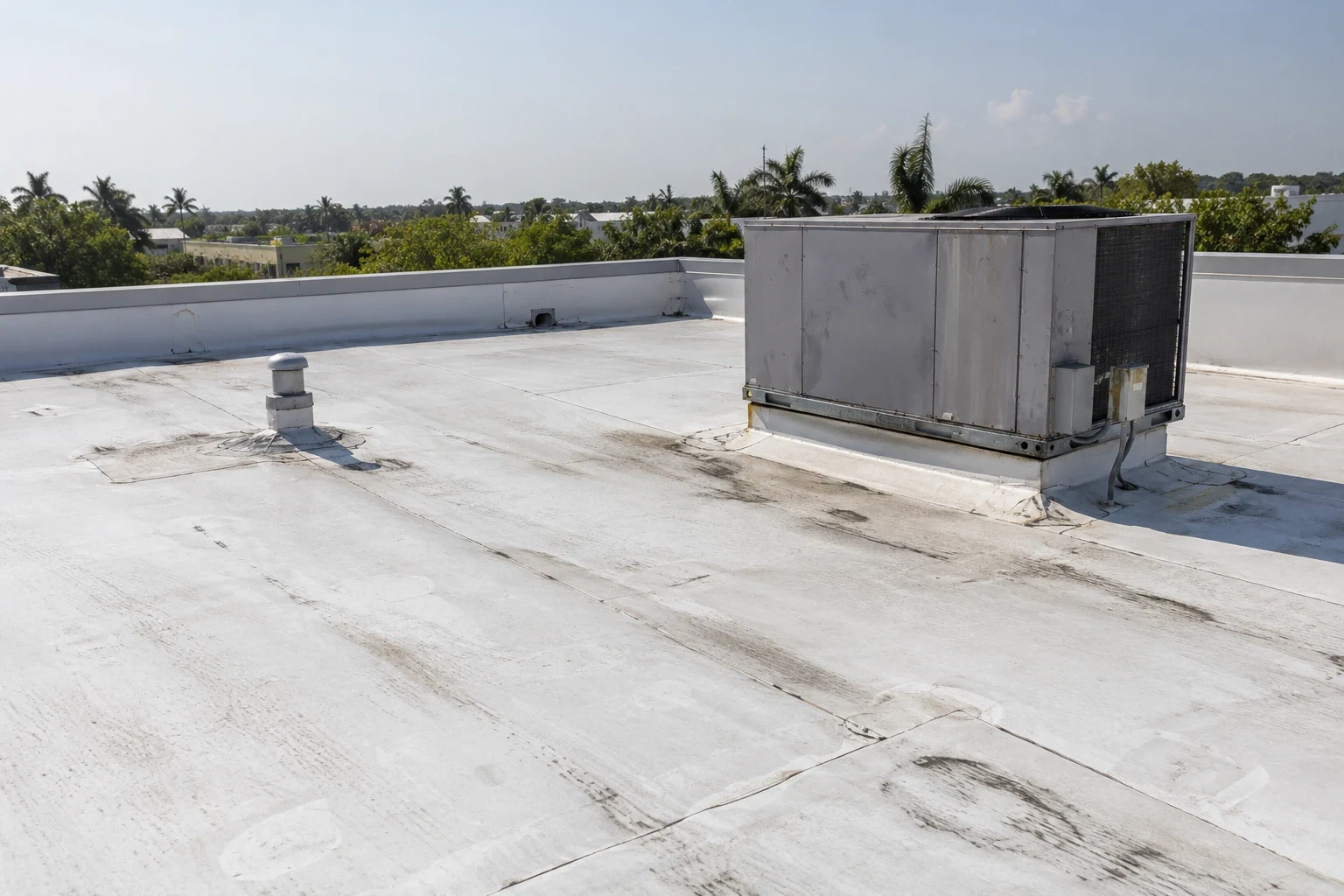
Inspect the Holcim Elevate roof in place
A repair crew can find a soft area beneath a Holcim Elevate membrane even when the surface has no obvious hole. Water may have entered at a seam or curb and traveled below the sheet. We inspect the system, attachment, and moisture before choosing a patch. Holcim Elevate, formerly Firestone Building Products, offers commercial roofing in EPDM, TPO, PVC, metal, and asphalt. The correct repair follows the material on the building, not the name on an old invoice.
We identify the roof type, check seams and flashing, and compare interior signs with conditions above. Lafayette's frequent rain makes drainage and edge details useful inspection points, while hot weather can affect repair timing and material preparation. Our commercial roof inspection documents conditions; a photo report can label repair zones for the property team. Each proposed step reflects the assembly we can confirm.
Tell EPDM, TPO, PVC, and asphalt apart
Holcim Elevate's commercial portfolio includes RubberGard EPDM, UltraPly TPO, PVC, metal, and asphalt systems. EPDM seams use a different joining method than heat-welded TPO or PVC. Metal panels have fasteners, sidelaps, and movement details, while asphaltic assemblies depend on stable plies and surfacing. We inspect material markings and construction, then check supplied system records against the field.
A fleece-backed sheet, a mechanically attached membrane, and an adhered membrane each need a repair detail suited to their substrate. If a coating or overlay obscures the original surface, we may need a closer look before applying materials. We record unknown layers instead of choosing a product from appearance alone.
Lafayette's hot summer conditions matter when planning exposed membrane work. Airport climate normals show July and August mean highs above 92 degrees Fahrenheit. That information describes the market, not the surface temperature on a specific roof. We check the work area's current condition and follow the material's preparation needs before welding, bonding, or coating.
Find the entry point before closing the assembly
We examine seams, terminations, edge metal, curbs, pipes, drains, and prior patches. A leak at a wall can come from a loose termination; water at a drain can begin at the bowl or the membrane around it. Soft insulation or a ceiling mark may show that moisture has moved away from the opening. A report ties those observations together and states which test confirmed the affected layers.
Lafayette references IEBC 2021 for existing-building work and ASCE 7-16 wind-load charts. A project that changes the roof assembly may require a separate design review. Our inspection records observed conditions; the applicable requirements depend on the work proposed.
The Rayne is a useful local reference for access coordination. We do not infer a roofing product there. For the building in scope, we confirm permitted entry times and agree on noise and staging limits with its contact.
Select a repair detail for the installed assembly
On TPO or PVC, the repair is cleaned, heated, and checked after the new membrane cools. EPDM calls for system-specific primer and seam accessories. Asphaltic work ties a new ply into the sound field and restores its surfacing. At metal, we inspect fastener seating and panel movement before forming a transition. The work order identifies the roof zone and selected method.
If wet insulation lies below the surface, the patch may need to include removal and replacement of affected layers. Covering wet material leaves an unresolved condition. A wider attachment problem or brittle membrane can also make a local patch a temporary answer rather than a durable repair. We explain the alternatives and note concealed conditions that may change the scope.
Our insulation and cover-board service can address damaged layers. If the roof has a blocked outlet, a drain repair can be part of the scope. For a larger project, we assess recover options or replacement after checking moisture, attachment, deck, and edge details.
Schedule roof work through Lafayette's wet season
Surface preparation can take longer after rain, and a coating or adhesive may need dry conditions. We check the forecast, substrate, and affected interior area before scheduling permanent work. For an active opening, we can first limit water entry with temporary protection. We explain how long that measure is intended to serve and schedule the permanent repair after the roof is dry and ready.
The Johnston Street-Louisiana Avenue project runs through an 8.5-mile corridor connecting businesses, schools, and UL Lafayette. At sites along that route, entrances, loading movements, and school or tenant schedules can shape a work sequence. We arrange access for each address, protect the space below, and identify which roof zone will be open during the visit.
For a property near Broussard's US 90 energy corridor, delivery and equipment movement may be part of the site plan. The local corridor includes energy, maintenance, and production businesses, but that does not establish the roof's system or condition. We confirm the roof and operating needs with the owner before staging materials.
Record Holcim Elevate material and repair work
After the repair, we photograph the completed detail and note the roof area, material identified, preparation, and any moisture or substrate work. If an older layer remained hidden, we state that the field inspection did not confirm it. A clear closeout note can help the owner compare later service calls with this repair.
Rain can reveal whether a repaired drain connection or seam needs another look. We record the actual water path, standing-water marks, and any open detail. Those observations can guide the next maintenance visit without assuming a leak occurred at a specific address.
For other manufacturer systems, we can also review Sika Sarnafil PVC or Versico membranes during a repair or replacement comparison. Arrange a Holcim Elevate system inspection if a seam has opened, a drain connection is wet, or repair materials are not clear.
For a Holcim Elevate roof, keep the assessment at the system level: identify the membrane, substrate, attachment, and details that are actually present. A brand alone does not tell an owner whether a roof can be repaired or restored. Confirm the installed materials and any project requirements before selecting accessories, then document seams, flashings, and terminations that need attention. This makes repair recommendations specific to the roof rather than to a catalog family.
Where a warranty or manufacturer requirement applies, verify the project documents and current installation instructions before work is specified. Record the product identification available on site and retain approvals or repair guidance in the closeout file. That keeps a technically sound field repair connected to the system requirements that govern the particular roof.
Questions About Holcim Elevate Commercial Roofing
Is a Holcim Elevate EPDM repair different from an UltraPly TPO repair?
We can triage an active opening at any hour, including weekends and holidays. First we assess roof access and interim protection. A permanent repair follows when the surface and assembly are suitable.
Can you identify a Holcim Elevate membrane without the original invoice?
Often, markings and field details help. If the roof is coated or has several overlays, records or a test opening may be needed before the material is confirmed.
Does Holcim Elevate make only single-ply roofing?
No. Its commercial portfolio also includes metal and asphalt systems. We inspect the actual assembly before explaining repair or replacement choices.
What if water is coming in after business hours?
For an after-hours leak, tell us where water is entering and whether the roof is accessible. We can discuss a temporary measure and set a time for permanent work after conditions allow.
Can a repair report confirm the manufacturer's warranty?
The report can record conditions, materials, and completed work. The document issuer reviews warranty coverage under its terms; we do not determine the outcome.