Versico Commercial Roofing in Lafayette, LA
Home / Roofing Manufacturers / Versico Commercial Roofing
Talk With Our Lafayette Team
Tell us what you have observed and arrange a roof inspection. We can review the Versico system, document the condition, and discuss a practical next step.
Call 555-555-5555
Review the Versico assembly before repair
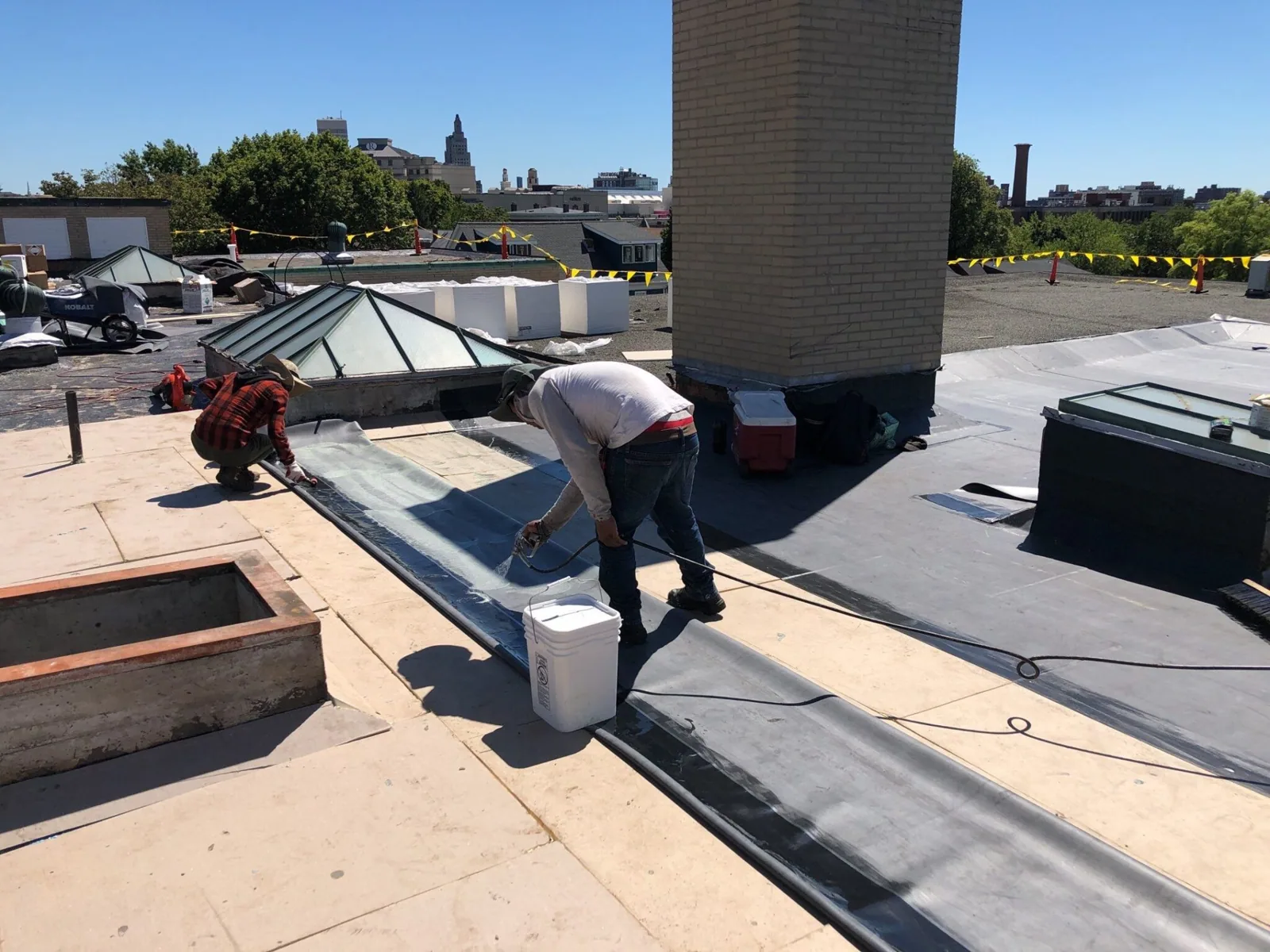
A roof label may say Versico, but that alone does not tell us which membrane or attachment is on the building. The roof could use TPO, EPDM, PVC, or a fleece-backed assembly. Each system has its own seam, flashing, and repair considerations. We start by checking records and visible construction, then trace the reported leak across the roof rather than assuming the nearest seam is responsible. In Lafayette, frequent heavy rain can test a drain path or an aging curb detail. The next step depends on what the inspection finds.
We look at field seams, perimeter edges, penetrations, rooftop equipment, and the area below any interior stain. A close inspection also records patches, coatings, and prior repairs that may affect material compatibility. Our commercial roof inspection documents those conditions. If the assembly includes damaged board or insulation, a cover-board review helps establish what lies below the membrane.
Confirm the Versico membrane before planning work
Versico offers commercial membrane families that include TPO, EPDM, and PVC, plus fleece-backed options. Those names describe different materials, not interchangeable repair methods. We use roof records, markings, seam appearance, and field checks to identify the installed product. A white surface alone does not confirm TPO or PVC, and black alone does not confirm EPDM.
Attachment matters too. A membrane may be adhered, mechanically fastened, or ballasted. Fastener rows can sit below an overlying sheet, while adhesive can hide the bond pattern. We inspect accessible edges and compare them with project documents. If a recover hides the original assembly, we record the uncertainty rather than naming a system from appearance.
Versico describes TPO as a thermoplastic membrane. Its seams are heat-welded, and repairs need clean, compatible material and a sound substrate. EPDM and PVC use different preparation and accessories. System identification comes before selecting materials. We explain what is confirmed and what would require a test cut or further documentation.
Follow the leak beyond its first visible point
A ceiling spot is evidence of water, not a roof map. Water can travel along a deck flute or framing before it appears indoors. We compare the stain with penetrations, laps, drains, and changes in elevation. Ponding deserves attention, but it does not prove the drain caused the leak. We check the inlet, water path, and nearby membrane or flashing.
Lafayette Regional Airport climate normals record 60.50 inches of annual precipitation for 1981 to 2010. That baseline makes drainage and seams useful inspection points, while each roof still needs its own assessment. We look for sediment, displaced debris, open laps, and surfaces that stay wet after surrounding areas dry. A moisture survey may define the affected area when insulation is concealed.
UL Lafayette Research Park includes laboratories, offices, testing, consulting, and an incubator. Those uses show why a roof visit may need access planning and coordination with occupants. We do not infer roof construction or condition at a named campus; records and site observations guide the work sequence.
Match the repair to the confirmed assembly
For a confirmed TPO system, a repair may involve cleaning and preparing the sheet, placing a compatible patch, and heat-welding the perimeter. The completed weld is allowed to cool and then checked. If the sheet is loose, brittle, or separated from wet insulation, a surface patch may not address the full condition. We identify the repair boundary and note whether underlying material needs removal.
EPDM and PVC need different preparation and accessories. We avoid carrying one membrane's adhesive or flashing method into another system. Around a pipe or curb, the repair has to connect to sound membrane and a stable base. At an edge, we follow the detail to the termination rather than stopping at the first visible split. Where an older coating or repair obscures the original surface, we confirm compatibility before proceeding.
If moisture extends past one detail, a localized repair may need to grow into a section replacement or an assembly review. Our roof recover evaluation considers existing layers and moisture findings. For broad deterioration, replacement planning can compare the roof history, access, and drainage needs with a new assembly. We explain the evidence behind each option and leave unrelated areas outside the scope.
Keep a useful roof history
Keep the manufacturer and product name only when records or markings confirm them. Add the membrane type, attachment method, repair location, and any test that identified concealed layers. Photos should show both the seam or penetration and enough surrounding roof to find it again. If a product remains uncertain, label it as unknown instead of carrying a guess into the next work order.
During a later service call, compare the new condition with the earlier repair map. Look for movement at the patch edge, new work by another trade, and moisture beyond the previous boundary. Preventive maintenance can revisit those details and keep observations with the roof history. A TPO assembly has different seam and repair requirements from other single-ply systems. Distinguish the installed Versico material from a Soprema membrane or a Carlisle SynTec membrane before choosing compatible cleaner, primer, flashing, or weld procedure.
At closeout, state what was repaired, what was left for monitoring, and whether an area remained inaccessible. A dated record gives the owner a clearer basis for the next inspection and helps another roofer avoid repeating a failed detail.
Schedule work around the property
Roof work can affect tenants, deliveries, and equipment access. We confirm where crews can stage materials, which areas are occupied, and whether rooftop units must remain available. If odor, noise, or welding work affects the schedule, we discuss the sequence in advance. A short repair window may be possible for an isolated defect, while wet insulation or multiple details can extend the work.
LEDA manages four business parks in Lafayette Parish, including Industrial Park, Interstate Park, Northpark, and Southpark. A facility visit may require coordination around freight movement and tenant access. We confirm the roof-entry route with the property contact and do not infer a building's roof condition from its location. This location falls within our Lafayette service area.
Weather affects the work window. Rain or a damp surface can prevent proper preparation, while high surface heat changes how crews handle materials. We check conditions before welding. If the roof is not ready, we explain why and protect any exposed area. To discuss a Versico concern, arrange an inspection and share system records, leak locations, and known repair history.
For a Versico assembly, confirm the specific membrane and accessory details before selecting repair materials. Check whether the observed issue is limited to the field or extends into a seam, flashing, drain, or termination. A localized repair should tie into sound material and be documented with a location and photo. Where the roof history is incomplete, a short assembly inventory can prevent a future crew from treating an assumed system as verified.
Questions About Versico Commercial Roofing
How do you tell which Versico membrane is installed?
We compare project records with membrane markings, seam construction, and visible details. A roof color alone does not identify the material. If a coating or recover hides the original assembly, we explain what additional inspection would establish.
Can a Versico TPO leak be patched during one visit?
An isolated opening may be repairable in one visit when the sheet and substrate are dry, clean, and sound. Hidden wet insulation or a failed curb detail can expand the scope. We confirm the repair boundary before closing the membrane.
Does ponding water mean the membrane has failed?
Standing water is a condition to document, but it does not by itself prove membrane failure. We inspect the drainage path, nearby seams, and surface transitions. The findings determine whether the next step is drain service, a membrane repair, or further evaluation.
What should I provide before a Versico roof inspection?
Share installation documents, past repair invoices, leak locations, and any photos taken after rain. Those details help us compare roof history with current conditions. We still verify the assembly in the field before choosing materials.
When does a repair become a replacement discussion?
A wider discussion makes sense when deterioration is spread across multiple areas, moisture reaches the insulation, or repeated repairs no longer address the observed condition. We document those findings and outline the available next steps without treating one defect as proof the entire roof needs replacement.