
Sika Sarnafil Commercial Roofing in Lafayette, LA
Home / Roofing Manufacturers / Sika Sarnafil Commercial Roofing
Talk With Our Lafayette Team
Share the system record and identify the leak or seam. We will verify the membrane, inspect the flashing, and discuss the repair window.
Call 555-555-5555
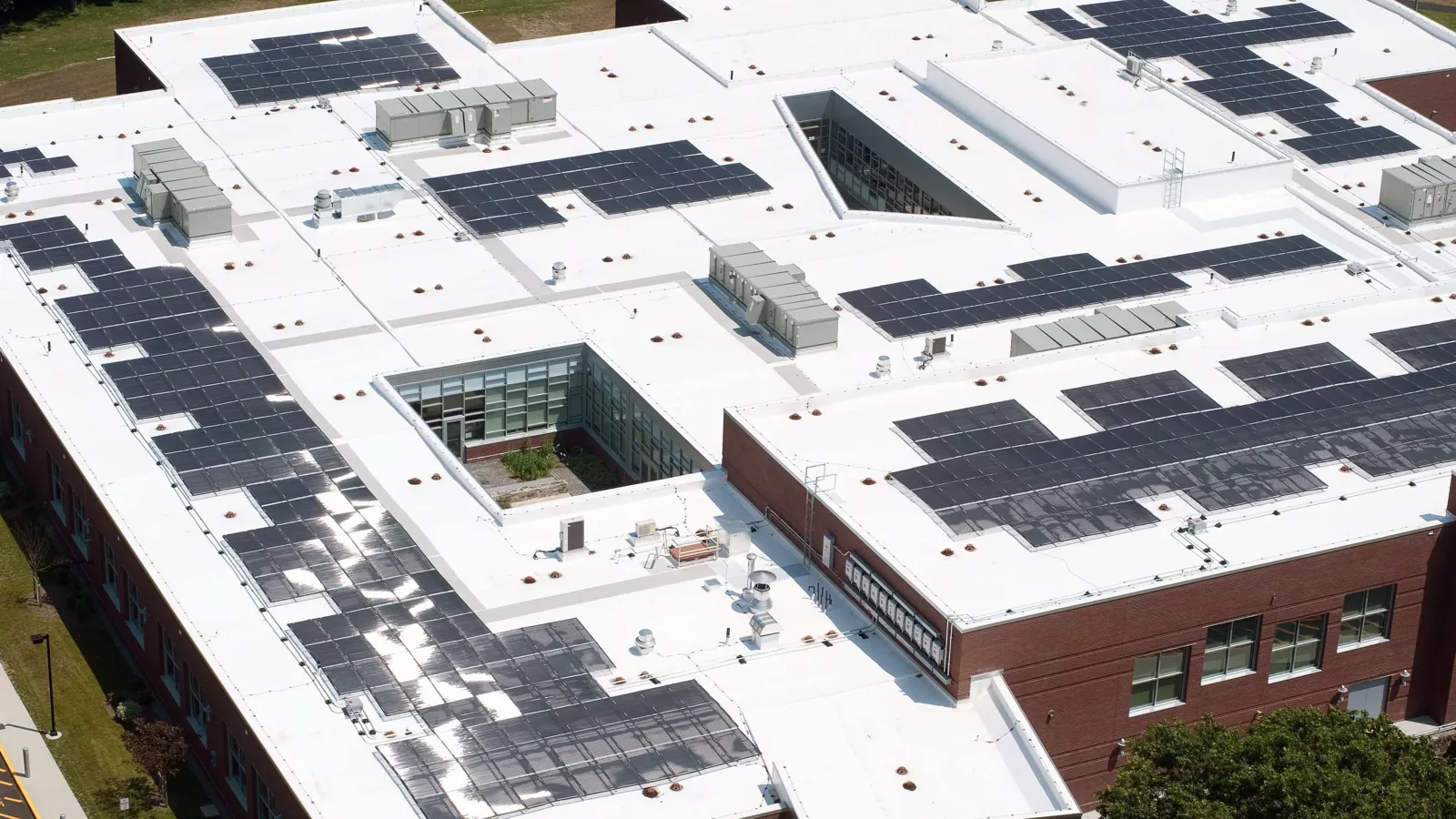
Inspect the Sarnafil roof before patching
A PVC roof can look smooth and intact while a corner weld or flashing detail has begun to separate. On a Sika Sarnafil system, the membrane and attachment type guide the repair. Sarnafil offers PVC roofing membranes in adhered and mechanically attached configurations, with different reinforcement by product family. We confirm the installed sheet, inspect the welds, and check moisture before selecting materials. Lafayette's sunlight and hot-season temperatures make surface condition worth tracking, but the roof's history matters just as much.
We look at field seams, curb corners, penetrations, drains, edge terminations, and old patches. A heat-welded detail must be prepared and tested with the right tools. If insulation is wet, the repair may include removal before the membrane closes. Our commercial roof inspection records the assembly, while a cover-board assessment checks whether the substrate needs attention.
Identify which Sarnafil membrane is installed
Sarnafil G membranes use fiberglass reinforcement and are designed for adhered systems. Sarnafil S membranes use polyester reinforcement and are used in mechanically attached systems. Both are PVC thermoplastic membranes with heat-weldable seams. We verify the product through labels, records, and field construction instead of inferring it from a white surface.
Sikaplan is another Sika PVC membrane family. It can use adhered or mechanically attached system configurations. The product name and assembly should be confirmed before repair because details, accessories, and attachment differ. If a roof has been coated or recovered, we note that the visible membrane may not be the original surface.
The surface around the seam also matters. A weld may be contaminated by dirt, moisture, or old sealant. We check whether the sheet is flexible, whether the weld edge remains bonded, and whether the substrate is dry. If those conditions cannot be confirmed during a visual walk, we explain what closer testing would be needed.
Inspect the weld and flashing together
We follow the seam to its end and check how it meets a curb, pipe, drain, or change in plane. A split at the corner may continue under a flashing strip. Water can travel below the sheet before reaching an interior ceiling, so the stain alone does not set the repair limit. We compare roof and interior observations, then mark any moisture test or small opening used to confirm the assembly.
UL Lafayette Research Park houses labs, offices, testing and consulting operations, and an incubator. On an occupied research property, roof access may need to avoid equipment moves or sensitive work areas. We coordinate the visit with the site contact and verify the actual membrane before selecting a repair.
The Broussard US 90 energy corridor includes oilfield service and production activity. When a roof visit falls along that route, we ask about truck access and equipment movement before staging. The corridor's business mix does not identify any building's roof system; field conditions and records still guide our inspection.
Restore the PVC detail with compatible material
We clean the repair area, prepare the membrane, and heat-weld a compatible patch beyond the damaged edge. The weld is allowed to cool before probing. At pipes or curbs, prefabricated or field-formed flashing must tie into sound sheet and suit the detail. A loose corner can require more than a bead of sealant if the underlying membrane has separated.
If wet insulation or cover board sits below the opening, we remove affected material as needed and rebuild the layers before closing the membrane. A broad area of brittle or loose sheet may call for a larger section repair. We describe where the new material begins and ends, what moisture testing found, and which conditions remain outside the scope.
If a recover is under consideration, an overlay assessment first weighs existing layers and moisture findings. Replacement planning can account for deck, insulation, edge, and access details. We can compare PVC systems with the existing roof when an owner is evaluating a new assembly.
Plan service around occupied Lafayette buildings
Repair planning includes access, staging, equipment shutdowns, and protection inside the building. We confirm who can release the roof, which rooms need protection, and when welding or material movement can occur. If a leak is active after hours, emergency response is available around the clock, including weekends and holidays. Temporary protection may limit exposure until a dry, suitable repair window opens.
UL Lafayette Research Park includes labs, offices, testing and consulting operations, and a technology incubator. That variety of work is a local reminder to coordinate with the building contact before blocking roof access or air intakes. We do not infer a specific roof assembly from the facility type. We plan for the roof and the use of the building actually in scope.
For maintenance, we can record seam condition, curb corners, drains, and prior patch edges on a roof map. A maintenance visit can return to those same locations after a wet period. Photos help the facilities team distinguish a repaired weld from a new condition nearby.
Document the Sarnafil repair and its limits
At closeout, we photograph the finished weld and the surrounding flashing, then record the membrane identified, preparation, and any moisture work. If a product label was unavailable, we state how the material was identified and where uncertainty remains. The report includes any area that could not be opened or tested.
At the Rayne, clinical services operate throughout the day and night. For a similar operating schedule at any property, we coordinate timing with its own facility contact. A local institution is context for planning, never proof of its roof system or prior repair history.
For a future replacement comparison, we can also review Holcim Elevate systems or Versico membranes. Arrange an inspection if a Sarnafil weld has lifted, a curb detail is soft, or an old patch has begun to peel.
Sika Sarnafil repair planning should account for the existing membrane type and the method needed to prepare and join compatible material. Inspect field seams and transitions separately from penetrations and perimeter metal, since each detail can fail in a different way. If the installed system cannot be confirmed from records, identify that uncertainty before proposing a product-specific repair. A clear closeout note records what was joined, reinforced, or left for further evaluation.
Material selection should be confirmed against the current system documentation and project requirements. Record product identification when it is visible and preserve the detail used at each repaired location. If a transition includes another membrane or metal assembly, specify how the interface will be prepared and made watertight rather than treating it as an ordinary field seam.
Questions About Sika Sarnafil Commercial Roofing
Can a Sarnafil PVC seam be repaired by heat welding?
Yes, when the surface is clean, dry, and compatible. We prepare a patch that extends onto sound membrane, let the weld cool, and probe the finished edge.
How do Sarnafil G and S membranes differ?
G products use fiberglass reinforcement for adhered applications; S products use polyester reinforcement for mechanically attached systems. We verify the installed product before choosing the repair detail.
What if the Sarnafil roof has an older coating?
We identify the visible coating and check whether the underlying membrane can be exposed for a sound tie-in. If product compatibility is uncertain, a test area or additional records may be needed.
Does a PVC roof need moisture testing before a patch?
Not every small repair needs an opening, but a soft area or recurring leak may justify a moisture check. We explain what the test would confirm and where the patch limit should fall.
Can you help with a leak outside normal hours?
Our emergency response is available overnight, on weekends, and through holidays. We assess safe temporary protection first, then schedule permanent welding when surface conditions allow.