
Hurricane Roof Damage Repair in Lafayette, LA
Home / Roof Damage Repair / Hurricane Roof Damage Repair
Talk With Our Lafayette Team
Tell us what changed and where water is entering. We will document the roof, protect openings where safe, and explain permanent repairs.
Call 555-555-5555
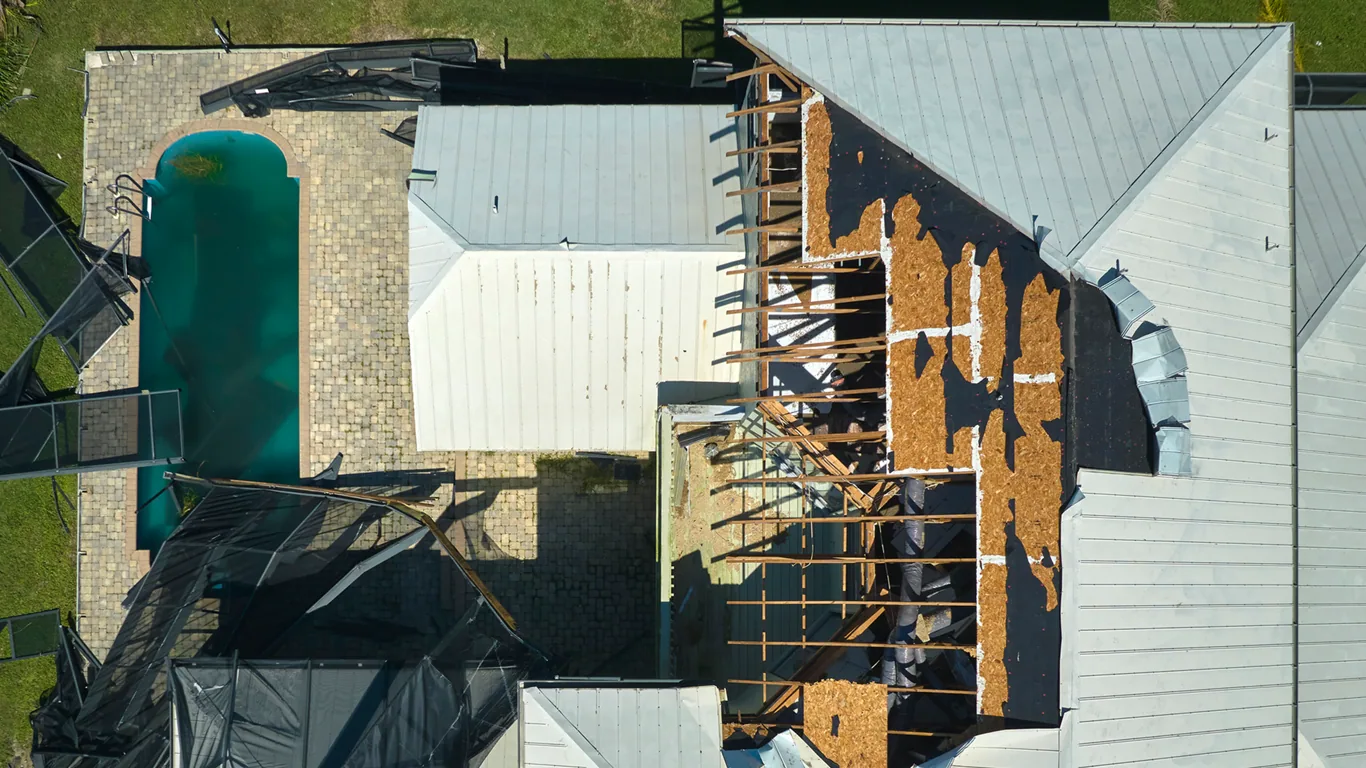
Inspect the roof after the storm
A hurricane can leave a building with a peeled edge, a wet ceiling, or a roof that looks normal from the parking lot. Each condition needs a different inspection. We first check whether the area is safe to access, then document openings, displaced metal, debris marks, standing water, and interior moisture. Lafayette Parish coordinates hurricane preparedness and local emergency planning. That history makes a post-storm roof plan sensible, but the storm's path alone cannot show what happened to a particular building.
Our service begins with the observed condition. We photograph the affected area, identify the roof system, and check likely entry points around seams, drains, curbs, and perimeter details. When water is entering, our emergency roof repair response is available day and night, all week. We can also prepare claim documentation with dated photos and repair notes, without predicting an insurer's decision.
Check the perimeter before moving inward
Wind can loosen edge metal, peel membrane, lift a flashing corner, or shift rooftop debris. We inspect corners and terminations first, then follow the roof inward to seams, equipment curbs, drains, and penetrations. We note missing fasteners, open laps, surface tears, and materials that may have moved. A ground view cannot confirm attachment below a loose edge.
After the perimeter, we review the field membrane and roof drainage. Lafayette Regional Airport records a 60.50-inch annual precipitation normal, with June at 7.08 inches. Water left by a storm can expose blocked drains or low areas as well as direct wind damage. We record the drainage condition separately so a water issue is not automatically called storm damage.
Interior reports help target the roof check. A ceiling stain can sit away from the entry point. We compare the room location with the roof plan, inspect the likely route, and check insulation where accessible. If safety, debris, or water coverage limits inspection, the report says which parts need a return visit.
Protect openings while the roof dries
When the membrane is open, temporary protection may keep additional water from entering. Its form depends on wind, access, roof slope, electrical hazards, and the surface condition. We do not secure a cover to material that cannot hold it safely. The temporary step is documented with its limits and a return plan for permanent work.
Wet insulation or cover board may need time to dry or may require removal. We check moisture before closing the assembly. A dry surface is also important for welding, adhesive, and coating work. Lafayette's humidity can extend drying after rain, so we explain what must wait and what can proceed. The next forecast may also change the schedule.
For a facility along Broussard's US 90 energy corridor, the local development group describes oil, gas, maintenance, and production businesses along the route. That operating mix shows why some commercial buildings need careful service coordination after severe weather. We coordinate the specific property's roof access, loading needs, and interior protection, without assuming a shared storm impact along the corridor.
Repair damage by system and scope
We confirm whether the roof is TPO, PVC, EPDM, modified bitumen, built-up, metal, or coated before selecting materials. A thermoplastic opening needs a compatible welded patch. EPDM needs its matching primer and tape. Metal roofs may need fastener, panel, or flashing work. If insulation is wet, the repair may include removing affected layers before the membrane is restored.
A focused patch fits when damage is limited and the surrounding roof remains sound. Multiple openings, broad attachment failure, or repeated wet areas may call for larger section work. Our storm damage inspection can distinguish immediate repairs from maintenance items found during the same visit. For a roof with a clear opening, we also check the wind damage condition at the edge and supports. If standing water remains, we also inspect for ponding water roof repair needs.
We describe the repair limits, material, preparation, access needs, and any concealed conditions. If the scope crosses into a larger project, Lafayette's 2021 International Existing Building Code is among the city's references for existing-building work. The project requirements depend on the work and local review. Our proposal documents the roofing scope rather than claiming an approval.
Keep the building operating where possible
Roof repairs can proceed while some buildings remain open, provided access, safety, and interior protection are coordinated. We confirm tenant hours, critical equipment, loading areas, and any rooms that need restricted access. A property near the Oil Center may need a different work sequence than a storage building. We schedule noisy work, roof openings, and material movement with the building contact.
The Johnston Street-Louisiana Avenue corridor spans 8.5 miles and connects businesses, schools, UL Lafayette, and neighborhoods. A hurricane response in a mixed corridor requires attention to each property's access route and surrounding activity. We do not presume the same staging conditions from one site to another. A roof map and marked work zone help staff keep people away from active repairs.
If repairs affect several roofs, a multi-building roof program can keep findings and follow-up schedules together. Each building still gets its own inspection notes, photos, and repair limits. That record helps the owner decide which work must happen immediately and which can be planned after the storm response settles.
Keep post-storm findings usable
We finish with photos of repaired details and a list of conditions that remain. The report notes which areas were accessible, what moisture checks were completed, and whether another visit is needed after drying. If a temporary patch remains, the record gives the date and expected follow-up. A photo set without locations is hard to use later, so we mark roof zones and matching interior areas.
For roof owners near Broussard US 90 or in Lafayette, the same evidence-led process applies. We do not infer damage from a storm notice. We check the actual roof, explain what we saw, and set the next repair step. Arrange a close look if a ceiling mark appears, edge metal has moved, or water remains after the weather clears.
A hurricane-related roof review should begin with safe access and temporary water control, then move through the assembly in a consistent order. Check perimeter attachment, corners, seams, flashing, drains, and debris impact; record any area that could not be reached. Interior reports can guide inspection but should not replace exterior confirmation. Once the building is stabilized, separate urgent repairs from broader restoration so the owner can sequence work with a clear roof map.
Questions About Hurricane Roof Damage Repair
Should we wait until the roof is dry to call?
Call as soon as you see active water entry or an opening. We can assess safe temporary protection, then return for a permanent repair when the roof surface and materials are ready.
What if debris is still on the roof?
Tell us what you can see from a safe location. We assess access and hazards before removing debris, and we document areas that remain hidden until the surface is cleared.
Can you confirm that a hurricane caused the leak?
We can document conditions that are consistent with the reported event and note other wear separately. The report describes evidence; it does not decide insurance coverage or establish a cause that inspection cannot confirm.
How do you decide between a patch and replacement?
The surrounding membrane, attachment, insulation, and number of affected areas set the scope. We mark sound material and explain when a local repair can work or when a broader section should be considered.
Can emergency work happen at night?
Our emergency response is available around the clock, including nights and holidays. The first visit focuses on safe access and controlling water entry; permanent work follows when conditions support it.