
Commercial Skylight and Penetration Flashing in Lafayette, LA
Home / Commercial Roofing Services / Commercial Skylight and Penetration Flashing
Talk With Our Lafayette Team
Tell us which pipe, curb, skylight, or equipment area is involved. We can inspect the transition and outline a flashing repair suited to the roof system.
Call 555-555-5555
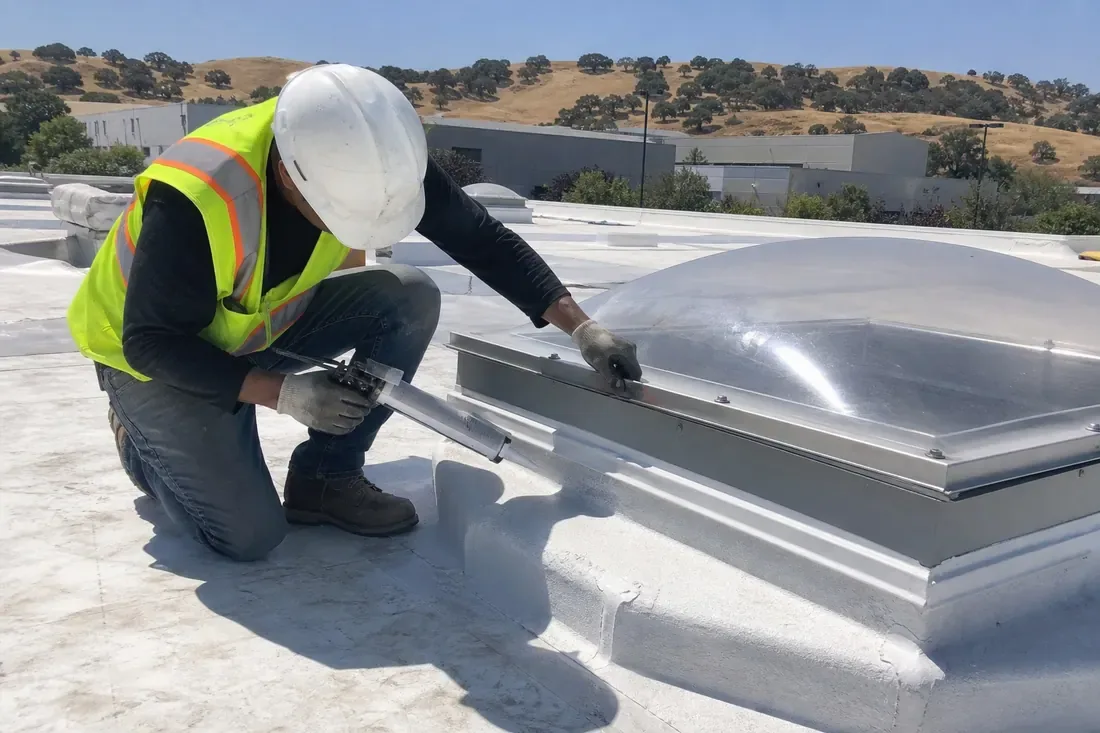
Trace the leak at its roof detail
A pipe boot with a split collar can admit water even when the roof membrane around it looks intact. We inspect the penetration, its flashing, and the nearby roof surface before selecting a repair. Skylights, equipment curbs, pipes, conduits, and wall transitions each interrupt the field membrane in a different way. In Lafayette, LA, heat and heavy rain can test those details repeatedly, so the repair has to reconnect each part of the assembly.
We check for loose corners, cracked sealant, open seams, damaged curbs, and moisture below the surface. The roof access plan matters on an occupied building, especially when work crosses tenant space or equipment routes. A commercial building in Downtown Lafayette may need a different staging plan from one near the airport, but both need a compatible flashing detail. A hands-on inspection can trace water entry around the penetration and check adjacent seams.
Map every roof opening in the work area
We identify the type of penetration, its curb or boot, the roof membrane, and any prior repair. Pipes can move with temperature or vibration; equipment curbs can collect water at their uphill side; conduit supports can leave small gaps in the field. A repair scope should name the opening and nearby roof section rather than refer to one generic flashing task.
We also check whether the roof surface is sound around the detail. A patch cannot hold well if it bonds to loose, wet, dirty, or degraded material. Where a roof has several layers or the existing system is unclear, we document that before specifying a membrane tie-in. If an image helps locate hard-to-reach penetrations, drone imagery can supplement a close physical review, but it does not replace the hands-on check.
Rebuild the curb transition
A curb detail has several corners and vertical faces where the membrane must remain continuous. We inspect the curb base, inside and outside corners, counterflashing, fasteners, and the membrane termination. Loose metal or a split corner can let water travel behind the flashing. We remove failed material where needed, prepare the surface, and tie new flashing into sound roof material with compatible reinforcement.
Equipment may be mounted on curbs installed after the original roof. We ask whether recent service or replacement work changed the support, then inspect the current detail rather than assume the original flashing remains intact. The work scope identifies any equipment clearance or temporary shutdown required. If moisture appears below the curb, moisture testing can help set the repair limit before the detail is closed again.
Check skylight frames and surrounding membrane
Water can enter at a skylight frame, curb, gasket, or the membrane transition around it. We inspect the glazing and frame for visible cracks or separation, then check the curb flashing and nearby roof laps. The source may sit at the frame or several inches away where the roof detail has opened. We note condensation separately from a roof leak because the corrective work differs.
Skylight replacement or repair needs a safe opening plan. We protect the interior, coordinate access below, and confirm how the roof will be secured if the work spans more than one shift. If water is active, emergency response is available any hour, including weekends and holidays, to limit exposure while permanent work is arranged. A record of each skylight location helps the facilities contact track recurring issues in a larger roof area.
Use flashing compatible with the membrane
TPO, PVC, EPDM, modified bitumen, built-up roofing, and metal roofs use different flashing materials and seam methods. We identify the membrane and check prior repair materials before choosing the detail. Sealant alone may not bridge a moving connection or restore a failed membrane lap. A lasting scope describes preparation, reinforcement, termination, and how the repair meets the existing surface.
Surface temperature and dryness affect preparation. The airport's historical table lists 92°F-plus mean highs in both July and August. That warm-season exposure is one reason to follow the chosen system's application conditions and to inspect aged sealant rather than cover it without preparation. A membrane repair can address adjacent open laps, while a TPO system review helps confirm the right detail when that material is present.
Protect the building while details are open
Penetration repairs can require a short access restriction below the work or around rooftop equipment. We agree on the route, occupant notice, and protection needed for the area. For a clinic, retail tenant, or office, the property contact can help choose a work period that keeps people away from the immediate repair zone. The plan should account for material staging and a secure roof surface before crews leave.
Lafayette Regional Airport's long-term precipitation normal includes 7.08 inches for June. That rainfall context makes temporary protection important whenever a penetration is opened. We check the forecast, stage compatible materials, and avoid exposing more roof than can be secured. If water reaches the interior during a storm, emergency response can protect the building while the permanent flashing is scheduled.
Record the repair location and next check
After repair, we review the curb or boot, membrane tie-in, fasteners, and nearby seams. Photos identify the opening and completed detail. If a skylight frame or equipment base was outside the roofing scope, the report says so. That prevents a roof repair record from implying that other building components were replaced or tested.
A roof plan with many openings can benefit from a marked location list. The city identifies Lafayette as a regional center for healthcare, retail, Cajundome and convention facilities, and UL Lafayette; those uses bring varied rooftop equipment and operating schedules. We document the specific building inspected, not a general condition for the market. A photo-backed condition report can retain each repaired penetration and any remaining follow-up item.
Each opening should be evaluated as a roof detail, not just as a visible leak. Check the curb, counterflashing, membrane tie-in, fasteners, and nearby drainage, then compare the pattern of interior moisture with the exterior evidence. A skylight replacement may require work beyond the unit itself if the curb or surrounding membrane is compromised. For pipes and equipment, confirm whether movement, service access, or added supports have stressed the flashing before selecting a repair method.
Questions About Commercial Skylight and Penetration Flashing
Why does a pipe penetration leak after the surrounding membrane was patched?
The repair may not have reached the boot, clamp, curb, or adjacent seam where water enters. Pipes can move, and a sealant bead may separate from the material. We inspect the whole transition, identify the membrane, and tie a compatible flashing repair into sound surrounding roof.
Can you repair a skylight leak without replacing the skylight?
Sometimes. We check the frame, glazing, gasket, curb, and roof membrane separately. If the leak begins at the flashing and the skylight remains serviceable, a roof detail repair may address it. A damaged frame or glazing can require a different scope, which we identify during inspection.
Do equipment changes affect roof flashing?
They can. A new curb, pipe, conduit, or support may create an opening or alter an existing detail. We inspect the current installation and document what needs to be tied back into the membrane. The scope can coordinate with the equipment service contact when access or shutdown timing matters.
What happens if rain starts while a flashing repair is underway?
We plan a secure stopping point and protect any opening before crews leave. If the roof becomes unsafe to work on, permanent repair waits for suitable conditions. Emergency response is available at all hours, weekends and holidays included, if water entry needs immediate attention.