
Commercial Roofing in Historic Downtown Abbeville, LA
Home / Service Areas / Historic Downtown Abbeville
Talk With Our Lafayette Team
Share the property address, roof concern, and any review or access requirements. We can inspect the roof and outline the repair or follow-up options.
Call 555-555-5555
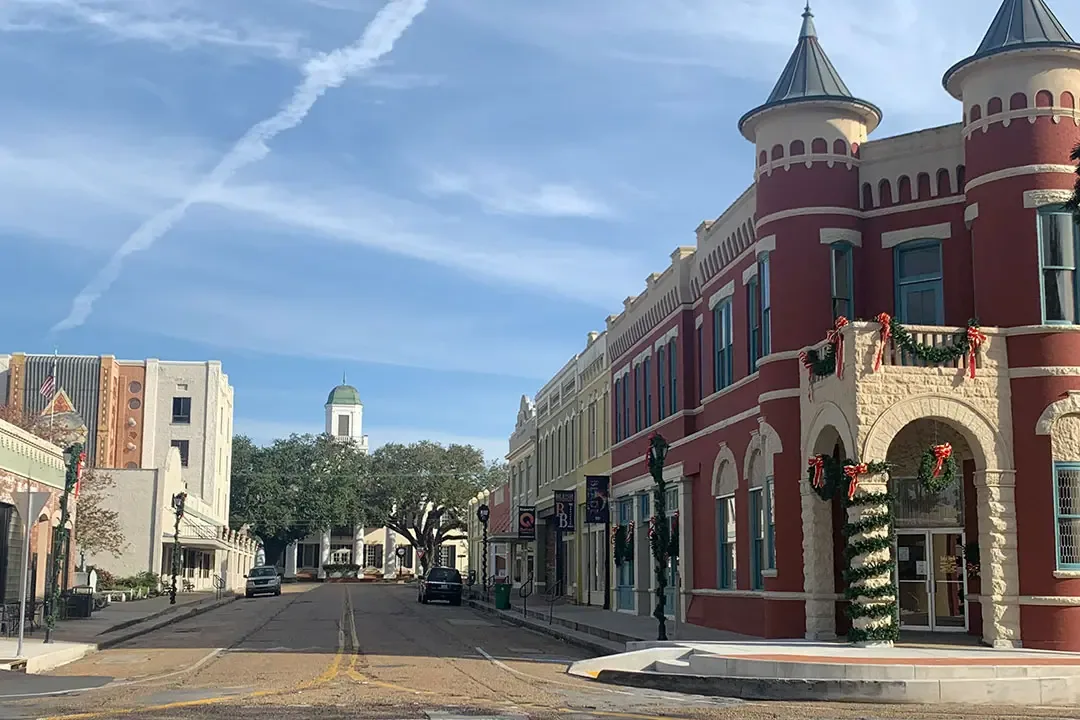
Arrange a commercial roof inspection in Abbeville
Historic Downtown Abbeville has commercial buildings within a designated Cultural District and Federal Opportunity Zone. The city describes the area as a commercial district with historic structures and a Main Street economic-development program. That context calls for a careful first look: confirm the building, identify the roof assembly, and document how any proposed work meets existing edges and transitions. The designation alone does not establish a roof's age, material, condition, or preservation requirement. We inspect the property itself before setting a scope.
The city also lists access to major highways, railways, the Port of Vermilion, and Chris Crusta Memorial Airport. Those are useful location references, not proof of any building's delivery route or roof layout. Lafayette's regional weather record provides context for rainfall and heat questions; we still assess the roof conditions at the Abbeville address. A commercial roof inspection checks drains, seams, penetrations, and edges at the actual address.
Document the existing roof before changing details
A historic designation can make project review more specific, but the building contact or local authority must confirm which requirements apply to a particular property. We record visible roof materials, existing edge conditions, penetrations, drainage, and previous repairs. If a scope could change the building's appearance, we identify the proposed work clearly so the owner can confirm any separate review process. We verify the requirements for this building rather than assume the district has uniform rules.
On the roof, we inspect seams, membrane laps, wall flashing, coping, penetrations, and transitions to adjacent materials. A patch that is compatible with the field membrane may still need a carefully detailed termination at a parapet or historic facade. If the existing assembly is hidden under coating or a later overlay, records or selective testing may be needed before specifying materials. The report separates what we can see from what remains concealed.
Historic Downtown Abbeville is a distinct district within the city, just as Lafayette's University Avenue corridor is a separate commercial and civic setting. We keep findings tied to the inspected address rather than transferring assumptions from another building or neighborhood. That distinction matters when several properties have different roof ages, drainage paths, and repair histories.
Trace water to the roof detail
A stain inside a commercial building can be several feet from the roof opening. Water may follow a deck flute, framing, or insulation before it appears. We compare the reported room with drains, scuppers, seams, equipment curbs, skylights, and wall transitions above and nearby. We look for separated laps, split flashing, sediment trails, wet insulation, and prior patches. The observed route, not the location of the stain alone, determines where a repair should begin.
A summer rainfall peak in Lafayette's regional records provides weather context for checking drainage and overflow, but does not measure conditions at an Abbeville address. We confirm the actual slope and outlet performance on site. If a drain bowl is separated from the membrane or a scupper has a failed edge, drain and scupper service can correct the specific connection. If water has reached the insulation, the scope may need to include removal and replacement of affected material.
Weather documentation for the wider region includes severe storms between Lafayette and Breaux Bridge. That record does not establish damage in Historic Downtown Abbeville. When an owner reports a storm-related issue, we inspect the roof and photograph observable impact, displaced metal, punctures, or open details. We note the date and the reported condition, while distinguishing visible evidence from a cause that cannot be confirmed in the field.
Select compatible repair materials
The repair must suit the installed roof. TPO and PVC seams are welded; EPDM, modified bitumen, built-up roofing, coatings, and metal have different preparation and tie-in requirements. We identify the assembly from field details and available records before applying a patch. An older repair or coating can cover the original material, so we may recommend a small test opening if the answer changes the repair approach.
At a roof edge, we check the membrane termination, metal attachment, coping joints, and flashing transitions. Around penetrations, we inspect the flashing height, corners, and seal at the roof surface. A visible split may sit beside another weak detail, so we trace the connection before deciding how much material to remove. If the deck or insulation is soft, we document the opening and explain how far the repair needs to extend to reach sound material.
Active water entry can be addressed with emergency response overnight, on weekends, and on holidays. The initial visit may cover or secure the opening while the permanent repair is planned. Temporary protection has limits, particularly when the roof remains wet or hidden materials need evaluation. We identify what the service call addressed, what was not accessible, and the conditions required for permanent work.
Compare a repair with broader roof work
A localized repair is appropriate when the failure is limited and surrounding materials remain sound. Repeated leaks, broad seam separation, or wet insulation across several areas may point to a larger scope. A recover can be considered when the existing assembly is dry, stable, and suitable for another layer. We inspect attachment, moisture, and edge conditions before discussing that option. A recover assessment helps establish whether the existing roof can remain in place.
Cost and schedule depend on the roof material, repair area, access, staging, height, interior protection, material availability, and weather window. Historic-area coordination may add a review step if the owner or authority requires it; we confirm that before scheduling appearance-sensitive work. When the roof condition supports a larger project, replacement planning can compare tear-off, insulation, drainage, and perimeter details as one scope.
For buildings that stay open during work, we coordinate the work area and sequence with the owner. A short repair may need a brief access period, while tear-off, deliveries, and noise can require more notice. The property contact tells us which entrances, rooms, or operations need attention. Our occupied-building roofing approach accounts for those logistics without changing the technical decision made from the roof inspection.
Keep the roof record tied to the address
Closeout notes should identify the inspected roof zone, observed material, completed work, photos, and any limitation. If we open the assembly, we record what was present below the surface and how the repair ties back into sound material. A roof plan or reference photo can help identify the same parapet, drain, or curb on a later visit. We also mark items that were inaccessible or need monitoring after another rain.
The Port of Vermilion and Chris Crusta Memorial Airport are among the city's named transportation assets, while the Main Street program focuses on downtown commercial activity. They provide real place context without establishing a roof condition for any nearby property. Our roof condition report can keep observations, photographs, and repair priorities in one record. Deere Park is a distinct commercial property and needs its own inspection record.
Questions About Historic Downtown Abbeville
Does a historic district designation change the roofing scope?
It may require the owner to confirm a review process when visible materials or exterior details will change. We document existing conditions and proposed roof details; the applicable requirements must be confirmed for the specific property.
Can you match a repair to an older roof assembly?
We first identify the surface and any hidden layers. Records, edge details, or a selective opening can help when a coating or prior recover obscures the material. The repair method follows the verified assembly.
How do you locate a leak when the ceiling stain is elsewhere?
We map the reported room, then inspect roof details above and around it. Seams, drains, penetrations, and wall transitions can let water travel before it becomes visible indoors.
What if a roof inspection finds wet insulation?
We document the extent we can confirm and explain whether moisture testing or a selective opening would set the removal boundary. A patch should not conceal wet material that needs attention.
Can roofing work happen while a downtown business remains open?
We coordinate access, staging, noise, and interior protection with the property contact. The repair extent and any separate review needs determine the work window.