
Shopping Center Roofing in Lafayette, LA
Home / Property Types We Roof / Shopping Center Roofing
Talk With Our Lafayette Team
Share the affected suites, tenant access rules and roof history. We will inspect the related areas, document the findings and discuss a repair or phased project with management.
Call 555-555-5555
Get a shopping center roof review
A tenant calls because water has reached a storefront ceiling just before opening. The leak may sit over another suite or start near a shared roof detail. We check the area above the report, trace seams and transitions, and mark which tenant spaces sit below the affected section. The property manager can then coordinate access and notices from a clear work boundary.
Church Point’s current directory lists retailers, restaurants, entertainment and event activity, while River Ranch commercial district combines office and retail space with grocery, banking, healthcare and food tenants. These places show different forms of Lafayette commercial activity. Their published tenant lists do not establish the roof system at another shopping center, so we inspect the actual roof and its shared drainage.
Separate tenant reports from roof zones
Several suites can sit beneath one roof section, and one interior mark can result from water that traveled from another bay. We compare leak reports by date and location, then inspect the corresponding seams, curbs, walls and drains. A roof plan with suite labels helps management see whether calls point to one detail or several separate areas.
Store staff can identify when a drip began, which fixtures are affected and whether the ceiling has been opened. We record those observations without treating them as proof of the roof entry point. For water entering outside business hours, an emergency visit can cover the opening and limit further exposure. We return for a close roof inspection and permanent repair once access and weather permit.
A commercial leak repair can address a confirmed opening. For a broader review, a roof inspection can map visible conditions across a defined section. We identify who receives photos and who can approve added work.
Keep storefront access clear
Customer entrances, delivery doors and accessible routes remain important while roof work is underway. Before setting a lift or material drop, we review drive aisles, storefronts, fire access and tenant delivery hours with management. A barricade should identify its limits and the alternate path, not leave customers to find an open route on their own.
A center with restaurants or grocery tenants may have service activity at different times from a clothing or office tenant. We ask which suites need early access, what loading zones must remain available and whether noisy work can be timed between peak periods. The manager handles tenant notices; we provide the dates, roof zones and access effects needed to make them specific.
Occupied-building reroofing can divide a center into phases. The plan sets the work boundary, daily dry-in, debris route and coordination point for each stage. If a phase must shift, we update the property contact before crews enter another area.
Follow water across the shared roof
A large retail roof can route runoff across several tenant bays before reaching an outlet. We check drain bowls, scuppers, gutters, overflow paths and low areas, then note where water accumulates. Lafayette Regional Airport’s normals show 60.50 inches of precipitation for the year and 7.08 inches in June. That local rainfall context makes drain access worth planning before a wet-weather service call.
Debris at a drain is different from a roof plane that holds water after the outlet is clear. We note the location and condition of each. If the roof has changed through past tenant work, new curbs or abandoned penetrations may interrupt runoff. Clearing an outlet will not correct settled insulation, and a membrane repair does not solve an undersized or blocked drain path.
Drain and scupper work can address a defined outlet problem. We document any larger low area separately so management can decide whether to investigate slope or include a correction in a capital scope.
Inspect signs, curbs and tenant alterations
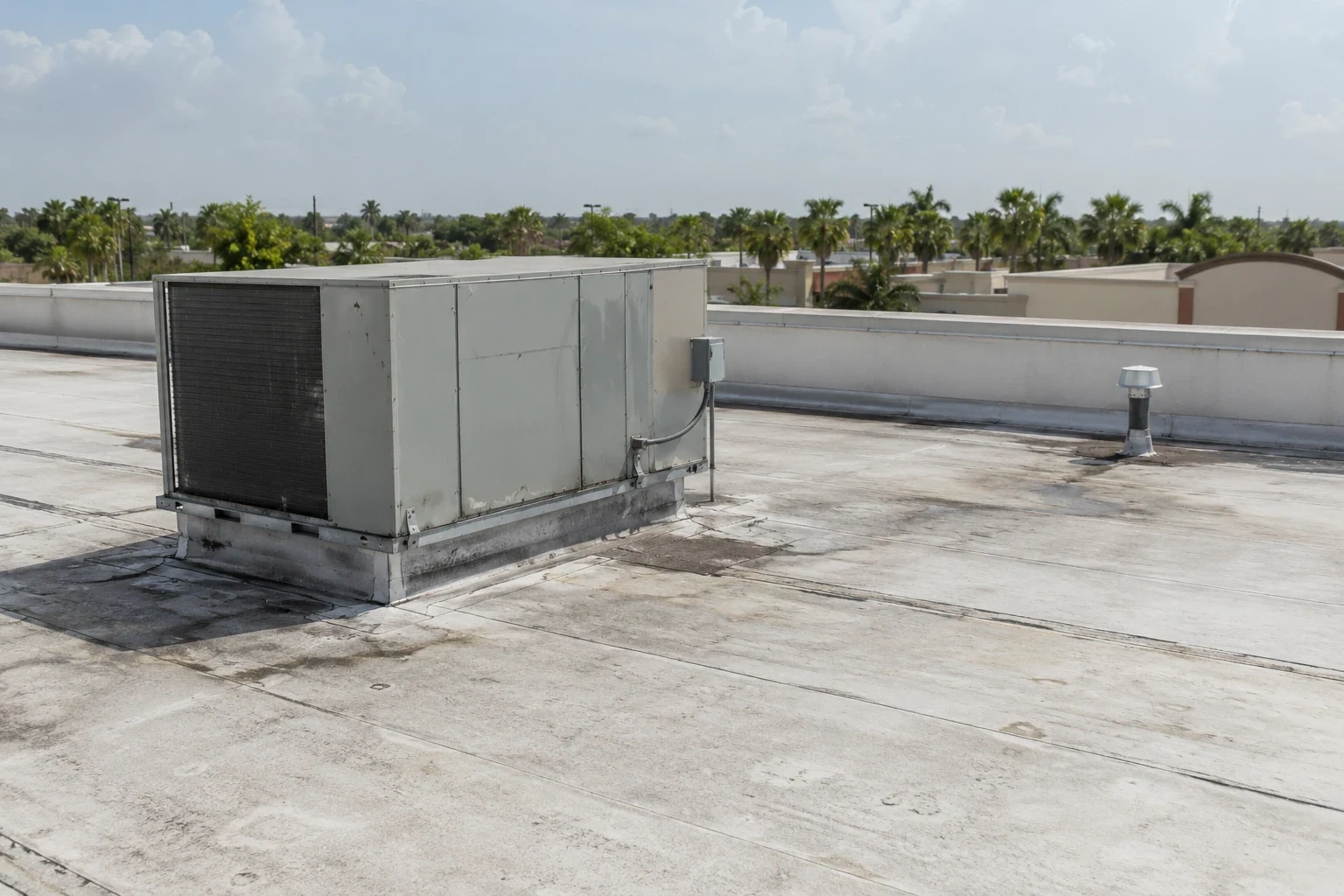
Storefront signage, HVAC replacements, exhaust systems and utility work can change the roof over time. A service vendor may add a support, move a line or leave an old curb in place. We inspect around penetrations and look for patch layers, open corners, loose flashing or cuts near equipment. If another trade performed recent work, management can share its service record before the roof visit.
Shopping center owners may compare work across adjacent retail formats. Big-box retail roofing often brings a different site access and loading pattern, while grocery store roofing has its own equipment and operating constraints. Each property still needs a roof-specific inspection rather than a scope copied from a neighboring tenant or building.
We can examine curbs and supports, check the membrane at the equipment perimeter and note whether water can reach nearby seams. The written scope names the detail to be repaired and any equipment work that belongs to the mechanical vendor.
Compare repair with phased replacement
A small flashing failure may be handled as a repair. Repeated leaks across several suites, widespread wet insulation or deteriorated edge metal may support replacement planning. We map findings by roof area and show which conditions each option addresses. That makes it easier to compare immediate work with a phased project without losing track of tenant impacts.
Project documents can identify removal assumptions, insulation, edge details, drainage, staging and daily protection. If a tear-off exposes concealed deck damage, we photograph the area and use the owner’s approval process before changing the scope. Tenant work should be separated from roof work where the two require different access or trades.
A commercial roof replacement assessment can review the full assembly. Before a smaller project, drainage corrections may be scoped as separate work so the owner can see which repairs address the membrane and which address the water path.
Keep tenant and roof records connected
A property manager may receive leak notices from a tenant, a maintenance vendor and a leasing contact. The roof history should connect each report with a date, suite, roof area, repair and follow-up condition. We can mark roof zones with the suite ranges management recognizes, then attach photos that show the relevant seam, penetration or drain.
River Ranch’s published commercial district includes office and retail property alongside grocery, restaurant, banking, healthcare and professional tenants. Acadiana Mall’s directory includes retailers, restaurants, entertainment and events. Those local examples illustrate why access coordination can vary by tenant mix. They do not tell us the operating schedule or roof condition at a separate center.
Call when leak reports begin to cluster, a tenant vendor has altered a roof detail or a drain backs up. We can inspect the roof area, document what connects the reports and give management a repair or planning step to share with tenants.
Questions About Shopping Center Roofing
Can roof repairs happen while stores stay open?
Usually, when access, staging and work hours are planned with management. We define the roof zone and any affected entrance or delivery path, then close and secure the area at the end of the shift.
Why can two tenants report leaks from one roof area?
Water may travel under the surface or along framing before it appears inside. We map each report against the roof plan and inspect the shared details above, rather than assume each suite has a separate opening.
What should a center manager tell tenants before work?
The notice should identify dates, affected suites, entry changes, delivery limits and a contact for questions. We provide the roof-zone schedule and known access effects so management can issue a useful notice.
Does a clear drain mean the roof has no ponding issue?
Not necessarily. A low roof area can hold water even when the outlet is open. We record drain condition and roof slope separately, then explain whether cleaning, repair or a larger correction is indicated.
How do we decide whether to repair or replace a shopping center roof?
We compare the spread of defects, moisture, repair history, edges and drainage. The findings show what a targeted repair leaves in place and what a broader project would address.