
Aircraft Hangar Roofing in Lafayette, LA
Home / Property Types We Roof / Aircraft Hangar Roofing
Talk With Our Lafayette Team
Tell us where water appears, how the hangar door is used and what aircraft access must remain. We will inspect the roof, document findings and coordinate a repair plan.
Call 555-555-5555
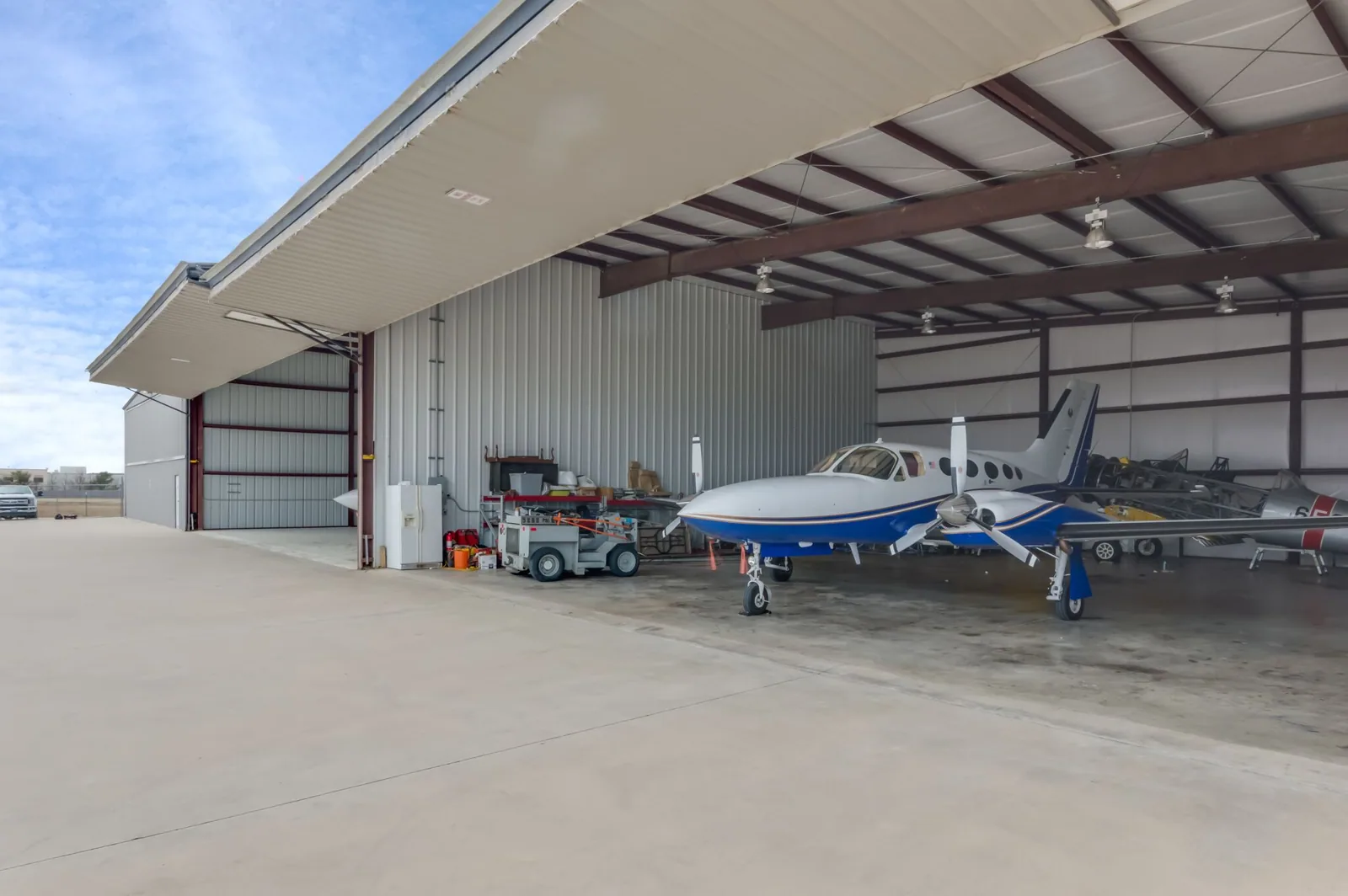
Inspect the hangar roof and door transition
A hangar door opens for the first departure, and a drip appears near the door track. The roof opening may be at a panel lap, fastener or curb well away from that edge. We inspect the roof and wall transition, trace the drain path and check the panel system before outlining a repair that keeps the aircraft area protected.
Eunice serves the area as a commercial and general-aviation facility. Billeaud Properties is documented midway between Lafayette Regional and Acadiana Regional airports. Those facts provide local aviation and transport context; they do not establish the roof type or condition of a specific hangar.
Inspect the metal roof and large openings
Hangar roofs often have broad metal panels, long seams and a large door opening. We inspect panel laps, fasteners, ridge caps, eaves, gutters and the flashing where the roof meets the door frame or wall. Movement at a fastener line can admit water before a panel shows obvious damage. A close inspection helps separate a loose attachment from a failed seam or blocked gutter.
The hangar door and adjacent structure move during normal operation. We look for gaps at the head and jamb details, then check whether water tracks along the frame. If a door contractor is adjusting the opening, we coordinate the roofing repair with that work and keep responsibilities clear.
A commercial roof inspection can map panel condition, penetrations and drainage. If a fastener or flashing defect is confirmed, commercial roof repair can address the detail and surrounding material.
Protect aircraft during roof work
Aircraft, tools and maintenance equipment below the roof need protection from falling debris and water. The operator identifies where aircraft will be parked, what must remain accessible and whether the work area can be cleared for a lift or material delivery. We limit the roof phase and confirm where the crew can move equipment without crossing aircraft paths.
Hangar doors may need to cycle during a workday. The facility contact sets any opening schedule, security rules and entry permissions. If a repair requires a temporary closure, the plan names the window and alternate access. We secure each roof area at the end of the shift and report any detail that needs a decision before the next operation.
For a sudden opening or active leak, emergency roof repair can respond nights, weekends and holidays. We protect a defined area and arrange a complete inspection once the roof can be accessed safely.
Check edges after severe weather
Hail can dent metal and strong wind can loosen edge trim, ridge caps or fasteners. An archived NWS account recounts hail reports and two tornadoes during an April storm crossing between Lafayette and Breaux Bridge. That regional record supports a timely look after a storm, but it does not confirm damage at a hangar. We inspect the roof for visible impact, displacement, punctures and water entry.
Long panels can show movement around fasteners or laps. We compare affected areas with the roof layout, note loose trim and check inside for water or light at a joint. Photographs should show the condition and its location, not just a close-up that loses the roof context.
Storm damage roof repair can document and address confirmed storm-related defects. The scope separates panel repair, flashing and any interior protection needed around aircraft.
Keep gutters and downspouts working
Water may move quickly off a metal roof but still back up at a blocked gutter, downspout or valley. We check debris, gutter joints, overflow paths and the connection to the wall. Lafayette’s annual precipitation normal is 60.50 inches, with 7.08 inches in June. That local record makes drainage service important, while the roof’s geometry shows where water should leave the building.
A new sealant bead will not fix a sagging gutter or a misaligned downspout. We record whether water is trapped, overflowing or entering at a roof-to-wall detail. If the gutter is damaged, metal work and roofing tie-ins can be planned together with the facility manager.
When the existing panel system needs broader rehabilitation, metal roof retrofit may be considered after checking the substrate, fasteners and drainage. We do not treat a retrofit as a substitute for repairing an active leak.
Choose repairs for the panel system
Metal profiles differ in seam shape, fastener type and attachment. We identify the panel and inspect the original details before choosing a repair. A roof with exposed fasteners needs attention to washers and backing; a standing-seam assembly has different clips and seams. Previous patches or coatings may affect preparation and compatibility.
Hangars share some broad-span concerns with flex-industrial roofing and manufacturing plant roofs, but aircraft access and door operation create their own limits. The inspection should record aircraft paths, equipment and any roof areas that cannot be closed during normal operations.
We document panel condition, edge details, penetrations and drainage by roof area. If damage is limited, a repair may preserve usable panels. Widespread corrosion, loose attachment or repeated leaks can support a broader replacement or retrofit review.
Maintain a clear hangar roof record
Aircraft operators may manage roof repairs alongside door service, electrical work and equipment maintenance. Keep dates, panel locations, photographs and repair notes together. We can label the roof by bay or door so a later visit can find the same seam, fastener line or gutter connection. The record should state which access restrictions applied during the repair.
Billeaud Properties and the regional airports are useful map references for operators managing work across Acadiana. For each hangar, the inspection record should identify the bay, door, panel seam, gutter, and fastener pattern. When another visit follows a storm or mechanical adjustment, consistent labels help distinguish a new defect from a previously repaired detail and coordinate roof and door service.
Call when water reaches an aircraft bay, a panel moves after a storm or a gutter spills near a door. We will inspect the roof detail, document what we find and discuss a repair window that fits operations.
At handoff, review the repaired bay with the operator and identify any panel, gutter, or door transition that needs another look. If an aircraft or vehicle was moved for access, confirm the area is clear before normal use resumes. Add the repair map to the facility file.
Keep the door-head flashing and nearby gutter on the next inspection list if the operator reports water after door service.
Questions About Aircraft Hangar Roofing
Can aircraft remain in a hangar during roof repairs?
The operator decides what can remain in the bay. We plan the work zone, debris protection and lift access with the facility contact, then keep the open roof area limited and secured each day.
Why might a hangar leak near the door track?
Water can enter at a panel lap or curb and follow the frame before reaching the door. We inspect the roof, wall and door-head transition, then document the likely path and repair detail.
What should be checked after hail or high wind?
We inspect panels, fasteners, ridge caps, eaves, gutters and the large door transition for visible displacement, dents or openings. The report identifies affected areas and any interior moisture.
Does a metal roof retrofit solve every hangar leak?
No. The substrate, panel attachment, corrosion, drainage and existing repairs determine whether retrofit is suitable. We inspect the current assembly and address active openings before comparing broader options.
Can a hangar door keep operating during roofing work?
Door use can continue when lift placement, access and the repair zone allow it. The operator sets door-use limits; we identify the work window, protected area and any temporary restriction in advance.