
Soprema Commercial Roofing in Lafayette, LA
Home / Roofing Manufacturers / Soprema Commercial Roofing
Talk With Our Lafayette Team
Share the leak location and any system records. We can inspect the roof, document its layers, and discuss the next step.
Call 555-555-5555
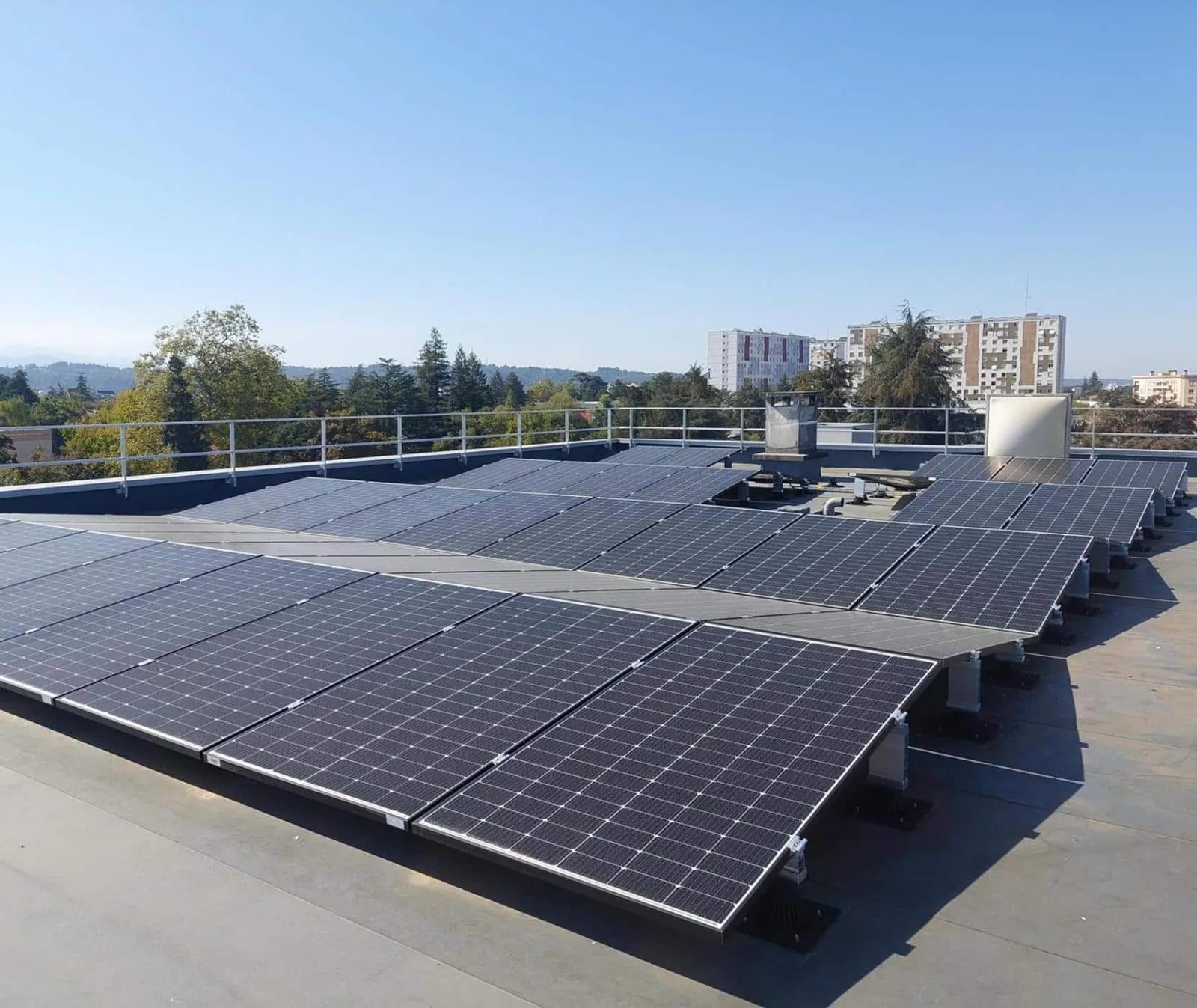
Inspect the Soprema assembly before choosing a repair
A small split at a rooftop curb can be the only visible sign of a larger roof problem. On a Soprema assembly, the right response depends on which product family is present and what is below the surface. Soprema's commercial range includes SBS-modified bitumen, PVC single-ply, and liquid-applied PMMA or PMA systems. Those materials call for different inspection and repair methods. We identify the assembly first, then follow the detail to see whether water reached insulation or the deck.
We note the roof's layers, surface condition, seams, flashings, and past repairs. Older work can conceal the original product, especially where a coating or patch crosses a transition. Our commercial roof inspection records what can be confirmed in the field. A moisture survey may help define wet areas when the assembly is not visible from above.
Separate the membrane families
SBS-modified bitumen uses asphalt modified with styrene-butadiene-styrene polymers. Its roof assembly may use one or more plies and a selected surfacing. We inspect laps, end joints, granule loss, blisters, and transitions before deciding whether a repair can stay local. The surrounding layers matter. A surface patch over wet insulation may hide a continuing problem.
PVC single-ply is a thermoplastic membrane with seams that are joined by heat welding. Its repair method differs from work on modified bitumen. A technician must prepare the surface and use compatible material. Liquid-applied PMMA or PMA products form a membrane through application and curing. A liquid-applied repair needs sound preparation, correct reinforcement at the detail, and the specified application conditions. These systems are not interchangeable simply because all three can appear as a continuous roof surface.
Soprema's published commercial product information names those families, but the installed assembly still has to be verified. We check labels, project documents, accessible edges, and field construction. If a prior recover makes identification uncertain, we state that limitation and recommend the smallest useful inspection to resolve it. We do not infer a specific product from color, age, or a building's use.
Read the roof surface and the layers below
Modified bitumen may show open laps, displaced granules, wrinkles, or blisters. A blister should be assessed for its size, bond, and moisture rather than cut open automatically. On a PVC roof, we focus on seam edges, flashing corners, punctures, and the condition of the surface around a proposed weld. For a liquid-applied system, we check for cracking, peeling, thin coverage, or a split at a change in plane. These observations help define what a repair can reasonably address.
Water can enter at one detail and travel before it becomes a ceiling stain. We compare interior reports with roof penetrations, drains, parapets, and nearby seams. Lafayette Regional Airport normals show June as the wettest month in the 1981 to 2010 climate table, at 7.08 inches of precipitation. That local pattern makes pre-wet-season checks useful, but the reading does not predict how an individual building drains. We inspect the actual low points, outlets, and evidence left after rain.
Downtown Lafayette has a mix of offices, restaurants, and civic uses. That mix makes scheduling and access part of the practical inspection plan, especially where the roof is above occupied space. We do not presume a certain assembly or roof condition at a named property. We confirm the roof in scope, set access limits with the owner, and keep findings tied to observed areas.
Choose a repair compatible with the system
A repair should connect to sound material and address the route water used. For modified bitumen, the method may involve preparing the surface and installing compatible membrane and flashing layers. Heat application, if used, must suit the assembly and site conditions. At a PVC seam, compatible sheet is welded to clean, prepared material. A liquid-applied repair requires sound substrate, the correct primer where specified, and continuous coverage at corners or penetrations.
If inspection finds wet insulation, soft cover board, or a damaged deck, the scope may need to include removal and reconstruction. We record where that material begins and ends, then show how the membrane will close the opening. Where only a small area is affected, a localized repair may be appropriate. If damage repeats across a broad field or multiple details, we compare the repair cost and limits with a wider section repair or replacement review.
Our roof coating and restoration service evaluates coating condition and substrate compatibility before applying a restoration layer. The replacement review considers deck, drainage, access, and existing roof layers. We compare the confirmed membrane with GAF systems only when the installed assembly makes that comparison useful. Each option follows the field evidence rather than the product label alone.
Set the repair window around rain and heat
Surface preparation is part of the repair, not a step to rush through. Rain, dew, or trapped moisture can interfere with adhesion and welding. A hot roof can change handling conditions and may make access uncomfortable. We check the forecast and the surface itself before work begins. If conditions do not support a sound repair, we adjust the schedule and protect any opening that cannot remain exposed.
US 90 connects Lafayette with commercial activity in Broussard, including oilfield service and production businesses. The corridor's varied operating schedules remind us to ask about deliveries, vehicle movement, and equipment access before staging materials. That is a coordination point, not a claim about any one building's roof. Our crew confirms who can authorize roof access and how the work area will be protected.
After work, we note the product family, repair location, materials used, and any remaining concern. A maintenance record helps the next service call distinguish a new leak from an older detail. Our roof maintenance program can track drains and transitions through the wet season. For buildings where moisture may extend beyond a visible defect, a roof insulation assessment helps review the layers beneath the membrane.
Bring the roof history to the inspection
Installation records, product labels, past invoices, and leak photos can shorten the time needed to identify a Soprema system. If those records are not available, we can still inspect visible construction and report what remains uncertain. Include the date of the last rain, the rooms affected, and whether the leak returns during each storm. A location sketch can help us compare the interior mark with roof features above it.
A property manager may also need a clear sequence for tenant notices, equipment shutdowns, and access. We explain which repairs need welding, heat, or liquid application and what conditions affect that work. If moisture is found beyond the opening, we show the proposed boundary before expanding the scope. The record should make clear what is included, what has not been opened, and what follow-up may still be needed.
To discuss a Soprema roof, arrange an inspection and share the information you have. We can identify the system, document its condition, and review a focused repair or broader next step. A confirmed thermoplastic roof may also be compared with Sika Sarnafil PVC systems, while Downtown Lafayette properties require the same address-specific inspection.
Questions About Soprema Commercial Roofing
Which Soprema commercial roof products do you service?
We inspect confirmed Soprema SBS-modified bitumen, PVC single-ply, and liquid-applied PMMA or PMA assemblies. The material and repair detail determine the method. We verify the installed system before recommending work.
Can a blister in modified bitumen be repaired directly?
First we check whether the blister is bonded, whether moisture is present, and how it connects to nearby laps. Cutting it without understanding those conditions can make the opening larger. The inspection defines a repair boundary.
Does a liquid-applied roof need full recoating when it cracks?
Not always. We look at how far the cracking extends, whether the coating has separated, and whether the substrate remains sound. A small detail repair and a broad restoration are different scopes.
Will you know the Soprema product from its color?
Color is not enough to identify a commercial assembly. We compare markings and documents with seams, attachment, and visible layers. If a recover or coating hides those details, we report the uncertainty.
What should be checked before a wet-season repair?
Before the wet season, inspect the drainage route, laps, penetrations, and prior patches. Lafayette's rain pattern makes timing useful to discuss, but the roof condition sets the work plan.