
Duro-Last Commercial Roofing in Lafayette, LA
Home / Roofing Manufacturers / Duro-Last Commercial Roofing
Talk With Our Lafayette Team
Share any product records and the location of the leak. We can inspect the membrane, check the transitions, and review next steps.
Call 555-555-5555
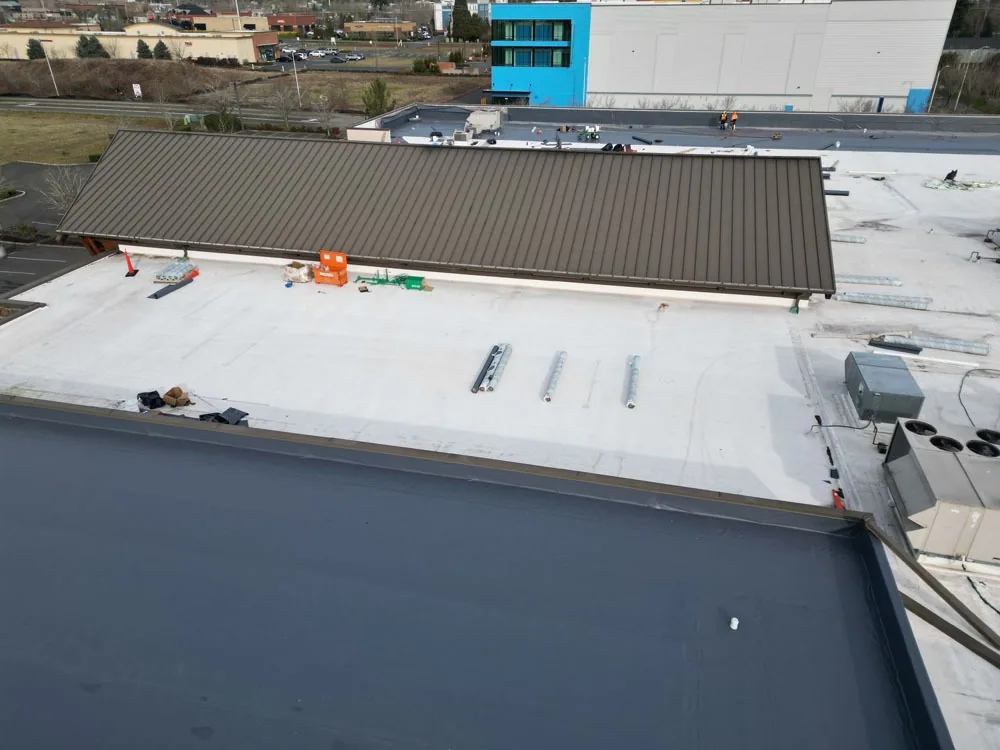
Inspect the Duro-Last roof before patching
A prefabricated roof sheet can reduce some field seams, but it still has edges, penetrations, and transitions to inspect. Duro-Last describes its commercial roofing as a custom-fabricated PVC system, with components prepared for the building. The installed roof must still be checked for field conditions. We look at how the sheet meets drains, curbs, walls, and edge metal, then follow any reported leak to its source. A neat-looking field does not rule out a problem at a termination.
We record the membrane condition, field welds, flashing, fasteners, and past repairs. A prior patch may cover a puncture or separate from the surrounding sheet. Our commercial roof inspection establishes what is visible and what needs closer testing. If the roof history is unclear, a condition report can organize the observations and recommended follow-up.
Understand what was prepared off the roof
Duro-Last's published system information describes a PVC membrane assembled with custom-fabricated components. That can change the amount of field fabrication required, but it does not remove every seam or site-built detail. The sheet still has to connect at perimeters, pipes, drains, equipment curbs, and changes in plane. We check how those transitions were installed and whether the materials remain bonded or welded.
A repair should preserve the system's material compatibility. On a confirmed PVC roof, a technician prepares the existing membrane and uses compatible PVC material for the repair. A heat-welded patch needs clean, dry contact and a sound substrate. We let the seam cool, then check its edge. A loose corner or puncture near a curb may call for a larger flashing repair if the opening continues below the visible surface.
Duro-Last also identifies commercial TPO products. A TPO assembly is a different membrane family from PVC, even when both appear as light-colored sheet roofing. We identify the installed material through project records, labels, accessible edges, and seam construction. Where a recover or prior coating hides that evidence, we explain what remains unknown. The brand name on an invoice can help, but it cannot confirm that every roof layer is the original system.
Inspect seams, edges, and every roof opening
On a Duro-Last roof, we trace the membrane from the open field to the edge detail. We check for cuts, abrasion, loose flashing, sealant failure, and separation near equipment. A prefabricated penetration boot can still be damaged by movement or later trade work. We note whether a patch overlaps sound material and whether a seam ends at a stable transition. At parapets, we look for movement and inspect the termination rather than judging the detail from the field sheet alone.
Drainage deserves its own review. We look at the inlet, bowl, clamping area, and surrounding slope. Leaves, grit, or roof debris can slow the path, while ponding may persist because water cannot reach the outlet. A blocked drain does not prove the membrane has failed. We document where water sat and inspect the closest seam, repair, or flashing for an opening. A moisture check may be useful where the insulation is concealed.
Lafayette Regional Airport is a regional transport hub near industrial parks and US 90/I-49 activity. For work nearby, we confirm truck access, rooftop clearance, and staging space with the owner. Those logistics affect the visit; they do not tell us what roof assembly is installed.
Repair a PVC detail without hiding the evidence
For a confirmed PVC assembly, repair usually starts with locating sound sheet beyond the damaged area. The surface is cleaned and prepared, and a compatible patch is set and welded according to the material and site conditions. We check the cooled weld and document the finished perimeter. At a drain or curb, the patch must tie into a stable detail. A surface bead that leaves a lifted edge or wet substrate underneath will not resolve the underlying condition.
If insulation or cover board is wet, we identify the affected area and discuss removal before closing the roof. That may require opening a larger section than the visible puncture. We photograph the layers, record what was found, and rebuild them before installing new membrane. If the existing sheet is brittle or separated across a broader area, a section repair or replacement may be more appropriate than multiple isolated patches.
Our commercial roof repair service addresses localized defects. Before an overlay, the existing layers and moisture record are assessed through recover planning. If the roof has broad deterioration, replacement planning compares the full assembly, drainage, and access needs. We explain the findings behind each option and note conditions that remain outside the repair scope.
Plan access for active Lafayette buildings
Roof work can cross paths with HVAC service, deliveries, and tenants. Before mobilizing, we confirm staging space, access routes, and whether rooftop equipment can be shut down. If a repair needs heat welding or material odors, we discuss the timing and nearby occupied areas. A focused repair may fit a short visit, but wet insulation or several failed details can require a longer sequence.
UL Lafayette Research Park is a 143-acre campus with laboratories, offices, testing and consulting services, and an incubator. A roof visit at a research facility may need coordination around active labs and equipment access. We do not infer a roof assembly there. At the building in scope, the site contact sets permitted access zones.
We also consider Lafayette's wet-season timing. A damp sheet may not be ready for preparation or welding, and active rain can expose an open assembly. Before work, we check the surface and forecast. If a repair must wait, we explain how the area will be protected. Maintenance visits can track drains and previous repair sites through the year.
Keep the system identification with the repair record
Useful records include the installation date, product name, roof plan, prior service notes, and photos of the leak after rain. Warranty terms depend on the product documents and project-specific conditions, so we review the written requirements alongside the roof record. We document the visible assembly and distinguish confirmed facts from assumptions. When the roof contains several layers, a small opening or manufacturer record may be needed to identify the covered product.
After a repair, the service record should identify the membrane, location, materials, preparation, and test performed. We also note any wet area, open item, or condition that should be observed at the next visit. This helps a property manager respond if the same ceiling mark returns. Different membranes have different repair details, including Holcim Elevate systems and Versico products. At Opelousas, we would also confirm the building address and roof assembly before setting a scope.
To discuss a Duro-Last roof, share the leak location and any system paperwork, then arrange an inspection. We can check the fabricated sheet and site-built transitions, document what we find, and discuss a practical repair or broader review.
Questions About Duro-Last Commercial Roofing
Does custom fabrication mean there are no field seams?
No. Custom-fabricated sheets can reduce some field work, but perimeters, penetrations, curbs, and transitions still need to be connected on site. We inspect those locations along with the open membrane field.
Can a Duro-Last PVC puncture be repaired with any roof patch?
The material needs to be compatible with the confirmed assembly. We identify the membrane, prepare the surface, and weld a compatible PVC patch when conditions allow. A different sheet or coating may require another approach.
What if the roof invoice says Duro-Last but the surface is coated?
We compare the invoice with visible construction, labels, and accessible edges. A coating may hide the original membrane. If the assembly cannot be confirmed, we describe the uncertainty and recommend what inspection would resolve it.
Will a clogged drain cause a leak in the membrane?
A blocked drain can leave water on the roof, but it does not prove the membrane is open. We clear and inspect the drainage path, then check nearby welds and flashing. Any repair follows the observed defect.
What should I send before requesting a repair?
Send installation records, prior repair notes, photos, and the rooms affected by the leak. Include when the issue appeared and whether it returned after rain. Those details help us focus the inspection without replacing field verification.