Commercial Fire Damage Roof Repair in Lafayette, LA
Home / Roof Damage Repair / Commercial Fire Damage Roof Repair
Talk With Our Lafayette Team
After the area is released, tell us where the fire and water reached the building. We will inspect the roof layers and outline temporary and permanent work.
Call 555-555-5555
Plan a safe roof recovery
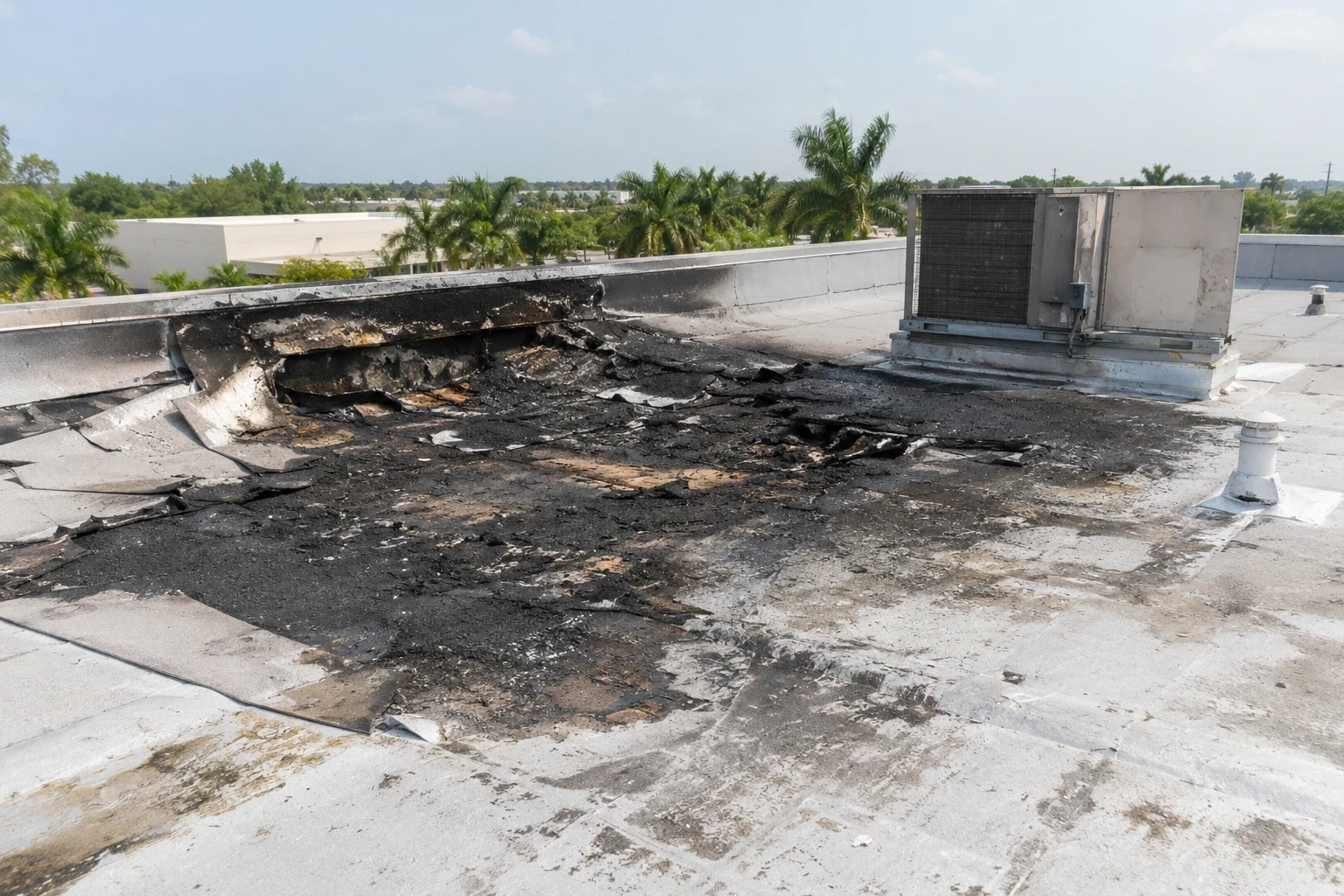
After a roof fire, the damage may extend beyond the burned opening. Heat can soften membrane, smoke residue can coat nearby equipment, and water from suppression may saturate insulation or collect inside the roof assembly. We inspect the full affected zone after the fire authority releases the area and the building team confirms safe access. The first task is to separate visible char from material that has lost strength without an obvious color change.
In Lafayette, warm and humid conditions make drying and interior protection part of the recovery plan. We photograph the roof, identify the membrane and deck, and map water or smoke paths. A written scope can separate temporary cover, removal of damaged layers, structural review, and permanent roof work. Our emergency roof protection can help secure an opening while permanent work is planned; related wind damage findings should be documented separately if a storm also affected the building.
Map heat, smoke, and suppression water
We start outside the fire area and work toward the center. The inspection includes membrane discoloration, blistering, shrinkage, open seams, punctures, soft cover board, and damage around penetrations. We check metal edges and rooftop equipment for heat exposure, then note where suppression water may have entered. A roof can look intact while insulation below it is wet or compressed.
Interior observations help guide the roof inspection. We compare ceiling marks, odor, wet materials, and reported fire boundaries with the roof plan. Smoke can move through openings and mechanical pathways, so we record the roof condition separately from the interior restoration scope. If the building remains partly occupied, the property contact determines areas that can be accessed and spaces that must stay clear.
For a large institutional property, roof zones and access control matter. UL Lafayette reports more than 250 buildings across all university holdings. For a campus team coordinating inspections across buildings, a clear map keeps each finding attached to the inspected structure and work area.
Keep temporary protection distinct from rebuilding
Temporary measures can cover an opening or route water away from exposed materials while the permanent scope is assembled. We do not cover unstable surfaces or enter a zone that remains unsafe. If deck or structural damage is suspected, the appropriate building professional must evaluate it before roofing resumes. The roof repair scope can then follow the approved access and sequencing plan.
Suppression water often changes the repair limits. We check wet insulation, cover board, and deck, then identify which layers need removal. A moisture survey may help map affected areas, but readings are confirmed with the construction and any targeted openings. Drying alone is not a repair if the membrane has lost its bond or the insulation has deformed.
Our commercial roof inspection records conditions, and a photo condition report can organize findings for the owner, adjuster, and restoration team. The record identifies what was visible, what was tested, and what remains inaccessible. That separation helps the next decision stay tied to the actual assembly.
Replace layers that no longer perform
Once the work area is safe and dry, we match repair materials to the existing system. A TPO or PVC patch must be welded to compatible membrane. EPDM calls for its own tape, primer, or flashing. Modified bitumen and built-up roofs need their own tie-in and surfacing. A coating over heat-damaged or smoke-contaminated membrane does not restore lost strength. We confirm the bond and substrate before selecting the repair.
Where damage is confined to a small area, replacing the affected section may restore continuity. If heat reached multiple roof zones or the deck has been affected, a larger tear-off and rebuild may be required. We explain the limits, test results, tie-in locations, and any allowance for concealed conditions. The price and schedule depend on access, disposal, material availability, drying, and coordination with electrical or mechanical trades.
LEDA's parish employer list includes Ochsner Lafayette General and Our Lady of Lourdes. On a healthcare property, we plan roofing around access, noise, air intakes and temporary protection with the owner. The National Weather Service documents an April severe-weather event with large hail and two tornadoes between Lafayette and Breaux Bridge, a reason to record observed roof conditions after a reported event rather than assume damage from the regional record.
Coordinate with restoration and building operations
Fire recovery often involves several teams. We clarify who controls access, who is removing interior finishes, when electrical or mechanical systems can be inspected, and where temporary protection must remain. Roof work should not block fire lanes or place debris over occupied routes. A lift, crane, or material staging zone needs approval from the property contact.
For a building near the Ambassador Caffery corridor, traffic and access plans may shape delivery timing. The corridor includes major medical campuses and retail development, but each site has its own route and operating rules. We coordinate for that property, protect roof openings during shifts, and update the contact if weather changes the work window.
Our response is available all day and night, every day of the week. An after-hours call can address immediate water entry or a temporary cover. Permanent work waits until the assembly, substrate, and access conditions are ready. We keep those steps separate in the written plan so temporary protection is not mistaken for a completed restoration.
Record what was removed and restored
At closeout, we provide photos of the repaired roof area and note the layers removed, materials installed, and moisture checks completed. We also identify conditions that remained outside the roofing scope, such as a structural concern or equipment damage. If the repair exposed a wider issue, the report states why the scope changed and what evidence supported that decision.
A dated roof record can support future maintenance and prevent confusion if another leak occurs. Keep the repair map with restoration records and note any equipment work that followed. If the roof has separate punctures, our membrane puncture repair process addresses those openings; a claim support record can organize photos and scope details without predicting coverage. Call to arrange an inspection once the property is safe for access.
After rebuilding, compare the final roof map with the temporary-protection and removal records. Check that new penetrations and adjoining trades left the membrane and flashing intact, then set a follow-up inspection if the assembly was opened or repaired in several stages.
Questions About Commercial Fire Damage Roof Repair
Can you inspect a roof while firefighters are still working?
No. We enter only after the fire authority releases the area and the building contact confirms safe access. A temporary plan can be prepared while the site remains restricted.
Does a blackened membrane need to be replaced?
Color alone does not answer that. We check heat effects, bond, flexibility, seams, and the layers below. The repair may be local or wider depending on material performance and moisture.
What does suppression water do to roof insulation?
Water may travel beyond the visible opening and remain trapped in insulation or cover board. We map likely entry, use suitable moisture checks, and open the assembly where needed to set removal limits.
Can temporary cover remain until the building reopens?
It can remain only if it is safe and suited to forecast conditions. We explain its limits and schedule permanent work when access, drying, and coordination allow.
Who coordinates equipment shutdowns during roof restoration?
The building contact and mechanical team coordinate shutdowns. We identify the roof work area, explain the repair sequence, and fit our access around the operations plan.